For drivers who expect more than merely “good enough” from their vehicle, brakes are not a commodity—they are a craft. Precision stopping is the quiet backbone of every confident journey, and understanding how brake repairs should be approached separates routine ownership from truly refined care. This guide is designed for drivers who want to be informed, exacting, and unhurried in their decisions: those who understand that exceptional safety is rarely accidental.
Understanding the Architecture of a Proper Brake Repair
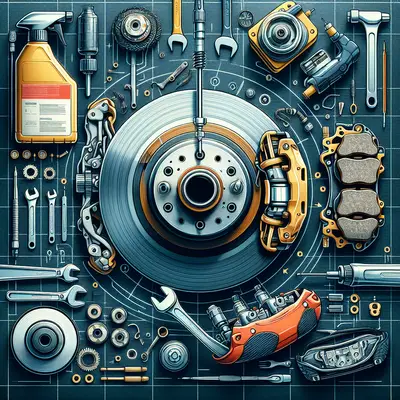
A sophisticated brake repair is not simply about replacing worn parts; it is about restoring a system to balanced, predictable performance. While the basic components—pads, rotors, calipers, brake fluid, and lines—are well known, their interaction is where quality is either preserved or compromised.
A considered repair begins with a methodical inspection: thickness measurements of pads and rotors, evaluation of rotor runout (wobble), caliper function, condition of rubber hoses, and a thorough check of brake fluid clarity, level, and age. A technician committed to excellence will not treat these steps as formalities but as diagnostics that shape the entire service strategy.
The brake system must be viewed as a cohesive whole. Replacing only the most visibly worn part may solve a symptom but leave the underlying imbalance intact. The aim is not just to stop the car, but to ensure the pedals feel consistent, the vehicle tracks straight under hard braking, and the response inspires trust in every stop.
Five Exclusive Insights for Safety‑Focused Brake Owners
Drivers who care deeply about safety often sense that “standard service” may not match their expectations. These five insights go beyond the usual advice and help you evaluate whether your brake repair is genuinely aligned with refined, safety‑first standards.
1. Measuring, Not Guessing: The Quiet Power of Precision
In an elevated brake repair, nothing important is estimated by eye. Pads should be measured with a gauge, rotors checked with a micrometer, and rotor runout assessed with a dial indicator. Insist on actual numbers, not vague descriptions like “they’re getting low” or “your rotors are a bit warped.”
When you have precise measurements, you can make rational decisions: whether to replace rotors now or at the next service, whether pad wear is even across all corners, and whether a subtle vibration is due to rotor runout or another suspension issue. This data-driven approach is the difference between reactive repairs and deliberate, anticipatory maintenance.
2. Brake Fluid as a Safety System, Not a Footnote
Brake fluid is often treated as a minor detail, yet it is central to braking reliability. Over time, fluid absorbs moisture, lowering its boiling point and increasing the risk of brake fade under heavy use—such as descending long grades or emergency stops. For a safety‑conscious driver, waiting until “it looks dirty” is too casual.
A premium approach involves testing brake fluid for moisture content and, when appropriate, performing a thorough flush rather than a partial “top-up.” You should know the recommended service interval for your vehicle’s brake fluid (commonly every 2–3 years or per the manufacturer), and ensure the correct fluid specification (DOT rating) is used. Treated properly, brake fluid is not an afterthought—it is an invisible safeguard.
3. Symmetry Matters: Why “All Corners” Deserve Equal Attention
Uneven brake work—such as replacing pads on only one axle when the other is borderline—can introduce subtle imbalances that reveal themselves in emergency stops or on wet roads. While there can be thoughtful reasons to service front and rear brakes at different times, a refined approach always considers how the system will behave as a whole.
Ask for a clear explanation of front vs. rear condition, pad and rotor thickness on each wheel, and whether replacing components in matched pairs (both fronts or both rears) will yield more predictable, stable performance. Symmetry promotes consistent pedal feel, balanced braking force, and a smoother, more controlled deceleration in demanding situations.
4. Hardware and Preparation: The Details That Define Excellence
Owners often focus on pads and rotors, but the “small” hardware—shims, clips, guide pins, and anti-rattle components—plays a disproportionate role in refinement. Worn or corroded hardware can cause noise, uneven pad wear, dragging brakes, or a vague pedal response.
A premium brake repair includes thorough cleaning of mounting surfaces, proper lubrication of slide pins with the correct high‑temperature grease, and replacement of worn clips and shims with quality components. This attention to detail does not merely prevent squeaks; it contributes to consistent braking response, maximizes pad life, and preserves the quiet, composed character that careful drivers value.
5. Test Drives With Purpose, Not Just Ritual
A cursory lap around the block after a brake job is not enough for discerning owners. A meaningful post‑repair test drive should include gentle stops, progressively firmer braking, and at least one controlled, harder stop from moderate speed—performed safely and within legal limits.
You should expect the technician (or service advisor) to comment specifically on pedal feel, straight‑line stability under braking, and any noises or vibrations observed. After the repair, you can mirror this approach: pay attention over the first 100–200 miles as the pads bed in. Braking should feel smooth, linear, and confidence‑inspiring—never grabby, vague, or inconsistent. If anything feels off, refined owners do not “wait and see”; they seek clarification promptly while the work is recent and easy to evaluate.
Partnering Intelligently With Your Brake Technician
Even the most meticulous driver needs a competent partner in the workshop. The key is choosing a shop that views brakes as a safety system, not a sales opportunity. Look for facilities that provide written measurements, explain recommendations with clarity, and are willing to discuss options aligned with your driving style—city vs. highway, light vs. heavy loads, and how long you typically keep your vehicles.
Ask about the brand and specification of pads and rotors used, whether they meet or exceed original equipment standards, and what type of warranty applies to parts and labor. Technicians who welcome such questions are typically those who take pride in their work; those who are dismissive or evasive may not share your standards.
Vehicle manufacturers also provide specific brake service guidance in the owner’s manual and, for some models, detailed repair procedures through dealer networks or technical publications. Familiarizing yourself with these recommendations allows you to have more informed discussions and quickly recognize when a suggested repair diverges significantly from factory standards.
Conclusion
Truly refined brake care is not about indulgence—it is about intentionality. When every component is measured, every fluid is verified, and every recommendation is explained with clarity, your vehicle evolves from merely “functional” to quietly trustworthy. For drivers who value safety as a daily luxury rather than a distant abstraction, this level of attention is non‑negotiable.
By embracing precise measurements, respecting brake fluid as a safety system, insisting on symmetry, honoring the details of hardware and preparation, and expecting purposeful test drives, you transform routine brake repair into a disciplined practice. The result is not just shorter stopping distances, but a deeper, calmer confidence every time your foot touches the pedal.
Sources
- [National Highway Traffic Safety Administration (NHTSA) – Brakes and Safety](https://www.nhtsa.gov/equipment/brakes) – Federal agency overview of brake systems and their role in vehicle safety
- [U.S. Department of Transportation – Brake System Safety](https://www.transportation.gov/mission/safety/brake-safety-awareness) – Government guidance on brake safety awareness and maintenance considerations
- [AAA – Car Brake Systems and Maintenance](https://www.aaa.com/autorepair/articles/car-brake-systems-and-maintenance) – Consumer-focused explanation of brake components, warning signs, and service practices
- [Bendix Brakes – Brake Fluid and Brake System Care](https://www.bendix.com.au/drivers/brake-fluid) – Technical information on brake fluid properties, contamination, and replacement intervals
- [University of California, Berkeley – Vehicle Dynamics and Braking Concepts](https://citris-uc.org/wp-content/uploads/2015/03/vehicle_dynamics_notes.pdf) – Educational material covering braking forces, stability, and vehicle dynamics principles
Key Takeaway
The most important thing to remember from this article is that this information can change how you think about Repair Guides.