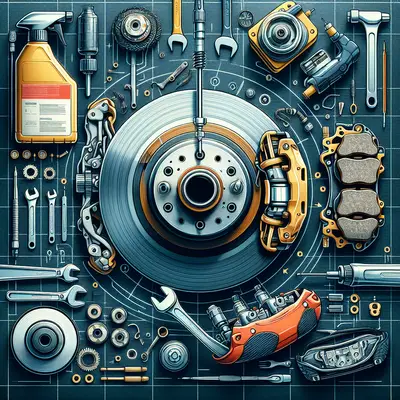
When your brakes stop feeling “right,” you don’t want drama, you want certainty. Not panic, not guesswork—just a clear path from concern to correction. This guide is designed for drivers who expect more than a generic checklist. It lays out how to approach brake repairs with composure, technical clarity, and an insistence on safety that feels as deliberate as every press of the pedal. Along the way, you’ll find five exclusive insights that set cautious, informed owners apart from the crowd.
Reading the Car’s “Language”: Interpreting Early Brake Signals
Before any tool is touched, refined brake care begins with interpretation. Your car is remarkably consistent; what feels “off” almost never is your imagination. Subtle changes in pedal travel, sound, or stopping distance are the earliest—and kindest—warnings it can give you.
A gradually softening pedal that sinks lower than usual can suggest air in the lines, internal master cylinder wear, or a developing hydraulic leak. A high, rock‑hard pedal that requires extra effort may indicate a failing power brake booster or vacuum issue rather than simply “old pads.” Occasional, faint squeaks in damp weather can be normal surface rust being scrubbed away; persistent metallic scraping, however, is not ambient noise—it is friction material nearly gone or a pad wear indicator doing its job.
Exclusive Insight #1: Treat “new normal” as a red flag. If you catch yourself thinking, “It’s been like this for a while, I’ve gotten used to it,” you’ve just identified a risk. Normal braking does not slowly change; when it does, something in the system is quietly asking for attention. Document the change in a note on your phone—date, mileage, and what you feel—and you’ve already started a proper diagnostic record.
The Four-Corner Mental Checklist Before Any Repair
Every methodical brake repair, professional or DIY, should be framed by a four‑corner mental checklist: pedal feel, noise, pull, and heat. Thinking in these four dimensions keeps you from chasing the wrong “fix” and ensures that no corner of the car is ignored simply because one symptom is loudest.
Pedal feel addresses firmness, travel, and response delay. Noise addresses squeals, clicks, grinding, or rhythmic thumps and when they occur—light braking, heavy braking, or just before a full stop. Pull refers to any tendency for the car to veer left or right when braking on a straight, flat road. Heat can be sensed indirectly: a faint burning smell after city driving, one wheel attracting more brake dust, or a single wheel running hotter to the touch (carefully checked from a distance or with an infrared thermometer).
Exclusive Insight #2: A “quiet” corner can still be the problem. If the car pulls left on braking, many owners (and some shops) instinctively focus on the left side. In reality, the issue is often the opposite wheel failing to engage properly. A seized right‑front caliper slide or contaminated pad can make the left front appear overzealous. A refined brake inspection always views symptoms in mirror pairs, never in isolation.
Parts Choices That Respect Both Safety and Feel
Brake parts are often sold as if they’re binary: “budget” or “performance.” Discerning owners know the real choice is about harmony—how rotors, pads, fluid, and hardware interact for consistent, predictable stops under the conditions you actually drive.
Rotors vary in metallurgy and cooling design, and while drilled and slotted options can be valuable for repeated high‑heat use, they are not a universal upgrade. On a daily‑driven sedan, a high‑quality plain rotor often provides quieter, smoother engagement with excellent longevity. Pads, likewise, come in organic, semi‑metallic, and ceramic formulations, each with trade‑offs for noise, dust, cold performance, and fade resistance.
Exclusive Insight #3: Match the pad to your heat profile, not your aspirations. If your driving is composed—steady highway runs, city commutes, no track days—choosing an aggressive “performance” pad can be counterproductive. Many performance compounds require higher temperatures to bite optimally. In normal commuting, they may feel wooden when cold and generate more noise. A premium ceramic or well‑engineered semi‑metallic, paired with quality rotors, often delivers the elegant braking experience most owners truly want: smooth, silent, and repeatable.
Fluid, Lines, and the Hidden Architecture of Confidence
Brake fluid and hydraulic lines do not have the visual drama of bright new rotors, but they dictate whether your carefully chosen hardware can function at its best. Over time, brake fluid absorbs moisture, which lowers its boiling point and can corrode internal components. That means hard braking on a warm day could suddenly feel spongy, not because your pads failed but because the fluid boiled and formed compressible vapor pockets in the lines.
Rubber brake hoses can also subtly degrade. They may swell internally, restricting flow, or develop tiny external cracks. The result is uneven brake application, delayed release, or a persistent pull that no amount of pad swapping seems to cure. Stainless braided lines, when properly selected and installed, can enhance pedal feel—but they do not replace the need for clean, fresh fluid at the correct specification.
Exclusive Insight #4: Fluid age matters as much as fluid level. A full reservoir tells you almost nothing about its quality. If you cannot verify when the brake fluid was last replaced, assume it is overdue. Many manufacturers recommend replacing brake fluid roughly every two to three years, even with no visible issue. For a safety‑critical system, this is not over‑maintenance; it is preserving the designed margin between a controlled stop and fluid‑induced fade when you need the brakes most.
When to DIY, When to Delegate—and How to Oversee Either
In the era of video tutorials, it is tempting to view every brake job as a Saturday project. Some truly are—pad and rotor replacement, when done meticulously with the right tools and torque specifications, can be within reach of careful DIY owners. Yet other tasks, such as ABS module work, hydraulic diagnostics, and electronic parking brake service, demand specialized procedures and scan tools.
The sophisticated approach is not to insist on always doing it yourself or always outsourcing. It is to know which is appropriate and how to maintain control even when you are not turning the wrenches. That includes asking your shop to measure and document rotor thickness, pad remaining on each corner, and brake fluid condition, and to save any replaced parts for your inspection.
Exclusive Insight #5: Treat every brake repair as a documented event, not a transaction. Keep a concise log: date, mileage, what was replaced, what brand or part number was used, and any measurements (pad thickness, rotor thickness, fluid service). Over time, this becomes an ownership advantage. Patterns emerge—such as one corner wearing faster, or a certain pad compound suiting your driving style better—and you can adjust before problems escalate. It also provides powerful clarity if a subsequent issue arises: you are no longer relying on memory or invoices alone.
Conclusion
Brake repair, at its most refined, is less about reacting to emergencies and more about cultivating an informed, measured relationship with your car’s most important safety system. By listening early, thinking in structured checklists, choosing parts that align with how you actually drive, respecting the hidden role of fluid and lines, and documenting each intervention, you elevate brake care from a necessary expense to a deliberate safety practice.
The result is not just stopping power—it is the quiet assurance that every time you press the pedal, the car will respond exactly as you expect. That level of predictability is the true luxury behind every composed, confident stop.
Sources
- National Highway Traffic Safety Administration (NHTSA) – Brakes and Safety - Federal guidance on brake safety, performance, and recall information
- U.S. Department of Transportation – Brake Fluid Standards (FMVSS No. 116) - Technical requirements and classifications for brake fluids used in passenger vehicles
- AAA – Brake System Basics and Maintenance - Consumer-focused explanation of brake components, warning signs, and service recommendations
- University of Nebraska–Lincoln – Automotive Brake Systems Overview - Educational overview of brake system components and function
- Consumer Reports – How to Know When You Need New Brakes - Practical guidance on interpreting brake symptoms and planning service
Key Takeaway
The most important thing to remember from this article is that this information can change how you think about Repair Guides.