For drivers who treat safety as a non‑negotiable luxury, brakes are more than a maintenance line item—they are the quiet guardians of every journey. Yet even the most conscientious owners often rely on generic advice that fails to match their standards. This guide is designed for the driver who expects more: deeper understanding, finer control over decisions, and a brake system that performs with composure, not drama.
Below, you’ll find five exclusive, detail‑driven insights that transform brake repair from a necessary expense into an informed, strategic choice.
Understanding Brake Feel as a Diagnostic Tool
Most drivers notice squeaks or warning lights; refined drivers notice changes in feel. The way your pedal responds—its firmness, travel, and feedback—can reveal more than many basic inspections.
A gradually softening pedal, for instance, may point to moisture‑contaminated brake fluid, internal hose deterioration, or subtle air intrusion, not just “old pads.” A pedal that feels firm at first but slowly sinks under steady pressure can indicate a failing master cylinder, even when no obvious leaks are visible. Likewise, a pedal that becomes firmer than usual—especially after recent work—can indicate incompatible pad compounds or warped rotors leading to uneven contact.
Treat any change in brake feel as a signal, not a nuisance. When you describe it to a technician, use precise terms: “gradual sinking,” “initial softness then firmness,” “slight vibration under light braking,” or “high pedal engagement point.” That level of detail elevates the conversation from guesswork to targeted diagnosis, saving time, money, and unnecessary parts replacement.
The Hidden Influence of Brake Fluid Quality
Brake fluid is frequently overlooked, yet it is the lifeblood of your braking system. Over time, it absorbs moisture from the air—a process called hygroscopic absorption—which reduces boiling point and increases the risk of vapor lock under heavy braking. For a spirited highway drive or a long downhill descent, degraded fluid can mean a pedal that feels fine in city traffic but becomes dangerously spongy when you truly need it.
A premium brake strategy treats fluid flush intervals as a safety investment, not an afterthought. In many cases, a two‑ to three‑year interval is appropriate, but drivers in humid climates or those who demand consistent, confident feel may reasonably adopt more frequent service. Insist that your shop uses fresh fluid from sealed containers, not opened bottles of uncertain age, and ensure they follow the manufacturer‑specified DOT grade—DOT 3, DOT 4, or DOT 5.1. Mixing incompatible fluids or “upgrading” without regard to system design can compromise seals and long‑term reliability.
Request a documented fluid change, not merely a “top‑off.” A complete flush—replacing old fluid through all lines and calipers—is what restores performance and consistency. It is one of the most cost‑effective refinements you can make to your brake system.
Precision in Parts: Beyond “Pads and Rotors”
To the untrained eye, brake jobs are simple: new pads, maybe new rotors. For the discerning owner, this is where the difference between ordinary and exceptional begins.
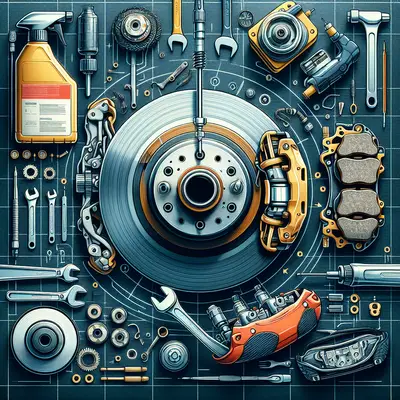
Pad composition (ceramic, semi‑metallic, low‑metallic, or performance compounds) affects not only stopping power, but pedal feel, noise, dust, and rotor wear. Ceramic pads, for example, may offer quieter operation and lower dust, but may not provide the same initial “bite” as certain performance‑oriented semi‑metallic options, especially when cold. Rotors vary as well—solid vs. vented, coated to resist corrosion vs. bare metal, different vane designs to manage heat more efficiently.
Advanced brake repair also considers hardware: anti‑rattle clips, shims, and guide pins. These components dictate how freely the caliper moves and how quietly the system operates. Reusing worn hardware can undermine even the highest‑quality pads and rotors, leading to uneven wear, noise, or pulsing.
When discussing repairs, ask not only what is being replaced, but why those specific parts were chosen. Clarify whether the brand and compound are appropriate for your vehicle’s weight, driving style, and typical environment. A refined repair approach favors balanced performance—predictable stopping, controlled noise levels, and longevity—over the cheapest line item on a quote.
The Role of Heat Management and Driving Style
Brake systems are designed to convert motion into heat, and how that heat is managed separates a merely functional system from an exceptionally reliable one. Repeated hard stops, towing, mountain driving, and frequent high‑speed braking expose your components to extreme temperatures that can accelerate pad glazing, rotor warping, and fluid degradation.
Pay attention to subtle early warnings: a faint burning smell after a long descent, a slight fade in braking power during spirited driving, or discoloration (blueing) of rotors seen through the wheels. These signals suggest that the system is operating near its thermal limits.
Your driving style can either support or sabotage even the best brake repair work. Maintaining longer following distances, anticipating stops earlier, and using engine braking on long downhill stretches help keep temperatures in a safer range. For vehicles regularly used in demanding conditions, a tailored repair plan—such as higher‑temp pad compounds, upgraded rotors, or more frequent fluid service—can preserve refined brake performance where a generic approach would fall short.
Evaluating a Brake Shop with Professional‑Grade Questions
Choosing where your brakes are serviced is as critical as choosing which parts are installed. Rather than asking, “How much for a brake job?” elevate the conversation with questions that reveal a shop’s standards.
Consider questions such as:
- “Do you measure rotor thickness and runout, or replace by default?”
- “How do you verify even pad contact and caliper slide function?”
- “Do you perform a road test and bed‑in procedure after installation?”
- “What warranty do you offer on parts and labor—and what conditions void it?”
A quality‑focused shop will welcome these inquiries and answer them confidently. They will describe their inspection process, torque specifications, and test‑drive protocol without hesitation. They may also provide detailed digital reports with photos of worn components, rotor measurements, and pad thickness, giving you transparency that matches your expectations.
Your goal is not to micromanage the technician, but to ensure their approach aligns with your commitment to safety, refinement, and long‑term reliability. A shop that respects informed questions is far more likely to deliver brake repairs that feel composed, consistent, and confidence‑inspiring at every stop.
Conclusion
A truly premium driving experience extends far beyond leather seats and a quiet cabin. It is the feeling of assured control when traffic tightens unexpectedly, of quiet authority when you press the pedal and the car responds with composure, not surprise. By treating brake feel as a diagnostic tool, prioritizing fluid quality, demanding thoughtful parts selection, respecting heat management, and choosing shops that embrace precision, you elevate brake repair from routine maintenance to a sophisticated safety strategy.
The result is not just a vehicle that stops—it is a vehicle that stops exactly how you expect, every time, with the kind of refined predictability that discerning drivers insist upon.
Sources
- National Highway Traffic Safety Administration (NHTSA) – Brake Safety Information - Federal guidance on brake safety, component performance, and common issues
- Car and Driver – How Brakes Work - Detailed explanation of modern brake system components and operation
- Continental – Brake Fluid Technical Information - In‑depth look at brake fluid types, moisture absorption, and boiling points
- SAE International – Brake Systems Overview - Technical overview of braking system design and performance considerations
- University of California, Berkeley – Vehicle Braking and Control Lecture Notes - Academic perspective on braking dynamics and vehicle control principles
Key Takeaway
The most important thing to remember from this article is that this information can change how you think about Repair Guides.