For drivers who treat safety as a discipline rather than a checkbox, brake repair is never a hurried errand—it is a carefully managed process. Understanding not only what needs to be repaired, but how to approach those repairs with intention, is what separates routine ownership from refined stewardship. This guide is designed for car owners who demand clarity, control, and confidence every time their foot approaches the pedal.
Understanding the Soul of Your Braking System
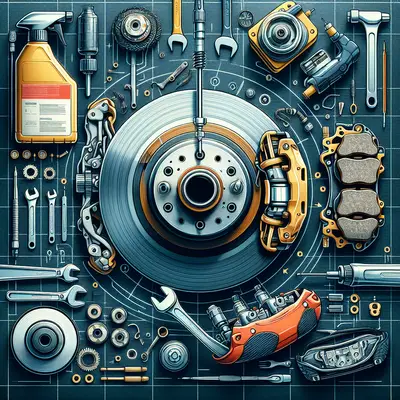
Before any repair begins, it is essential to see the brake system as an interconnected whole rather than a collection of parts. Your braking performance is the sum of hydraulic pressure, friction surfaces, heat management, and precise mechanical movement. Pads and rotors may be the most visible components, but calipers, hoses, master cylinder, brake fluid, and ABS modules all play quiet but decisive roles.
This holistic view matters, because replacing pads on a compromised hydraulic system is akin to fitting new tires on a misaligned suspension—it masks, but does not solve, the underlying problem. A refined approach to brake repair therefore starts with a structured evaluation: pedal feel, response time, noises, vibration, and visual inspection of components. Treat your first “repair step” not as parts ordering, but as correct diagnosis. Doing so elevates every subsequent decision—from parts selection to test drive—into a deliberate act of safety.
A Structured Approach to Brake Repair Decisions
When a brake issue appears—be it a grinding noise, pulsation, or warning light—your next moves determine whether the outcome is merely acceptable or genuinely excellent. Begin by documenting symptoms with the same precision a technician would: When does the issue occur (cold, hot, at low speed, at highway speeds)? Is there steering wheel vibration, or is the vibration felt more through the pedal? Is the brake warning light steady or intermittent?
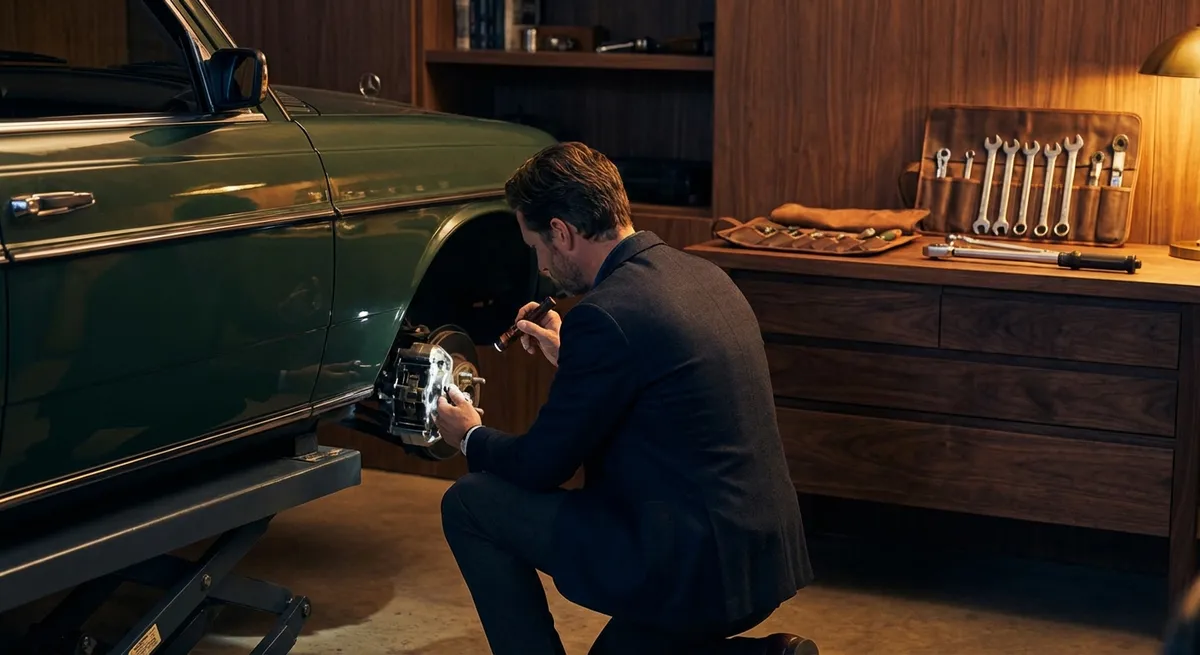
Next, decide where the repair belongs: your own garage or a professional bay. Complex jobs involving ABS electronics, seized calipers, or hydraulic leaks often warrant a professional, while pad and rotor replacement may be appropriate for an experienced home mechanic with the proper tools and environment. The most safety-conscious owners curate a short list of trusted technicians and do not chase the lowest quote; instead, they compare the clarity of explanations, quality of parts used, and thoroughness of post-repair testing. In brake work, “good enough” is rarely good enough.
Five Exclusive Insights for Exceptionally Careful Brake Owners
1. Pedal Feel Is Data, Not Just a Sensation
Many drivers consider pedal feel subjective, but for a meticulous owner, it is a diagnostic instrument. A high, firm pedal that does not sink under steady pressure usually indicates a healthy hydraulic system. A pedal that gradually sinks, even without visible leaks, can hint at an internal master cylinder issue. A spongy pedal frequently suggests air in the lines or degraded brake fluid.
Treat changes in pedal feel as you would a sudden change in steering response: a cue that demands attention, not adaptation. After any repair, perform a controlled pedal assessment on a level surface—engine on, vehicle in park—before moving the car. The goal is to confirm consistency, stability, and predictability before introducing speed and distance into the equation.
2. Heat Management Is the Hidden Currency of Brake Longevity
Every aggressive stop is a heat event, and heat is the quiet adversary of braking systems. Excessive temperature can glaze pads, warp rotors, accelerate fluid degradation, and shorten caliper seal life. Drivers who regularly descend long grades, tow trailers, or drive in performance environments should think of brake heat management the way pilots think of engine temperatures: as a safety-critical parameter, not a side effect.
Choosing rotors and pads rated for your style of driving is not indulgent—it is prudence. Performance-oriented or heavy-duty components, when appropriate, can reduce fade and help maintain consistent braking under demanding conditions. On steep descents, disciplined use of engine braking—downshifting to control speed—protects the brakes from chronic overheating. The subtle reward is a braking system that feels composed and trustworthy even when demands are high.
3. Fluid Flushes Are Not Optional for Serious Brake Care
Brake fluid is often treated as an afterthought, yet it operates at the very core of the system’s reliability. Most modern brake fluids are hygroscopic—they gradually absorb moisture from the air. Over time, this lowers the fluid’s boiling point, increasing the risk of brake fade under heavy use and encouraging internal corrosion in calipers, lines, and ABS components.
A driver committed to superior safety will prioritize scheduled fluid changes based on time and severity of use, not merely mileage. Dark, murky fluid or evidence of rust in the reservoir window are late-stage warnings, not initial cues. When having fluid replaced, insist on a proper flush that includes all four corners and, when applicable, the ABS hydraulic modulator. A clean, correctly specified brake fluid (DOT 3, DOT 4, or manufacturer-approved alternative) is one of the most undervalued investments in consistent, confident stopping.
4. Brake Noise and Vibration Are Clues, Not Just Annoyances
Squeals, clicks, and pulsations are often dismissed as “just a nuisance,” but each has a story to tell. A high-pitched squeal may come from pad wear indicators intentionally designed to signal end-of-life. Grinding sounds usually indicate that friction material has been exhausted and the metal backing plate is contacting the rotor—an urgent situation that can rapidly increase repair costs.
Pedal pulsation under braking often points to rotor thickness variation or uneven deposits, rather than simply “warped rotors” in the casual sense. A sophisticated response is to have a technician measure rotor thickness and runout instead of automatically replacing parts. Not every noise demands expensive work, but every noise deserves structured investigation. The owner who listens early tends to repair smaller issues instead of confronting fully developed failures.
5. Test Drives Are the Final Audit, Not a Formality
The most overlooked moment in brake repair is the test drive. For a conscientious driver, this is not a brief loop around the block but a methodical sequence of checks. Begin in a quiet, low-speed environment, verifying that the pedal is stable and the vehicle tracks straight during light braking. Gradually build to moderate and then firm stops, paying attention to any pull, noise, or change in pedal feel.
If the vehicle is equipped with ABS, safely trigger a controlled ABS stop on an appropriate surface (open, traffic-free area) to confirm that the system engages smoothly and predictably. The goal of a refined test drive is simple: to ensure that the braking system is not merely functioning, but performing in a manner that inspires confidence. Only after this “audit” should a repair be considered fully complete.
Selecting Parts and Professionals with Intention
For the discerning driver, “OEM vs aftermarket” is not a slogan; it is a question of suitability and integrity. Original equipment parts often deliver predictable performance and compatibility, especially for complex systems with integrated stability control and advanced driver assistance features. High-quality aftermarket components can be excellent choices as well—but only when sourced from established manufacturers that clearly specify testing standards and certifications.
When choosing a repair shop, look beyond decor and discounts. Ask how they document brake wear measurements, whether they torque lug nuts to specification rather than simply using an impact gun, and how they handle rotor finishing (replacing vs. machining, and why). A premium experience is not defined by leather seats in the waiting area, but by transparent communication, correct procedures, and a willingness to answer technical questions.
Building a Personal Brake Care Record
Meticulous record-keeping transforms brake maintenance from a series of isolated events into a coherent narrative of your vehicle’s safety. Keep a dedicated log—digital or written—of each brake inspection and repair: date, mileage, pad thickness, rotor condition, fluid replacement, and any notes about noises or pedal feel before and after service.
Over time, patterns emerge: how quickly pads wear given your driving environment, how often fluid benefits from replacement, and which brands or components have proven most consistent. This record not only supports better decision-making for future repairs, it also demonstrates to future buyers that the vehicle has been maintained with a higher standard of care. In the realm of safety systems, provenance matters.
Conclusion
Exceptional brake safety is not achieved by chance or by occasional urgency. It is the product of steady attention, thoughtful decisions, and a willingness to treat every repair as an opportunity to refine—not merely restore—your vehicle’s stopping performance. By listening to pedal feel as data, respecting heat as a critical factor, treating fluid care as non-negotiable, reading noise and vibration as clues, and conducting disciplined post-repair test drives, you cultivate a standard of braking confidence that few drivers ever experience.
For the discerning owner, the true luxury is not a feature on a specification sheet—it is the quiet certainty that when you need your brakes most, they will respond with poised, predictable authority.
Sources
- National Highway Traffic Safety Administration (NHTSA) – Brakes and Brake Systems - Federal safety information on brake system performance, defects, and recalls
- U.S. Department of Transportation – Brake Safety Resources - Government guidance on brake safety campaigns and best practices
- AAA – How to Know When You Need Brake Service - Practical overview of symptoms and service intervals from a major automotive organization
- CarCare.org (Car Care Council) – Brake System Overview - Educational resource explaining brake components, maintenance, and inspection tips
- University of California, Berkeley – Vehicle Braking and Tire Forces (Mechanical Engineering Lecture Notes) - Technical explanation of braking forces, heat, and performance from an academic perspective
Key Takeaway
The most important thing to remember from this article is that this information can change how you think about Repair Guides.