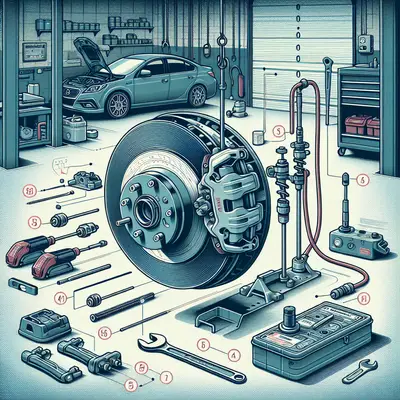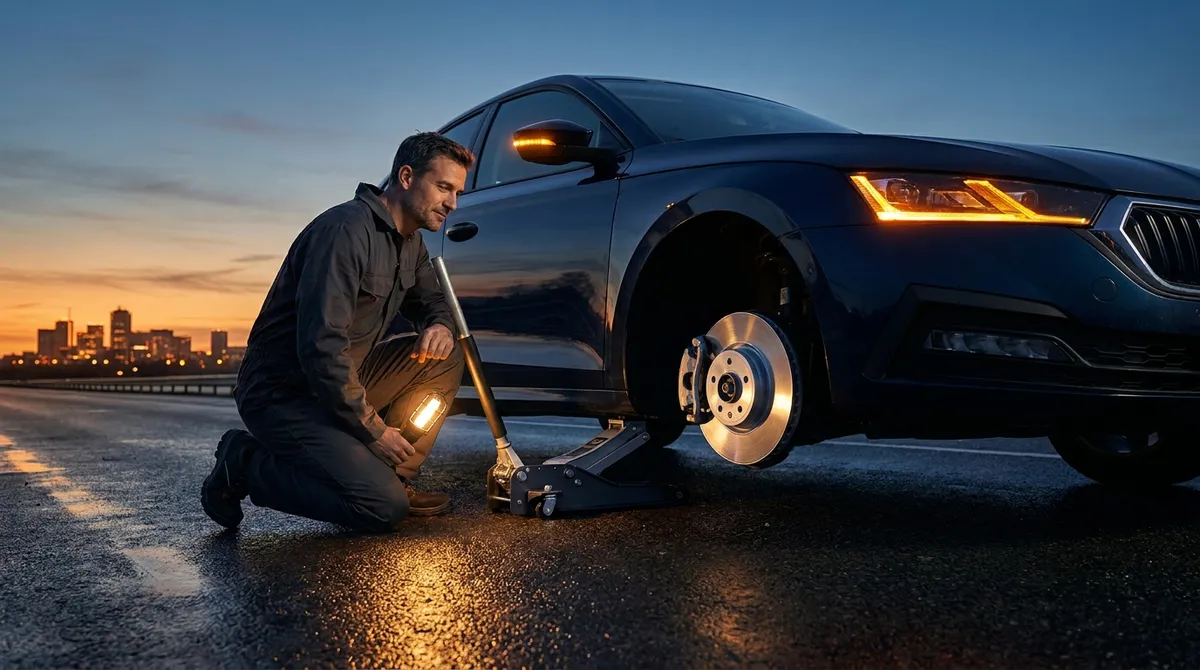
Brake maintenance, at its finest, is less a chore and more a quiet expression of standards. It is the difference between merely arriving and arriving with composure, confidence, and control. For the discerning driver, tending to brake health is not about reacting to emergencies; it is about shaping a driving experience where safety, refinement, and mechanical harmony are deliberately curated long before trouble appears.
Reframing Brake Maintenance as a Long-Term Safety Investment
For many drivers, brake service is a line item on a repair invoice; for the attentive owner, it is a long-term safety investment that influences every mile. Well-maintained brakes shorten stopping distances, stabilize the vehicle under sudden deceleration, and improve the effectiveness of modern driver-assistance systems. A disciplined maintenance rhythm also preserves the integrity of surrounding components—calipers, rotors, brake lines, and wheel bearings—reducing unexpected failures and erratic performance.
Thinking of brake care as an investment reshapes the conversation with your service provider. Rather than asking, “What is the cheapest way to pass inspection?” the more strategic question becomes, “What will best preserve braking consistency and safety over the next 24–36 months?” This mindset encourages higher-quality parts, more precise labor, and a meticulous inspection standard. Over time, that approach yields fewer surprises, a more predictable ownership experience, and a braking feel that remains composed rather than deteriorating in fits and starts.
Exclusive Insight #1: The Signature of a Healthy Brake Pedal
Enthusiasts often talk about engine sound or steering feel, but for a safety‑minded driver, the brake pedal itself has a “signature” that is worth learning. A healthy pedal is firm yet progressive—initial resistance followed by smooth, linear pressure build-up as you press harder. It should not sink slowly toward the floor, pulse under light braking on dry pavement, or feel spongy, as though air has infiltrated the system.
Train yourself to notice your pedal’s normal feel during everyday driving, particularly at low speeds in a familiar environment. Any change—softer engagement, extra travel before the brakes “bite,” or a delayed response when shifting from accelerator to brake—warrants attention long before a warning light illuminates. This sensitivity to subtle changes allows you to schedule service on your terms, rather than surrendering control when a minor issue has escalated into a safety-critical situation.
Exclusive Insight #2: Brake Fluid as the Hidden Guardian of Consistency
Brake fluid is the understated guardian of modern braking. Hygroscopic by design, it gradually absorbs moisture from the atmosphere, even in a sealed system. Over time, this reduces its boiling point and can introduce internal corrosion into brake lines, calipers, and ABS components. The result is not always dramatic failure; more commonly, it is creeping inconsistency—brakes that feel confident one day and slightly vague on a steep descent or in repeated hard stops.
A premium maintenance practice treats brake fluid as a scheduled replacement item, not an afterthought. Rather than waiting for a problem, many manufacturers and safety organizations recommend replacing fluid roughly every two to three years, or according to the service interval in your owner’s manual. For performance-oriented or heavily loaded vehicles—such as SUVs frequently used for towing—this interval may be more conservative. Request a full system flush, not a partial “top off,” and ask your service provider which specification fluid (DOT 3, DOT 4, DOT 5.1) is correct for your vehicle and driving profile. The reward is a consistent pedal feel and greater resistance to fade when you demand the most from your brakes.
Exclusive Insight #3: Surface Finish and the “Quiet” Science of Rotor Health
Most drivers think of rotors in terms of thickness alone, but the surface quality of a rotor is a subtle yet decisive factor in brake refinement. A rotor with uniform finish and minimal runout (wobble) promotes even pad contact, predictable stopping, and reduced noise. When the surface is uneven, scored, or warped from excessive heat, braking can become noisy, shuddering, or inconsistent, even if the rotor is technically above the minimum thickness.
During routine service, request that your technician not only measure rotor thickness but also check runout and inspect the surface for glazing or deep grooving. A masterful brake service often includes cleaning the rotor hat and hub surface, ensuring the rotor sits perfectly flat against the hub. This detail reduces the chances of vibration and premature uneven wear. When replacement is necessary, selecting rotors with corrosion-resistant coatings (particularly on the hat and edges) preserves both function and appearance, especially visible behind open-design wheels.
Exclusive Insight #4: The Art of Bedding-In New Brake Pads for Refined Performance
Installing quality brake pads is only the beginning; how they are introduced to your rotors—“bedded in”—has a profound impact on performance, noise, and longevity. Bedding-in is the controlled process of gradually heating new pads and rotors through a series of moderate stops, building an even transfer layer of pad material onto the rotor surface. Done correctly, this process helps prevent judder, reduces squeal, and promotes a more predictable friction curve.
A refined maintenance approach treats bedding-in as a deliberate ritual, not a rushed errand. After new pads and rotors are installed, avoid aggressive braking for the first 200–300 miles unless your manufacturer or pad supplier specifies a dedicated bedding procedure (often a sequence of moderate stops from specified speeds). Give the system time to condition itself under normal driving, and resist the temptation to test “full power” stops immediately. This patience establishes a stable relationship between pad and rotor, rewarding you with quieter, smoother braking over the long term.
Exclusive Insight #5: Seasonal Brake Care for Climates That Challenge Safety
For drivers in regions with harsh winters or high humidity, brakes are in constant conversation with the environment. Road salt, moisture, and temperature swings accelerate corrosion of rotors, calipers, and brake lines. Dust shields, slider pins, and parking brake mechanisms are especially vulnerable. Rather than waiting for components to seize or corrode to the point of failure, a seasonal strategy keeps the system supple and responsive.
Ahead of winter, a thorough brake inspection with particular focus on rubber boots, slide pins, and anti-rattle clips helps prevent sticky calipers and uneven pad wear. After winter, a spring inspection can identify rotors excessively rusted at the edges, pads that have worn unevenly from salt or debris buildup, and brake lines that may be showing early signs of corrosion. In coastal or humid environments, this seasonal cadence is equally valuable. Combining these checks with periodic underbody washes to remove salt and grime is a subtle but powerful way to extend the health of your braking system and maintain predictable performance year-round.
Integrating Brake Maintenance into a Personal Safety Standard
In a world of increasingly complex vehicles, brake maintenance remains one of the most direct, tangible ways to elevate your personal safety standard. By paying attention to the pedal’s distinct feel, respecting the quiet importance of brake fluid, insisting on well-finished and properly mounted rotors, bedding-in pads with intention, and adapting care to your climate, you cultivate more than mechanical reliability—you cultivate confidence.
The true luxury in driving is not only comfort or technology; it is the assurance that when you decide to stop, your vehicle responds with the same precision every time. Turning brake maintenance into a deliberate, informed ritual transforms routine service into a form of quiet authority on the road, where safety is not left to chance but shaped by thoughtful, consistent decisions.
Sources
- National Highway Traffic Safety Administration (NHTSA) – Brakes and Safety - Federal guidance on brake safety, performance, and recalls
- U.S. Department of Transportation – Brake System Information - Technical and safety-related information on vehicle braking systems
- AAA – Brake System Basics and Maintenance - Consumer-focused explanation of how brakes work and why maintenance matters
- University of Nebraska–Lincoln, College of Engineering – Brake Fluid Properties - Research-based discussion of brake fluid characteristics and performance
- Consumer Reports – How to Know When You Need New Brakes - Practical guidance on identifying early signs of brake wear and needed service
Key Takeaway
The most important thing to remember from this article is that this information can change how you think about Maintenance.