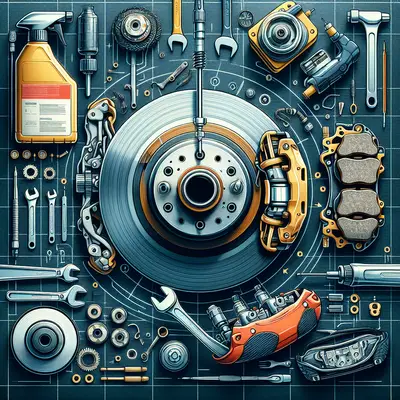
Few components reveal as much about a car’s true character as its brakes. They dictate not only how quickly you can come to a halt, but how calmly, how predictably, and how gracefully that stop unfolds. For owners who view their vehicle as more than a mere appliance, brake repair is not a crude, last-minute intervention—it is a disciplined craft. This guide is designed for drivers who want to move beyond “it stops, so it’s fine” and into a more refined, informed relationship with their braking system.
Below, you’ll find a structured, owner-friendly repair guide complemented by five exclusive insights that go beyond the usual “change your pads” advice—insights that matter deeply if you’re serious about safety, feel, and longevity.
Understanding Your Brake System as a Complete Ensemble
A modern braking system blends mechanical, hydraulic, and electronic elements into a single safety network. Before you think about repair, it helps to understand how the entire ensemble works together.
When you press the pedal, a brake booster multiplies your input, transferring force to the master cylinder. This builds hydraulic pressure in brake lines filled with fluid, which then actuates calipers (in disc brakes) or wheel cylinders (in drum brakes). Pads or shoes clamp against rotors or drums, converting motion into heat. ABS and stability-control systems monitor wheel speed and vehicle dynamics, finely modulating braking to maintain control.
Approaching repair with this holistic view changes your decisions. A soft pedal may not be “just air in the lines”; it might hint at aging rubber hoses, internal master cylinder leakage, or contaminated fluid. A juddering steering wheel under braking may not be “warped rotors” alone; improper torque of wheel nuts, corrosion between hub and rotor, or uneven pad deposits can all play a role. Thinking in systems—not just parts—sets the standard for high-level brake care.
A Disciplined Visual and Tactile Inspection Routine
Refined brake repair starts long before you pick up a wrench. A careful, methodical inspection—visual and tactile—lets you distinguish between superficial irritations and genuine safety concerns.
Begin with the wheels off and strong, even lighting. Examine pad thickness, looking for both overall wear and evenness across the pad surface. A noticeable taper or one pad worn more than its mate in the same caliper suggests sticking slide pins, a seized piston, or misaligned hardware. Inspect rotors for ridges, discoloration, and surface cracks. Light cosmetic grooves can be acceptable; deep scoring, blue heat spots, or fine radial cracks demand attention.
Run a fingertip (gently) across the rotor’s edge to gauge the lip from wear; a sharp ridge indicates substantial material loss. Look for dampness or residue around the caliper, brake lines, and master cylinder, which can signal fluid leaks. At the pedal, feel for consistency: does the initial bite feel immediate and firm, or is there a vague, spongy zone before engagement?
This inspection phase is where a discerning owner separates guesswork from evidence—and it’s the foundation of precise, targeted repair rather than broad, unnecessary replacement.
Five Exclusive Insights for Safety-First Brake Repair
1. Caliper Slide and Pad Hardware: The Hidden Architecture of Smooth Braking
For many owners, brake pads and rotors dominate attention while the hardware that guides them is overlooked. Yet caliper slide pins, abutment clips, and pad backing plates are the quiet architects of consistency.
Neglected slide pins can bind, causing one pad to do most of the work, leading to uneven wear, pull under braking, and premature rotor damage. When performing a pad and rotor service, meticulous cleaning and lubrication of slide pins with the correct high-temperature brake grease isn’t a nicety—it’s essential. Likewise, replacing worn or corroded pad hardware (spring clips, shims, abutment clips) prevents rattles, reduces noise, and ensures the pad can retract cleanly after each stop.
Owner advantage: Attending to this “supporting cast” improves pedal consistency, extends pad and rotor life, and often eliminates subtle noises that cheaper, rushed brake jobs leave behind.
2. Brake Fluid: Treating It as a Safety-Critical, Not Cosmetic, Service
Brake fluid is hygroscopic—it gradually absorbs moisture from the atmosphere. Over time, this lowers its boiling point and corrodes internal metal components. The result? Reduced performance during repeated hard stops and accelerated wear in master cylinders, calipers, and ABS modules.
Many premium owners treat fluid changes as optional. In reality, periodic brake fluid replacement (often every 2–3 years, or as specified by the manufacturer) is one of the most effective safety upgrades you can perform. A proper service includes extracting old fluid from the reservoir, flushing fresh fluid through each caliper in the correct sequence, and ensuring no air remains in the system.
Owner advantage: Fresh, clean brake fluid preserves the integrity of your entire hydraulic system, improves pedal feel consistency during spirited or emergency braking, and protects expensive components that are far more costly than a routine flush.
3. Torque and Cleanliness at the Hub: The Sophisticated Cure for “Warped” Rotors
Many drivers are told they have “warped rotors” when they feel pulsation under braking. In reality, true rotor warpage is often less common than uneven pad material transfer or rotor runout caused during installation.
Two practices distinguish an elevated repair:
- Meticulous hub preparation: Before installing a new rotor, the wheel hub should be cleaned to bare metal using a wire brush or abrasive disc, ensuring no rust or debris sits between the hub and rotor. Even a thin layer of corrosion can introduce runout and future pulsation.
- Accurate torque of wheel fasteners: Wheel nuts or bolts must be tightened using a calibrated torque wrench in a crisscross pattern, to the manufacturer’s specified torque. Over-tightening or uneven tightening can distort the rotor’s mounting and contribute to vibration complaints later.
Owner advantage: Insisting on proper hub preparation and accurate torque transforms rotor replacement from a “quick fix” into a durable solution that delivers glass-smooth stops for tens of thousands of miles.
4. Bedding-In New Pads and Rotors: Engineering the First 200 Miles
New brake components are not at their best the moment you drive away. Pads and rotors require a controlled break-in, or “bedding,” to establish a uniform transfer layer of friction material on the rotor surface.
A refined bedding procedure generally involves a series of moderate-to-firm stops from progressively higher speeds, allowing the brakes to heat up without coming to a complete stop and holding the pedal down. This prevents imprinting pad material in one spot on a hot rotor—one of the contributors to future pulsation. Each manufacturer may recommend a specific method, but the goal is consistent: to mate the pad and rotor surfaces in a way that maximizes friction stability and minimizes noise and vibration.
Owner advantage: Respecting this early “shaping” phase results in quieter, stronger, and more predictable braking over the entire life of the pads and rotors.
5. Listening to ABS and Electronic Aids as Early Warning Systems
Anti-lock braking systems (ABS), stability control, and related electronics are more than emergency aids; they can also serve as diagnostic signals. An illuminated ABS or stability-control warning light is often dismissed if the vehicle still appears to stop “normally,” but a sophisticated owner reads these warnings as signs that electronic oversight is compromised.
Wheel-speed sensors, tone rings, and ABS modules monitor dynamics continuously; faults in those components can quietly reduce the system’s ability to prevent lockup or maintain control during evasive maneuvers. A functioning base brake system is not a substitute for these electronic safeguards, especially in wet, icy, or emergency conditions.
Owner advantage: Addressing ABS and stability-control warnings promptly—rather than deferring them—ensures your braking system performs not only in routine traffic but at the precise moment you need its full capability.
A Step-by-Step Owner’s Framework for Brake Repair Decisions
When something feels “off” with your brakes, an orderly approach turns anxiety into clarity. Instead of reacting with either denial or wholesale replacement, follow a deliberate sequence:
- Document the symptom with precision.
Note when it occurs (cold, hot, only under hard braking), where you feel it (pedal, steering wheel, entire body), and what it sounds like (squeal, grind, clunk).
- Conduct a structured inspection.
Remove wheels, inspect pad thickness and evenness, rotor condition, hardware, lines and hoses, and the fluid reservoir. Check for leaks, rusted components, or damaged dust boots.
- Prioritize safety-critical faults first.
Any sign of fluid leakage, severely worn pads, or compromised hoses demands immediate repair. Cosmetic concerns—light surface rust or minor squeaks—can follow.
- Match component quality to your driving reality.
For daily commuting with occasional spirited driving, high-quality OEM or equivalent components typically offer the best balance of refinement and longevity. Track or heavy-towing use may justify more specialized materials—but every choice should be anchored in honest usage.
- Validate the repair with a controlled road test.
After any brake work, a careful test drive in a safe area—gradually increasing brake effort—confirms that the pedal, noise level, and vehicle behavior align with expectations. This is your final quality check, not an afterthought.
By using this framework, you transform brake repair from a reactive emergency chore into an informed, repeatable process—one consistent with a premium ownership standard.
Conclusion
A well-executed brake repair is more than fresh pads and shiny rotors; it is the culmination of precise inspection, respect for materials, attention to supporting hardware, and a willingness to honor the details that less discerning owners overlook. For the cultivated driver, the reward is not only shorter stopping distances, but a calming, confident, and repeatable braking experience—trip after trip, season after season.
Treat your brakes as the primary safety instrument they are, and they will return the favor with something invaluable: composure under pressure. That is the true measure of a sophisticated brake repair.
Sources
- [National Highway Traffic Safety Administration (NHTSA) – Brakes](https://www.nhtsa.gov/equipment/brakes) – Federal safety guidance and information on braking systems and recalls
- [University of Nebraska–Lincoln – “The Physics of Braking Systems” (Mechanical & Materials Engineering)](https://engineering.unl.edu/downloads/files/bartlett-vehicle-braking.pdf) – Technical overview of brake system dynamics and heat generation
- [Brembo – Brake Maintenance and Technical Insights](https://www.brembo.com/en/company/news/brake-maintenance) – Expert manufacturer perspectives on pad bedding, rotor issues, and proper installation practices
- [Continental Teves – “Brake Fluid and its Functions”](https://www.continental-automotive.com/en-gl/Passenger-Cars/Service-and-Repair/Brakes/Brake-Fluid) – Detailed explanation of brake fluid properties, aging, and replacement intervals
- [AAA – “How to Know When You Need Brake Service”](https://exchange.aaa.com/automotive/maintenance-repair/how-to-know-when-you-need-brake-service/) – Consumer-facing guidance on symptoms, inspection, and safety considerations
Key Takeaway
The most important thing to remember from this article is that this information can change how you think about Repair Guides.