For the driver who values composure over chaos, brakes are more than mechanical necessities—they are the final word in control. True confidence at the wheel is not loud or dramatic; it is the quiet assurance that, when you ask your car to stop, it will do so cleanly, predictably, and without protest. This kind of assurance is not an accident. It is the result of deliberate, refined maintenance habits that treat brake care as a core element of personal safety and driving elegance.
Below, we explore sophisticated, real‑world practices that move beyond basic pad changes, including five exclusive insights that will particularly resonate with owners who view brake safety as non‑negotiable.
Understanding Brake Health as a System, Not a Single Part
Most drivers think of “brakes” as pads and perhaps rotors. In reality, braking is a tightly integrated system that combines hydraulic pressure, heat management, and electronic controls. When one part is neglected, the entire system’s character changes—often in ways that are subtle at first and severe later.
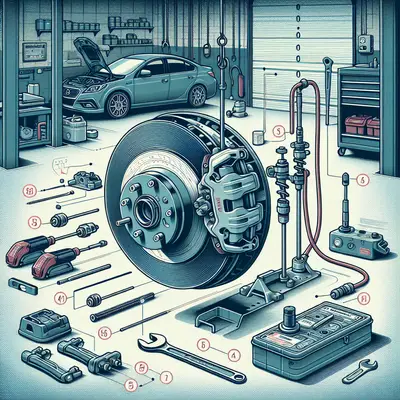
Your master cylinder, calipers, brake hoses, fluid, rotors, pads, and ABS components function as a single orchestra. A slightly sticky caliper pin, aging rubber hose, or contaminated fluid may not immediately trigger a warning light, but each gradually erodes precision. A sophisticated approach to maintenance recognizes this and treats every service as an opportunity to assess balance, not simply replace worn parts.
By shifting from a “piece-by-piece” mindset to a system mindset, you’ll make more intelligent decisions: pairing pad and rotor materials properly, insisting on fluid inspections, and evaluating hardware and lines when the wheels are off. This perspective is the foundation upon which every refined brake practice rests.
Exclusive Insight #1: Treat Brake Fluid Like a Wear Item, Not an Afterthought
Brake fluid is often invisible to owners—seated in a reservoir, seemingly unchanged for years. Yet it is one of the most critical determinants of how your brakes feel and behave under stress.
Brake fluid is hygroscopic, meaning it absorbs moisture over time. That moisture lowers the fluid’s boiling point and promotes internal corrosion of calipers, lines, and the ABS modulator. The result can be a soft, spongy pedal after repeated stops, longer stopping distances during demanding driving, and expensive internal damage that appears “suddenly” after years of neglect.
A premium approach is to:
- Check brake fluid condition annually, not just level but color and clarity.
- Adhere to the manufacturer’s interval, and for vehicles subject to heavy use (mountain driving, towing, frequent stop‑and‑go), consider more frequent flushes.
- Use the exact DOT rating specified in the owner’s manual—mixing or “upgrading” without understanding compatibility can harm seals or change ABS behavior.
This perspective reframes brake fluid from a forgotten background fluid to a central performance and safety component, managed proactively rather than reactively.
Exclusive Insight #2: Listen for the “Signature” of Your Brakes, Not Just the Squeal
Most drivers only react to loud squeals or grinding. Discerning owners pay attention to far more subtle acoustic cues and pedal sensations.
Every car has a unique brake “signature”: the way the pedal feels under light pressure, the faint sound as the pads first engage, the smoothness as the vehicle comes to a complete stop. When this signature changes—perhaps a faint rhythmic shushing at low speed, a slightly harsher bite when cold, or a momentary pedal pulse—it is often an early signal that something is shifting.
Refined attention here provides an enormous safety advantage:
- A soft click or faint clunk when first applying the brakes can hint at loose hardware or worn slides.
- A faint scrape only when turning gently can point to a backing plate or dust shield just touching the rotor.
- Very light, periodic pulsation (before it becomes obvious) can indicate early rotor thickness variation, allowing for correction before performance degrades.
Documenting these changes—mentally or in a maintenance log—equips both you and your technician to trace trends and act before minor issues become serious compromises in safety.
Exclusive Insight #3: Condition Your Driving Style to Protect Your Brakes
Refined maintenance extends beyond the workshop; it starts with how you drive. Harsh, late braking not only shortens pad and rotor life but raises operating temperatures to the point where fluid and hardware age faster than mileage alone would suggest.
A cultivated driving style protects your brakes by design:
- Anticipate traffic flow and lift off the accelerator earlier, allowing the car to decelerate before the brakes do the final work.
- Avoid “riding” the brakes on long descents; instead, downshift (in automatic or manual transmission vehicles) within safe RPM ranges to let the engine share the load.
- Leave a more generous following distance so you can brake smoothly rather than in abrupt, high‑heat bursts.
This is not simply about saving parts—it preserves the character of your braking system. Smooth, controlled inputs keep rotors flatter, pads more evenly worn, and calipers less stressed, which collectively maintain that new‑car sense of composure underfoot even as the vehicle ages.
Exclusive Insight #4: Insist on Precision in Hardware, Not Just Premium Pads
Many owners invest in high‑quality pads and rotors, then overlook the small hardware that ensures those parts function correctly. The result is a car that technically has “new brakes” but still feels imprecise or starts to squeak prematurely.
Thoughtful owners and meticulous technicians pay attention to:
- Caliper slide pins: They must be clean, correctly lubricated with high‑temperature brake grease, and free of corrosion to allow the caliper to center itself.
- Pad abutment clips and springs: These keep pads positioned correctly and reduce noise and uneven wear; reusing heavily corroded clips is a false economy.
- Pad fitment: Pads that are even slightly tight in the bracket can bind as rust builds, leading to drag, squeal, and tapered wear.
Specifying high‑quality hardware kits and asking your shop to document pad movement, slider condition, and bracket cleanliness is a quietly powerful habit. It ensures that every brake job is not merely new, but properly engineered for consistency and longevity.
Exclusive Insight #5: Elevate Inspection From “Quick Check” to Curated Evaluation
Many service visits include a “multi‑point inspection,” yet the depth of these can vary dramatically. For a brake‑conscious driver, a truly useful brake inspection is structured and specific.
A curated brake evaluation should, at minimum, include:
- Measured rotor thickness and comparison to the manufacturer’s minimum specification, not just a glance for “grooves.”
- Measured pad thickness recorded by axle, with trend notes if the car is a repeat visitor.
- Observations on wear patterns (inner vs. outer pad wear, leading vs. trailing edges) that can expose caliper or guide pin issues.
- A look at hoses and hard lines for swelling, cracking, or corrosion, especially in regions that use road salt.
Ask your technician for these readings and keep them in your own log. Over time, you’ll see how quickly your car consumes pads and rotors, how balanced wear is front to rear, and whether any sudden deviations occur. This upgraded visibility allows you to plan maintenance before it is urgent—and to notice anomalies that could indicate emerging safety concerns.
The Quiet Luxury of Confident Stopping
The most refined driving experiences are not defined by horsepower figures or screen sizes, but by the way a car responds to your most important request: stop, now, and do it without drama. That composure is crafted inch by inch—through attentive listening, disciplined driving, thoughtful hardware choices, and a willingness to treat brake fluid, pads, rotors, and lines as a unified safety system.
By adopting these elevated habits and embracing the five exclusive insights above, you transform brake maintenance from an occasional repair into an ongoing expression of care—for your car, your passengers, and everyone sharing the road. The reward is subtle but unmistakable: a brake pedal that feels unwaveringly trustworthy, no matter the speed, conditions, or distance ahead.
Sources
- National Highway Traffic Safety Administration (NHTSA) – Brake Safety - Federal guidance on brake safety, components, and performance expectations
- U.S. Department of Transportation – Brake Fluid and Maintenance Basics (FMVSS 116) - Official federal standard governing motor vehicle brake fluids and their performance requirements
- Car Care Council – Brake System Overview - Consumer-focused explanation of brake components, service intervals, and maintenance priorities
- AAA – Recognizing the Warning Signs of Brake Problems - Practical guidance on symptoms of brake issues and when to seek service
- MIT School of Engineering – How Brakes Work (Ask an Engineer) - Technical, accessible explanation of braking physics and system operation
Key Takeaway
The most important thing to remember from this article is that this information can change how you think about Maintenance.