Brake maintenance, at its best, is not an emergency reaction—it is an ongoing discipline. For the driver who values composure, control, and quiet confidence, the brake system becomes more than a collection of parts; it is the car’s most important instrument of restraint. When cared for with intention, brakes don’t simply stop the vehicle—they preserve your margin of safety, protect your investment, and elevate every mile into something calmer and more deliberate.
Below are five exclusive, often-overlooked insights that speak to drivers who expect more than “good enough” from their braking system.
1. Treat Your Brake Pedal as a Precision Instrument
Most drivers only truly “listen” to their brakes when a warning light appears or a harsh squeal demands attention. The meticulous driver, however, treats the brake pedal as a finely tuned gauge of system health.
Notice how the pedal feels first thing in the morning versus after a long drive. A pedal that slowly sinks at a stoplight can hint at internal leaks or failing master cylinder seals. A high, overly firm pedal may indicate swollen flexible brake hoses or a restriction within the system. Subtle new vibrations under your foot—especially under moderate braking—often point to rotor thickness variation or uneven pad deposits long before you feel shaking in the steering wheel.
By paying attention to pedal feel the way an audiophile listens for distortion in a favorite recording, you gain an early-warning advantage. Issues that others discover only when they become urgent, you will catch at the stage where they are safer, more elegant, and usually less expensive to remedy.
2. Elevate Your Brake Fluid Standards Beyond the Bare Minimum
Brake fluid is frequently treated as an afterthought, topped off when low and forgotten otherwise. In reality, it is the lifeblood of your brake system—and one of the most underestimated safety variables.
Because most brake fluids are hygroscopic, they gradually absorb moisture from the air. Over time, this loses you boiling point, meaning in demanding conditions—long downhill descents, spirited driving, towing, or hot climates—your fluid can vaporize, creating compressible pockets of gas. The result is classic brake fade: a long, soft pedal and declining stopping performance at precisely the wrong moment.
A premium maintenance philosophy includes:
- Regular fluid testing, not just visual checks. Professional shops can measure moisture content or boiling point directly.
- Scheduled fluid replacement, often every 2–3 years or as recommended by the manufacturer, even if the level remains acceptable.
- Using fluid that meets or exceeds OEM specifications, instead of simply matching the cheapest compatible type on the shelf.
This is one of the most refined, invisible upgrades you can make: your brake fluid will never “show off” visually, but it profoundly shapes how predictably and consistently your brakes respond under pressure.
3. Respect Heat Management as the Silent Guardian of Brake Life
Most conversations about brakes focus only on friction—pads gripping rotors or shoes pressing drums. The discerning driver pays equal attention to heat. Excess heat is what warps rotors, accelerates pad wear, and causes fluid to boil.
Your daily habits can either nurture or punish your brakes:
- Smooth, anticipatory braking keeps temperatures lower and more consistent than sudden, repeated hard stops.
- Downshifting on long descents (where appropriate for your vehicle and conditions) can share braking duty with the engine, instead of relying solely on friction brakes.
- Avoiding unnecessary left-foot braking in automatic cars prevents lightly “riding” the brakes—an almost imperceptible drag that keeps components hotter than necessary.
In severe service—mountain driving, city congestion with frequent stops, or towing—premium rotors with better cooling vanes and higher-temperature-rated pads make a tangible difference. You are not just buying “performance”; you are buying temperature control, which in turn buys you predictability and longevity.
Understanding your brakes as heat managers, not only as stoppers, is a subtle but powerful shift in perspective that separates the merely careful driver from the truly meticulous one.
4. Demand Precision in Hardware, Not Just in the Obvious Components
When people think of a brake job, they picture pads and rotors. The refined approach looks deeper: shims, slides, hardware, and even how components are torqued all influence the quality of your stops.
Thoughtful brake maintenance includes:
- Impeccably clean and lubricated caliper slide pins, using high-temperature, brake-specific grease. Sticky pins cause uneven pad wear, pulling, and inconsistent braking.
- New hardware kits (clips, abutment plates, anti-rattle components) when pads are replaced, rather than reusing tired originals. This supports even pad movement, reduces noise, and helps prevent binding.
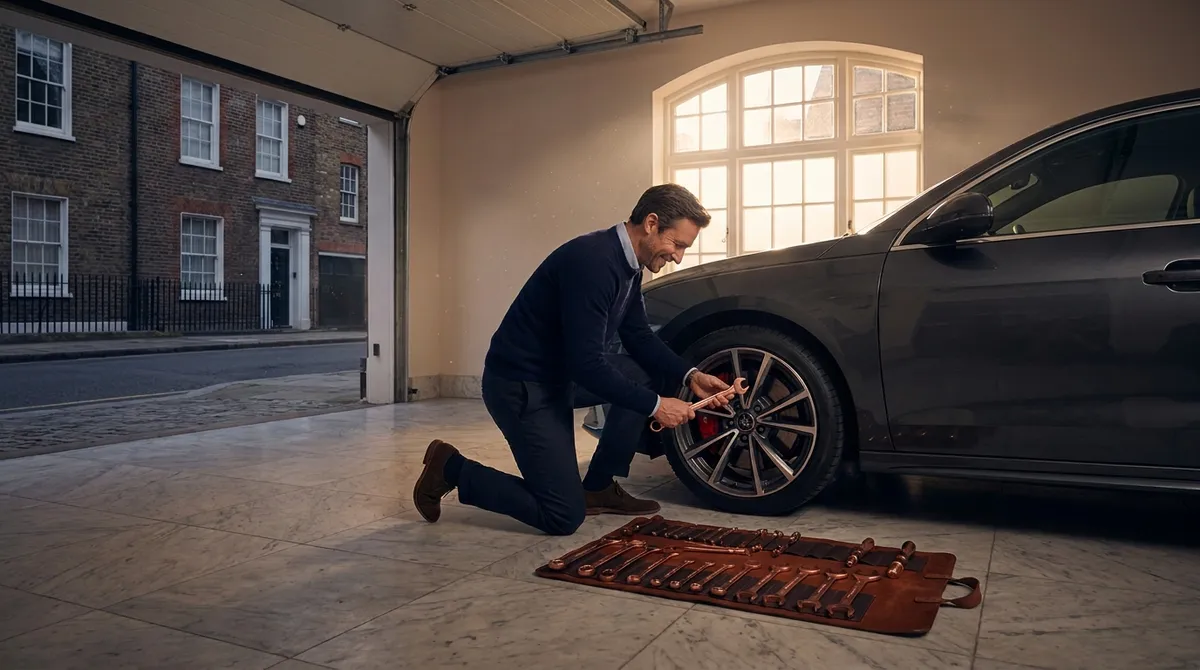
- Proper torque on all fasteners and wheel nuts, using a torque wrench instead of an impact gun alone. Over-torqued or unevenly torqued wheel nuts can contribute to rotor distortion and brake pulsation over time.
- Attention to hub cleanliness before rotor installation. A thin layer of rust or debris where rotor meets hub can mimic warped rotors and cause vibration, even if the rotor itself is flawless.
These details rarely appear on an itemized invoice in bold lettering. Yet they are precisely where refined brake work distinguishes itself from hurried, commodity-level service. The result is not only better stops—but quieter, smoother, and more consistent ones over the life of the components.
5. Curate a Personal Brake Maintenance Timeline, Not Just a Generic One
Owners’ manuals and service stickers provide broad intervals meant to apply to many drivers. The thoughtful approach goes further, tailoring brake care to how and where you actually drive.
A curated maintenance plan takes into account:
- Driving environment: Urban stop-and-go, mountain roads, coastal humidity, desert heat—each stresses brakes differently.
- Vehicle role: Commuter car, weekend grand tourer, family hauler, or towing workhorse each deserves a different level of vigilance.
- Driving style: Assertive acceleration and late braking generate far more wear and heat than measured, anticipatory driving.
- Storage conditions: A car parked outside in damp climates may show more corrosion on rotors, lines, and hardware than a garaged vehicle.
From this, you can create a personalized rhythm: perhaps visual pad inspections at every tire rotation, annual in-depth brake evaluations, fluid testing every oil change, and fluid replacement at a conservative interval instead of waiting for a problem. Keep a concise log of brake work and observations—pedal feel changes, noise on cold mornings, or longer stopping distances with heavy loads.
Over time, your car stops being a mystery; it becomes a familiar instrument whose nuances you understand. When something changes, you notice, and you act before it becomes a crisis. That is the essence of premium brake maintenance: not extravagance, but clarity, foresight, and control.
Conclusion
For the discerning driver, brake maintenance is not a reluctant obligation—it is an expression of standards. By paying attention to pedal feel, elevating your expectations for brake fluid, respecting heat, insisting on precision hardware detail, and crafting a personal maintenance timeline, you create an environment where “surprise” is largely engineered out of your braking experience.
The payoff is not just shorter stopping distances on a spec sheet. It is the quiet authority of knowing that when you ask your vehicle to stop—on a wet night, on a steep hill, with your family on board—it will respond with the same calm, confident composure you brought to its care.
Sources
- National Highway Traffic Safety Administration (NHTSA) – Brake Safety Information - Federal guidance on brake system safety, component function, and maintenance considerations
- U.S. Department of Transportation – Brake Fluid and Hydraulic Systems Overview - General transportation safety resources, including technical discussions related to vehicle systems and performance
- AAA – How to Know When You Need New Brakes - Practical consumer-focused insights on brake wear, symptoms, and inspection habits
- Bridgestone Tire – Understanding Brake Fade - Clear explanation of heat-related brake fade, causes, and driving conditions that increase risk
- Pennsylvania Department of Transportation – Vehicle Equipment and Inspection Regulations (Brakes) - Official inspection standards that illustrate regulatory expectations for brake components and performance
Key Takeaway
The most important thing to remember from this article is that this information can change how you think about Maintenance.