Even in a world of turbocharged engines and luminous dashboards, true driving confidence is decided in the last few feet before a complete stop. A refined driver understands that brakes are not merely mechanical components; they are the final expression of control, foresight, and care. When your brake system is curated with the same discernment you bring to every other aspect of ownership, every stop feels deliberate rather than desperate.
This article explores five exclusive, often-overlooked insights that elevate brake safety from a basic obligation to a quietly reassuring standard. Each perspective is designed for the driver who values composure, predictability, and the subtle satisfaction of a vehicle that always feels ready to respond.
Understanding Brake “Character,” Not Just Brake Performance
Most discussions reduce brakes to “good” or “bad.” In practice, every well-maintained brake system has a distinct character—how the pedal feels underfoot, how the vehicle settles under deceleration, and how predictably it responds in less-than-ideal conditions.
A sophisticated owner pays attention to the progression of pedal travel, the way braking force builds, and how the car behaves when transitioning from gentle slowing to a firm, emergency stop. A pedal that feels spongy, inconsistent, or requires noticeably more travel than usual is a quiet signal that the system’s internal balance is changing, even if stopping distances still seem acceptable.
Think of it as developing a palate for your own car: you learn what “normal” feels like when pads are fresh, fluid is new, and hardware is in harmony. Once that baseline is firmly in mind, any drift from it—however subtle—becomes an early warning, allowing you to address issues well before they become obvious or hazardous. This refined awareness is the difference between merely “having brakes” and truly understanding them.
Exclusive Insight #1:
Treat pedal feel and vehicle behavior under braking as a personal benchmark. When you notice a deviation—softer pedal, harsher bite, or a new vibration—consider it data, not a nuisance. Documenting these changes (even briefly in a note on your phone) helps you and your technician track trends over time instead of reacting only when something feels dramatically wrong.
The Hidden Role of Brake Fluid: Time, Heat, and Humidity
Brake pads and rotors get the visual attention, yet the real authority in a modern hydraulic system often lies in the condition of the brake fluid. Over time, fluid absorbs moisture from the atmosphere—even in well-sealed systems—lowering its boiling point and increasing the risk of vapor bubbles under extreme braking.
For daily driving, this degradation is deceptively quiet. There’s no warning light for “slightly compromised brake fluid,” but under heavy braking (descending a long hill, abrupt stops in hot weather, or repeated high-speed braking), old fluid can translate into a soft or sinking pedal. This is not a theoretical concern; it’s a real-world scenario that many drivers attribute to “just getting hot brakes,” when the core issue is a fluid that has aged out of peak performance.
Premium ownership means treating brake fluid not as an afterthought, but as a scheduled, non-negotiable service. Many manufacturers suggest replacement around every 2–3 years, but the real refinement is in matching the interval to your driving: frequent mountain driving, towing, or spirited use justifies a more assertive schedule.
Exclusive Insight #2:
Ask your service provider for the actual brake fluid test results—such as moisture content or boiling point—rather than accepting a vague “it looks fine.” This turns fluid service into a measurable, data-driven decision and aligns brake maintenance with the disciplined logic typically reserved for engines and transmissions.
Precision in Contact: Pads, Rotors, and the Geometry of a Smooth Stop
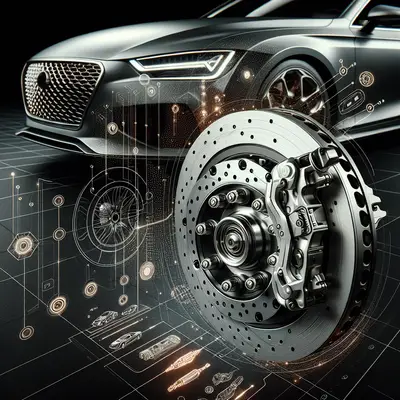
Premium stopping isn’t just about having “good pads” or “new rotors.” It’s about how precisely those components meet, bed in, and age together. Modern pads are engineered for specific friction ranges, heat characteristics, and noise control. Rotors, too, carry their own material properties and thermal profiles.
The interplay between them determines how your car decelerates under a feather-light touch versus a firm, confident stop. Poorly matched or improperly bedded pads can create uneven deposits on the rotor surface, leading to that familiar steering wheel vibration under braking. This is often mislabeled as “warped rotors,” when in reality, it’s uneven friction material on an otherwise structurally sound disc.
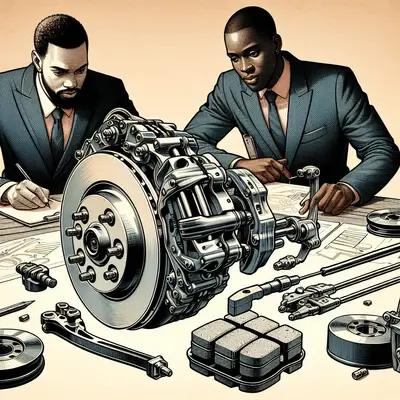
A discerning driver approaches pad and rotor replacement as a coordinated pairing, not a piecemeal swap. Choosing components that complement each other—and ensuring a proper break-in process—preserves a calm, linear braking response for the long term. It also reduces the risk of noise, pulsing, and premature wear that can undermine confidence.
Exclusive Insight #3:
After brake service, commit to a deliberate bedding-in process: a series of progressive stops from moderate speeds (as recommended by the pad manufacturer). This small, intentional ritual helps create an even transfer layer on the rotors, resulting in quieter, smoother braking that retains its refinement far longer.
The Silent Contributors: Calipers, Hardware, and Cleanliness
Brake calipers and their associated hardware—slide pins, shims, clips, and boots—rarely receive the spotlight, yet they are the reason your braking feels even from side to side. When calipers don’t move freely, one side of the vehicle may do more work than the other, leading to uneven pad wear, steering pull under braking, or subtle changes in pedal feedback.
Over time, road grime, corrosion, and dried grease can interfere with this movement. This doesn’t happen dramatically overnight; it develops in the background. In climates with road salt or coastal humidity, the effect is multiplied. A truly thorough brake service is as much about cleaning and lubricating hardware as it is about installing new parts.
Attention to hardware is not cosmetic—it is a central component of consistent, predictable brake behavior. Drivers concerned with safety and refinement don’t settle for “pads and rotors only”; they ensure that the “invisible” elements receive professional attention.
Exclusive Insight #4:
When scheduling brake work, ask specifically if the service includes cleaning and lubricating caliper slide pins, inspecting or replacing hardware, and checking dust boots. This one question sends a clear signal that you prioritize complete, system-level integrity over quick, surface-level repairs.
Driving Technique as a Quiet Form of Brake Insurance
Even the most meticulously maintained brake system will perform only as well as the driver’s inputs allow. Elegant braking technique does more than convey poise; it materially extends the life and reliability of the system.
Smooth, progressive pressure on the pedal gives the vehicle time to settle, distributes weight more predictably to the front axle, and prevents abrupt heat spikes in the pads and rotors. Anticipating traffic flow, reading brake lights several cars ahead, and using engine braking where appropriate all reduce unnecessary heat cycles that shorten component life.
This isn’t about driving slowly; it’s about driving with forethought. The difference between late, hard braking and earlier, measured deceleration is not just comfort—it is thermal management. For a serious driver, every composed stop is an investment in both safety and longevity.
Exclusive Insight #5:
Treat heavy, abrupt braking as a diagnostic event. If you’ve just made several hard stops—descending a grade, in aggressive city traffic, or during an emergency—pay attention to pedal feel, smell (burning odor), and any change in behavior afterward. If the pedal feels softer or the brakes smell scorched, allow them to cool and consider a professional inspection, especially if this becomes a pattern rather than an isolated incident.
Conclusion
A truly confident stop is not an accident; it is the result of informed choices, attentive observation, and quiet discipline. By learning your brake system’s natural character, respecting the importance of fluid, pairing pads and rotors thoughtfully, insisting on proper hardware care, and refining your own driving technique, you elevate braking from a simple function to a curated experience.
For the driver who values composed control, your brake system becomes more than a collection of parts. It becomes a carefully tuned safety instrument—one that answers decisively every time you ask it for assurance, from the gentle glide to a stop sign to the urgent, unplanned emergency stop you hope never comes.
Sources
- [National Highway Traffic Safety Administration (NHTSA) – Brakes](https://www.nhtsa.gov/equipment/brakes) – Federal safety information and guidance related to braking systems and performance
- [U.S. Department of Transportation – Brake System Safety](https://www.transportation.gov/mission/safety) – Broader safety context and federal initiatives related to vehicle safety, including braking
- [University of Nebraska–Lincoln – Fundamentals of Vehicle Braking](https://digitalcommons.unl.edu/mechengfacpub/121/) – Technical discussion of braking dynamics and friction behavior
- [Brembo – Brake System Technical Insights](https://www.brembo.com/en/company/news/brake-systems) – Manufacturer-level explanations of pads, rotors, and system design considerations
- [AAA – Car Brake System Basics and Maintenance](https://exchange.aaa.com/automotive/automotive-trends/car-brake-system-basics/) – Consumer-oriented overview of brake system components and maintenance best practices
Key Takeaway
The most important thing to remember from this article is that this information can change how you think about Brake Systems.