Modern braking systems reward the driver who appreciates precision. Beyond the obvious squeaks and dashboard lights lies an intricate network of components that determine how confidently your vehicle can arrest its momentum. This guide is designed for drivers who regard braking not as an afterthought, but as a central expression of safety, control, and mechanical refinement.
In the following sections, we move past surface-level advice and into the subtleties that separate basic upkeep from truly elevated brake care. We’ll explore how observant owners can anticipate issues earlier, communicate with technicians more effectively, and ultimately preserve the poised, predictable stopping performance that sophisticated driving demands.
Reading the Brake Pedal Like an Instrument
Your brake pedal is more than a switch; it is an instrument that broadcasts the health of your hydraulic system and friction components.
A precise, consistent pedal feel indicates the braking system is working in concert—pads, rotors, calipers, and fluid all contributing to a uniform response. A pedal that feels spongy, overly firm, or inconsistent from one stop to the next suggests an imbalance. Sponginess often points to air in the brake lines or degraded fluid, while a rock-hard pedal that still struggles to stop the vehicle may hint at a failing booster or restricted lines.
Pay attention to micro-changes: a slightly longer pedal travel over several weeks, a subtle delay before the brakes “bite,” or a faint pulsing under light braking. These are early-stage symptoms, not nuisances to be ignored. Making a brief note—date, conditions, and what you felt—provides a valuable record to share with your repair professional. The most discerning drivers treat pedal feel as a diagnostic language, not just a convenience.
Beyond Pad Wear: The Elegance of Rotor Condition
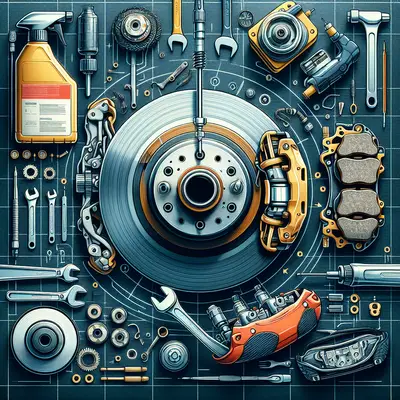
Braided through every confident stop is the relationship between your brake pads and rotors. Many owners focus only on pad thickness, but rotors are equally critical to consistent, elegant braking.
A rotor can have adequate thickness and still deliver poor performance if it is unevenly worn, glazed, or suffering from heat spots. Fine radial scoring, slight discoloration, or a barely noticeable lip at the outer edge can be tolerated, but more pronounced ridges or heavy blueing signal that the rotor’s surface is no longer optimally matched to the pad. This can lead to harshness, vibration, and extended stopping distances.
Disc thickness variation (DTV)—even fractions of a millimeter—can cause that familiar steering wheel shake under braking, often misinterpreted as “warped rotors.” What you are actually feeling is uneven friction. A refined repair approach includes measuring rotor thickness at multiple points, checking runout, and deciding whether resurfacing is appropriate or if replacement is the safer, more stable choice. Treat rotors as precision components, not consumables to be ignored until they scream for attention.
Brake Fluid as a Quiet Guardian
Among all brake components, fluid is the least visible yet most crucial defender of braking performance. Over time, brake fluid absorbs moisture from the environment, lowering its boiling point and increasing the risk of vapor bubbles under sustained or emergency braking.
For the typical driver, this may manifest as a pedal that feels fine at first but becomes softer after repeated stops on a descent or during heavy traffic. For the attentive owner, the solution is proactive fluid management. Check your owner’s manual for the manufacturer’s interval, but be aware that climate, driving style, and age of the vehicle can justify a more conservative schedule.
Consider having the brake fluid tested or replaced before long trips, especially if you frequently drive in mountainous areas or carry heavy loads. A complete fluid exchange—not just a simple top-off—ensures that old, moisture-laden fluid is fully removed. The result is a firmer, more trustworthy pedal and reduced internal corrosion within calipers, ABS modules, and lines. In refined brake maintenance, fresh fluid is not an indulgence; it is a baseline.
Five Exclusive Insights for the Safety-Conscious Driver
Discerning owners often ask what they can do beyond the basics to maintain exemplary braking performance. These five nuanced practices are where ordinary care ends and elevated brake stewardship begins:
Match Brake Components to Driving Character, Not Just Cost
Rather than defaulting to generic pads and rotors, select components that align with your actual usage. Commuter-focused, low-dust pads differ markedly from performance-oriented compounds designed for repeated hard stops. An informed choice, guided by your driving style and vehicle weight, yields quieter operation, more predictable feel, and reduced fade—particularly important for heavier SUVs and performance sedans.
Treat the First 200–300 Miles After Brake Work as a “Seasoning” Phase
New pads and rotors require a subtle break-in process, often called bedding. This involves a series of moderate stops from various speeds to gradually transfer a uniform film of pad material onto the rotor’s face. Rushing this with aggressive braking or heavy loads can create uneven deposits, leading to noise, vibration, or diminished bite. Ask your technician for their recommended bedding procedure and follow it conscientiously.
Use Wheel and Tire Care to Protect Brake Performance
Excessive wheel weight from heavy aftermarket rims, or misaligned tires that cause pulling or vibration, can compromise the feel and effectiveness of your brakes. Additionally, certain harsh wheel cleaners can attack caliper coatings, rubber components, or even brake lines over time. Choose balanced, appropriately sized wheels and a pH-balanced cleaner, and rinse thoroughly. The result is a cleaner, better-protected braking environment.
Listen for Changes in ABS and Stability System Behavior
Subtle ABS pulsations or an unusually early ABS engagement on dry pavement may hint at more than a slippery surface. Dirty wheel speed sensors, damaged tone rings, or mismatched tire sizes can confuse the system. You might not see a warning light immediately, but a refined driver notes any new or unusual ABS behavior and has it inspected before it escalates into a stability or stopping-distance issue.
Request a Brake Inspection With Every Tire Rotation—Not Just on Demand
Tires and brakes share the same stage: your wheels. When tires are rotated or replaced, the wheels are already off—an ideal moment for a closer look at pads, rotors, hoses, calipers, and hardware. Proactive owners ask for measurements (in millimeters) and visual assessments at each rotation. By comparing these numbers over time, you can estimate when replacement will be needed and schedule service before performance drops or noises appear.
Collaborating Intelligently With Your Brake Technician
The most successful brake repairs are the result of partnership, not passive transactions. Arriving at the shop with clear observations—when the symptoms occur, what you feel in the pedal or steering wheel, any smells or sounds, and how recently the brakes were serviced—transforms your visit into a more focused diagnostic exercise.
Ask to see worn components whenever possible. Viewing a heat-checked rotor, a tapered pad, or a seized slide pin is an education in itself. This visual context not only builds trust but also empowers you to understand why certain repairs or component upgrades are recommended. When estimates are presented, inquire about the quality tier of the parts, their warranties, and how they compare to original equipment.
A refined approach also includes verifying that related systems are considered: brake hoses, hardware kits, slide pins, and caliper condition. Neglecting inexpensive hardware while installing premium pads and rotors is akin to fitting art into a warped frame. The whole system must be treated as an integrated safety mechanism, not a collection of isolated parts.
Conclusion
Brake repair, at its most elevated, is not simply about stopping—it is about preserving the composure, predictability, and assurance that define a well-kept vehicle. By tuning in to pedal feel, respecting rotor integrity, prioritizing fluid health, and adopting the exclusive practices outlined above, you cultivate a level of safety and refinement that casual maintenance cannot match.
A composed driver understands that confidence at speed is only as meaningful as control under braking. With thoughtful attention and informed collaboration with skilled professionals, your braking system can remain as poised and precise as the rest of your driving experience.
Sources
- National Highway Traffic Safety Administration (NHTSA) – Brakes and Safety Systems - Federal guidance on brake safety, component function, and system performance
- U.S. Department of Transportation – Brake System Inspection Guidance (FMCSA) - Technical information on brake inspections and safety considerations, applicable principles for all vehicles
- AAA – How to Know When You Need New Brakes - Practical overview of brake wear symptoms and service timing for motorists
- Car and Driver – Brake Fade, Fluid, and Performance Explained - Detailed discussion of brake fluid, heat, and real-world braking behavior
- University of Texas at Austin – Automotive Brakes Educational Module - Engineering-focused explanation of brake system components and principles
Key Takeaway
The most important thing to remember from this article is that this information can change how you think about Repair Guides.