Even the most accomplished drivers sometimes treat brake repair as a vague art—something to be surrendered entirely to a shop, hoped for, and rarely verified. Yet your brake system is the one component that must work flawlessly every single time. A refined approach to brake care is not about obsession; it is about precision, intention, and the quiet confidence that comes from knowing how things should be done, and how to recognize when they are not.
This guide is crafted for drivers who demand more than “it seems fine.” It offers a clear framework for approaching brake repairs with composure and discernment, plus five exclusive insights that elevate your expectations of any brake service—whether performed in your own garage or entrusted to a professional.
Understanding the System: Seeing Your Brakes as a Cohesive Safety Network
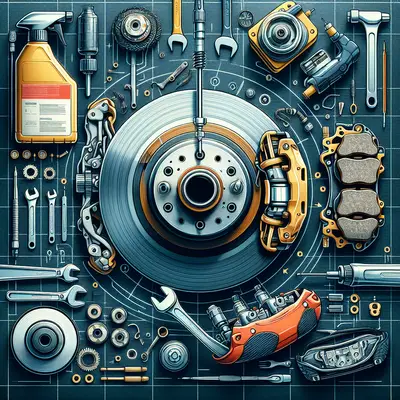
Brakes are often reduced to a simplistic equation of “pads and rotors,” but a premium approach recognizes the system as a coordinated safety network. Your brake pedal, lines, calipers, pads, rotors (or drums and shoes), brake fluid, master cylinder, and even the ABS module collaborate to translate a light pedal press into a composed, decisive stop.
This interconnectedness is why a proper repair guide never isolates one component from the others. For example, replacing pads without evaluating rotor thickness, runout, or glazing is an incomplete service; likewise, installing new front rotors without verifying rear balance can subtly degrade stability during emergency stops. The refined standard is to think in systems, not in parts. Every repair decision should be made with the entire brake ecosystem in mind—how new components will bed in, how they will affect pedal feel, and how they will behave under repeated heat cycles. When you view your brakes this way, “quick fixes” become visibly unacceptable.
Mapping a Repair Strategy Instead of Chasing Symptoms
Many brake issues present as vague sensations: a pulse in the pedal, a faint squeal, a soft travel before engagement. The unstructured approach is to react symptom-by-symptom—replace one part, wait, then chase the next effect. The composed approach is to build a repair map before the first bolt is loosened.
Begin with a deliberate pre-repair inspection: visual confirmation of pad thickness at all four corners, rotor surfaces inside and out, caliper operation, flexible hose condition, fluid level and clarity, and any evidence of leaks near the master cylinder or wheels. Note how the pedal feels engine-off versus engine-on, and how the vehicle behaves under light and firm stops. From there, define a hierarchy: safety-critical failures first (e.g., leaks, severe rotor damage), wear items next (pads, moderately worn rotors), and preventative measures last (fluid service, hardware refresh).
A mapped strategy transforms repair from guesswork into orchestration. It also allows you to speak clearly with any technician: instead of saying “the brakes feel weird,” you can say, “The pedal is soft only with the engine running, there’s no visible fluid loss, and the pads are at 40%—I’d like the master cylinder and ABS circuits assessed, not just the pads replaced.” That kind of clarity dramatically improves the quality of work you receive.
Five Exclusive Insights for the Safety‑Focused Brake Owner
These five insights are rarely highlighted in generic manuals, yet they carry outsized impact for drivers who care about consistent, confidence‑inspiring braking.
1. Pedal Feel Is a Diagnostic Instrument, Not Just a Comfort Preference
Many owners describe pedal feel in casual terms—“a bit spongy,” “kinda firm”—then move on. But to the careful driver, the pedal is a live, daily diagnostic tool.
- A gradually softening pedal over weeks often signals moisture‑laden brake fluid or slow internal seal wear, not just “old pads.”
- A pedal that sinks slowly at a stoplight with steady pressure can indicate internal bypass in the master cylinder, a serious fault often missed during hurried checks.
- A high, very firm pedal with diminished stopping power after repeated hard braking may point to pad fade or inappropriate pad compound for your driving, not simply “overheating brakes.”
Train yourself to notice consistency: where the pedal begins to engage, how far it travels under normal stops, and whether this changes after a long downhill or extended city driving. Keep a simple note in your phone when you notice a persistent change. Over time, you’ll recognize patterns long before they become emergencies.
2. Hardware and Lubrication Are the Hidden Guardians of Premium Braking
Many budget brake jobs reuse old hardware—shims, clips, slides—or neglect high‑temperature lubrication entirely. To the untrained eye, the result may look acceptable; to the refined driver, this is an obvious compromise.
Fresh, properly fitted hardware and the correct high‑temp synthetic brake lubricant ensure that pads retract smoothly, calipers move freely, and braking remains even side‑to‑side. Neglect in this area can create:
- Uneven pad wear, where one inner pad wears far faster than the others
- Persistent minor drag that warms one wheel more than the rest and affects fuel economy
- Subtle pulling during braking, especially evident in wet conditions
Insist on hardware kits as part of any pad and rotor service, and confirm that caliper slide pins are cleaned and lubricated with the correct product—not generic grease. It’s a relatively small detail that has an outsized effect on elegance and consistency in braking.
3. Brake Fluid Age Is as Important as Brake Pad Thickness
Pad inspections are common; fluid age and quality checks are often an afterthought. Yet brake fluid is hygroscopic—it absorbs moisture over time—which lowers its boiling point and accelerates internal corrosion in lines, calipers, and ABS components.
For the safety‑attentive owner, the standard is time‑based, not symptom‑based. Most manufacturers recommend a brake fluid flush every two to three years, regardless of mileage. Even if the fluid “looks okay,” dissolved moisture and microscopic contamination can quietly undermine performance in high‑heat situations, such as descending a long grade with passengers and luggage.
Ask for the brake fluid’s service interval in your owner’s manual, and treat that schedule as non‑negotiable. If you are having a major brake repair performed, that is an ideal moment to refresh the fluid; the system is already open, and the incremental cost is modest relative to the protection and confidence it provides.
4. Rotor Quality and Finish Directly Shape Stopping Refinement
Rotors are often treated as interchangeable discs, with price as the primary differentiator. A more exacting view recognizes that rotor metallurgy, thickness consistency, and surface finish all influence pedal feedback, quietness, and durability.
Low‑quality rotors may be more prone to:
- Developing thickness variation (often perceived as “warped rotors”)
- Uneven pad transfer, leading to pulsation or vibration under moderate braking
- Excess noise or squeal, even with quality pads
A refined repair guide encourages you to select rotors from reputable manufacturers, ideally those supplying OEM or OEM‑equivalent parts, and to ensure they are installed cleanly—no rust scale trapped between the hub and rotor, correct torque on the lug nuts in a star pattern, and proper bedding‑in of pads to establish an even transfer layer. These details are what separate “they work” from “they feel superb and stay that way.”
5. Brake Balance Front‑to‑Rear Is the Quiet Secret Behind Composed Stops
Most conversations about brakes focus on the front axle, since it handles a significant share of braking force. However, sophisticated stopping behavior relies on carefully managed front‑to‑rear balance, especially in vehicles with performance or heavy‑duty capabilities.
Under‑performing rear brakes—due to worn pads, stuck sliders, failing parking brake mechanisms, or neglected drum components—may not announce themselves with obvious symptoms. Yet they shift excessive workload to the front, causing:
- Nose‑heavy braking, with pronounced dive and less composed weight transfer
- Faster front pad and rotor wear than expected
- Longer stopping distances in real‑world emergency situations
A comprehensive brake repair guide always includes a proper inspection of the rear system, even when the driver’s complaint seems isolated to the front. For the discerning owner, the expectation is simple: any meaningful brake service must confirm that all four corners are contributing appropriately to the vehicle’s stopping performance.
Setting a Higher Standard for Professional and DIY Brake Repairs
Whether you perform your own work or entrust it to a specialist, your standard should be the same: brake repairs must be verifiable, not just reassuring. This begins with clarity of scope: what precisely is being replaced, what is being measured, and what is being inspected but left in service.
If you are visiting a shop, request specifics in advance:
- Which brand and grade of pads and rotors will be used?
- Is hardware included? Are caliper pins cleaned and lubricated?
- Will rotor thickness and runout be measured, not just eyeballed?
- Is a brake fluid flush recommended based on age, not merely appearance?
- Will you receive measurements (pad thickness, rotor thickness) on the final invoice?
For the DIY‑inclined owner, a disciplined checklist is your ally. Document before‑and‑after pad thickness, rotor condition, torque values for caliper bolts and wheel lugs, and any anomalies noted during disassembly—such as uneven pad wear or stiff slides. This written record transforms your repair from a one‑time task into a traceable maintenance history you can reference years later or share with a future buyer.
Ultimately, a superior brake repair is quiet, precise, and predictable. The real mark of quality is not that you notice the brakes—it is that you don’t have to wonder about them at all.
Conclusion
Brake repairs need not be mysterious, rushed, or reduced to the cheapest line item on a service quote. When you approach your brake system as a carefully tuned safety network, small decisions—fluid intervals, hardware replacement, rotor selection, and attention to balance—take on their proper importance.
By treating pedal feel as a diagnostic tool, insisting on complete hardware and lubrication, respecting fluid age, choosing rotors with discernment, and guarding front‑to‑rear balance, you create a personal brake standard that quietly outperforms “good enough.” The reward is not just shorter stopping distances; it is the composed assurance that every press of the pedal reflects deliberate choices, not blind trust.
Sources
- [National Highway Traffic Safety Administration (NHTSA) – Brake Safety Resources](https://www.nhtsa.gov/equipment/brakes) - Federal guidance and consumer information on brake safety, recalls, and best practices
- [U.S. Department of Transportation – Brake System Technology Overview](https://www.transportation.gov/testimony/brake-systems) - High‑level insights into brake system design, performance, and regulatory considerations
- [AAA – What You Should Know About Your Car’s Braking System](https://exchange.aaa.com/automotive/maintenance-repair/what-you-should-know-about-your-cars-braking-system/) - Consumer‑focused explanations of brake components, maintenance intervals, and warning signs
- [Bendix Brakes – Technical Brake Guides](https://www.bendix.com.au/technical-bulletins) - Detailed technical bulletins on brake noise, rotor condition, hardware, and fluid considerations from a major brake manufacturer
- [Penn State University – Brake Fluid and Hydraulic Systems (ME Course Materials)](https://www.me.psu.edu/courses/me462/Fluid_Fundamentals.pdf) - Educational resource explaining hydraulic fundamentals relevant to brake fluid behavior and system performance
Key Takeaway
The most important thing to remember from this article is that this information can change how you think about Repair Guides.