For the driver who expects more than “good enough,” the braking system is not a background accessory—it is the primary instrument of control. Beneath every effortless stop lies a carefully orchestrated interaction of hydraulics, friction, heat, and electronics. Understanding this interplay transforms brake care from a reactive chore into a deliberate, safety‑driven discipline.
This article offers a refined tour of modern brake systems and highlights five exclusive insights that discerning owners use to stay comfortably ahead of risk, rather than merely responding to it.
The Foundation: How Modern Brake Systems Quietly Do the Heavy Lifting
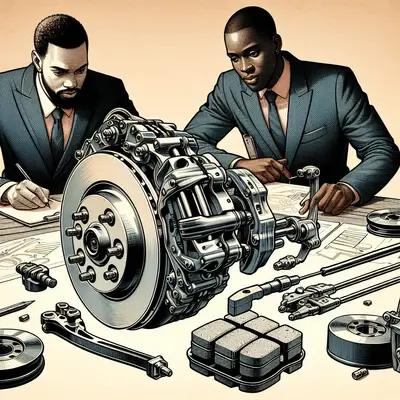
A modern braking system is a coordinated ensemble: brake pedal, master cylinder, brake lines, calipers (or wheel cylinders), rotors or drums, pads or shoes, and increasingly, advanced electronic controls. When you press the pedal, the master cylinder converts that modest foot pressure into hydraulic force, sending brake fluid through reinforced lines to each wheel. Calipers clamp pads against rotors (or shoes against drums), turning kinetic energy into heat via friction and bringing the vehicle to a controlled stop.
Anti-lock braking systems (ABS) and electronic stability control (ESC) oversee this process in the background. Wheel-speed sensors and control modules constantly evaluate grip, pressure, and vehicle behavior, modulating brake force at each wheel in milliseconds to avoid lockup and maintain steering control. For the attentive driver, this means the “feel” of the brakes is not just mechanical—it’s also the sum of precise electronic corrections, especially on uneven or slippery surfaces.
Though the experience feels simple from the driver’s seat, this simplicity is engineered. Fluid quality, hardware tolerances, rotor metallurgy, pad compound, and software calibration each play a role in the car’s stopping character. Appreciating that complexity is the first step toward maintaining a brake system to a higher standard than the typical “pad change when they squeal” approach.
Materials, Not Myths: Why Pad and Rotor Choices Truly Matter
Not all brake components are created equal, and sophisticated drivers understand that material choice subtly shapes both safety and driving character. Brake pads are generally available in three broad categories: organic (or NAO), semi‑metallic, and ceramic. Organic pads tend to be quieter and gentler on rotors but may fade more easily under high heat. Semi‑metallic pads provide strong bite and heat resistance but can be noisier and more abrasive. Ceramic pads occupy a refined middle ground for many luxury applications: low dust, quiet operation, and stable performance across a wide range of temperatures.
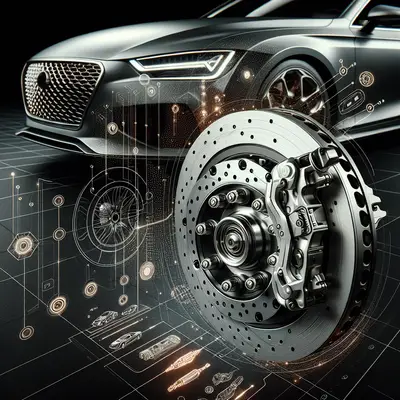
Rotors, too, vary in design and composition. Standard solid or vented rotors are sufficient for most daily use, but high‑carbon alloys, slotted, or drilled designs can improve heat dissipation and resistance to warping in demanding conditions. However, those performance‑oriented rotors can also produce more noise and may shorten pad life if mismatched. The sophisticated approach is not to default to the most aggressive part, but to select components that are harmonized with your driving reality—urban commuting, spirited weekend drives, towing, or frequent mountain descents.
Choosing “OE‑quality” or better (often specified in the owner’s manual or by reputable manufacturers) ensures that the essential friction profile and thermal characteristics match the vehicle’s original engineering intent. For the safety‑focused owner, the goal is predictable, consistent stopping behavior, not just shorter distances on paper.
Beyond the Pedal: How Brake Fluid Quietly Defines Your Safety Margin
Brake fluid is among the most overlooked elements of the system, despite its outsized influence on stopping performance. This hygroscopic fluid gradually absorbs moisture from the atmosphere, even in a sealed system. Over time, that moisture lowers the fluid’s boiling point. Under repeated or hard braking—such as in hilly terrain, towing, or emergency maneuvers—overheated, moisture‑laden fluid can form vapor bubbles, resulting in a spongy pedal or, in extreme cases, a frightening increase in stopping distance.
Manufacturers commonly recommend brake fluid replacement every 2–3 years, but highly safety‑conscious owners often align it with other major services or heavy use patterns. The difference in pedal feel after a proper flush can be surprisingly noticeable: firmer, more linear, and more confidence‑inspiring.
Using the correct specification (DOT 3, DOT 4, DOT 5.1, etc.) is non‑negotiable. These ratings reflect boiling points and chemical compatibility with seals and internal components. A premium approach extends beyond simply topping up the reservoir: it means periodic, full system flushing with high‑quality, fresh fluid, performed by someone who understands proper bleeding procedures to avoid trapped air pockets.
Exclusive Insight #1: Brake Feel Is a Diagnostic Language—Learn to “Listen”
Discerning drivers treat brake feel the way a sommelier treats aroma: as a nuanced, information‑rich signal. Instead of waiting for grinding noises, they pay attention to subtle changes in pedal response.
A slightly longer pedal travel, a delay before initial bite, or a softer-than-usual feel under the same driving conditions can reveal early issues like:
- Gradual fluid degradation or minor air ingress
- Early pad glazing or uneven pad deposits on rotors
- Beginning stages of master cylinder or booster wear
- Minor caliper sticking that hasn’t yet produced obvious pull or noise
By mentally “bookmarking” how their brakes feel during routine drives, these owners can detect deviations weeks or months before a typical driver would notice. This early awareness translates into proactive service, reduced repair costs, and a wider margin of safety.
Exclusive Insight #2: Temperature Management Is the Hidden Guardian of Brake Health
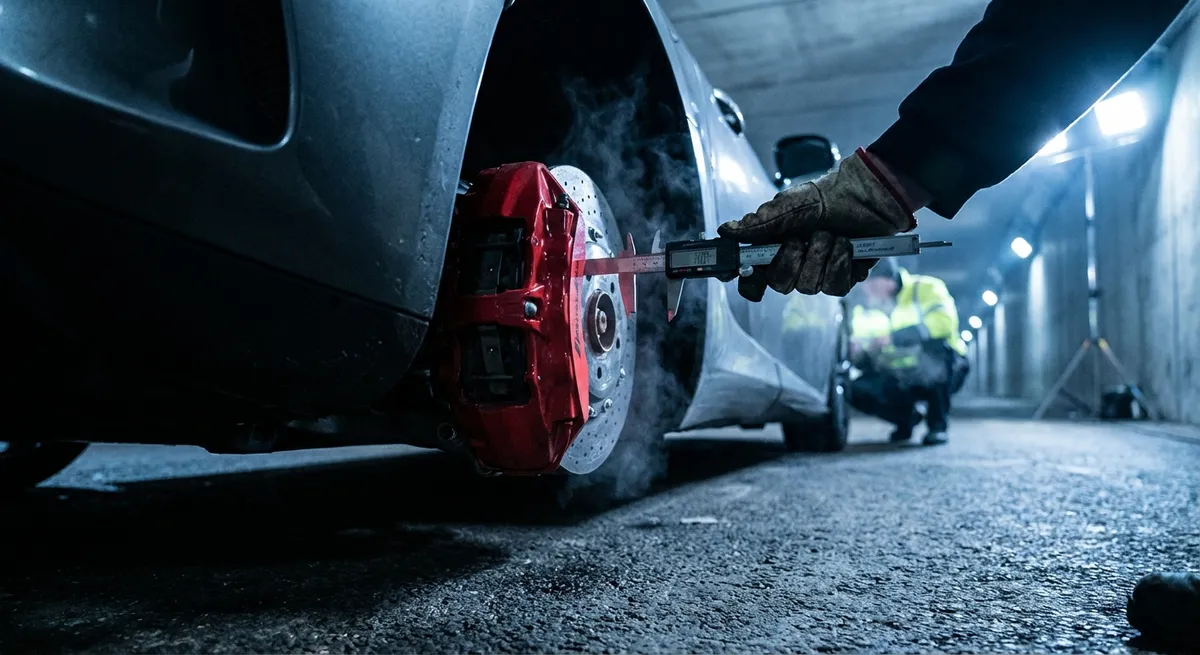
Brakes are energy‑management devices, and their enemy is unmanaged heat. While most drivers only think about rotors when they warp or crack, heat exposure is continuously reshaping the internal life of the entire system.
Safety‑focused owners actively manage brake temperature through driving technique:
- They favor firm, decisive braking over prolonged, light pedal dragging, which keeps components cooler overall.
- On long descents, they rely more on engine braking (downshifting when appropriate) rather than leaning on the pedal for minutes at a time.
- After a hard stop from highway speeds, they avoid resting firmly on the pedal at a complete standstill, which can encourage rotor hot-spotting and uneven pad material transfer.
This temperature discipline preserves rotor integrity, prevents fade, and significantly extends pad and fluid life. It is the kind of quiet, invisible excellence that never appears on a bill—but is felt every time the car stops with composure.
Exclusive Insight #3: Cleanliness in the Brake Zone Is a Safety Strategy, Not a Cosmetic Detail
Brake performance is influenced not only by what you can see (pads and rotors) but also by everything that accumulates around them. Road salt, fine dust, embedded grit, and corrosion can affect caliper slide pins, pad backing plates, and the precise way pads retract from the rotor after braking.
Attentive owners treat the wheel well and brake area as a functional environment:
- They ensure that during brake service, technicians clean the caliper brackets, hardware channels, and contact surfaces—not just swap pads.
- They opt for proper high‑temperature brake lubricants on slide pins and pad contact points, avoiding generic greases that may swell rubber or burn off.
- In harsh climates, they prioritize periodic underbody rinses to reduce salt buildup around brake lines, hoses, and connections.
The result is quieter, more consistent braking, reduced risk of seized calipers, and longer service intervals between major repairs. In this context, cleanliness is not cosmetic; it is an essential ingredient in mechanical precision.
Exclusive Insight #4: Electronic Aids Are Powerful—But They Assume Your Brakes Are Sound
Modern vehicles rely heavily on ABS, ESC, and advanced driver assistance systems (ADAS) such as automatic emergency braking. These technologies can dramatically enhance safety, but they all operate on a single, non‑negotiable assumption: that the underlying hydraulic and friction systems are healthy.
A poorly maintained brake system can quietly diminish the effectiveness of these electronic guardians:
- Contaminated fluid or internal corrosion can slow hydraulic response, reducing how quickly ABS can modulate pressure.
- Uneven pad wear, sticking calipers, or mismatched components can confuse stability control algorithms that assume symmetric braking at each wheel.
- Worn tires combined with marginal brakes can lengthen stopping distances beyond what ADAS systems were calibrated to handle.
Sophisticated owners view electronic aids as a final layer of protection, not a substitute for rigorous brake maintenance. They recognize that every software intervention still ends in a friction event at the rotor.
Exclusive Insight #5: Alignment, Tires, and Suspension Quietly Rewrite Your Brake Performance
Brakes rarely operate in isolation; they are deeply integrated with the chassis. While most drivers address braking, tire, and alignment issues separately, elevated safety practice treats them as a single ecosystem.
Subtle suspension wear or misalignment can substantially compromise braking effectiveness:
- A car that pulls slightly on straight roads may pull aggressively under hard braking, even if the brake components themselves are in good condition.
- Uneven tire wear or low tread depth reduces available traction, increasing stopping distances regardless of how advanced the brake hardware is.
- Aging shocks and struts allow excessive weight transfer, forcing the front brakes to work disproportionately harder and raising the risk of premature fade.
The discerning driver pairs brake inspections with alignment checks and tire evaluations, especially before long trips or seasonal changes. By ensuring that the chassis can fully exploit the brakes’ capabilities, they convert theoretical stopping power into real‑world security.
Conclusion
Refined brake care is not defined by how often pads are replaced, but by how deliberately the entire system is understood and managed. For the driver who values composure, predictability, and maximum safety, brakes are treated as a finely tuned control instrument rather than a consumable line item.
By attending to material quality, fluid health, temperature management, system cleanliness, and the broader relationship between brakes, electronics, tires, and suspension, you cultivate a vehicle that stops with the same quiet confidence it accelerates. In the realm of safety, this level of attention is not excess—it is excellence.
Sources
- National Highway Traffic Safety Administration (NHTSA) – Brakes - Overview of braking system safety, technologies like ABS, and related regulations
- U.S. Department of Transportation – ABS and ESC Safety Information - Details on how ABS and electronic stability control enhance braking and vehicle stability
- University of Michigan – Brake System Overview (Vehicle Safety) - Technical perspective on brake system design and performance considerations
- Continental Automotive – Brake Fluid and Hydraulic Systems - Technical information on brake fluid properties and maintenance recommendations
- Brembo Technical Insights – Brake Discs and Pads - Guidance on rotor and pad selection, materials, and performance trade‑offs
Key Takeaway
The most important thing to remember from this article is that this information can change how you think about Brake Systems.