Television history is having a reflective moment. As new lists celebrate the longest-running series of all time—from The Simpsons and Law & Order: SVU to daytime pillars like General Hospital—one theme keeps resurfacing: longevity isn’t an accident. It’s curated, maintained, and quietly refined year after year.
Your brake system deserves that same philosophy. Just as a show only earns a multi‑decade run through disciplined production and careful adaptation, truly safe brakes are not the result of one good service, but of a long-term, intentional maintenance strategy. In an era when vehicles are heavier, faster, and more tech‑laden than ever, “good enough” is no longer acceptable—the standard is graceful, predictable stopping power over time.
Below, we translate the staying power of TV’s longest-running hits into five exclusive, premium-grade insights for discerning drivers who expect their brakes to perform flawlessly, season after season.
Insight 1: Treat Your Brake System Like a Prestige Series, Not a One‑Off Special
Long‑running shows don’t survive on a single strong pilot. They stay meticulous from script to screen, episode after episode. Your brake system deserves that same serialized attention. A single high-quality brake job—no matter how expensive the parts—cannot compensate for years of neglect, infrequent inspections, or rushed follow‑ups.
A premium maintenance mindset means establishing a cadence, not reacting to crises. For most drivers, that translates to a professional brake inspection at least once a year or every 12,000–15,000 miles, even if nothing “feels” wrong. During that visit, your technician should measure pad thickness on all four corners, inspect rotor surfaces, check for uneven wear patterns, and document changes compared with prior visits. Keep those records, just as a studio would track each season’s performance. Over time, you and your technician will see a narrative emerge—subtle shifts in wear that can be corrected early, before they culminate in pulsation, pulling, or extended stopping distances.
Insight 2: Longevity Requires a Strong Supporting Cast—Not Just New Pads and Rotors
In the world of TV, even the most charismatic lead actor falls flat without a competent supporting cast and production crew. Similarly, the finest ceramic pads and premium rotors will underperform if the “supporting characters” in your brake system are ignored.
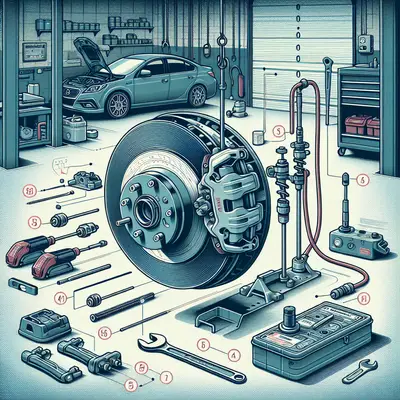
A truly refined brake service addresses what many budget shops skip: hardware, lubrication, and hydraulics. Caliper slide pins should be cleaned and lubricated with high‑temperature, brake‑specific grease—never general-purpose lubricants that can swell rubber components. Pad abutment clips should be replaced or meticulously cleaned to prevent binding and uneven wear. Flexible brake hoses must be inspected for subtle cracking, bulging, or weeping at the crimped ends—early signs of internal failure that can cause pull or delayed response. Even the brake dust shields, often corroded in harsh climates, play a quiet role in protecting rotors from debris that accelerates scoring. When these details are treated with the respect they deserve, your braking “ensemble” works in silent harmony, just as a seasoned cast does on screen.
Insight 3: Modern “Storylines” Demand Modern Fluids and Friction Choices
TV has evolved from three networks to an endless array of streaming platforms; your vehicle has taken a similar leap. With advanced driver-assistance systems (ADAS), larger wheels, and heavier curb weights, the demands on your brakes have never been greater. Sticking to outdated habits—such as ignoring brake fluid until something fails or blindly choosing the cheapest pad on the shelf—is the maintenance equivalent of ignoring streaming and hoping cable will carry the ratings.
Brake fluid is hygroscopic; it absorbs moisture over time, compromising its boiling point and corroding internal components. For most vehicles, a brake fluid test every two years—and a full flush when contamination or moisture content climbs—is a wise, refined practice, not an upsell. In warm, mountainous, or high‑performance driving environments, that interval can prudently be shortened. Likewise, friction material should be chosen purposefully. A daily‑driven luxury sedan with frequent stop‑and‑go commuting benefits from a high-quality ceramic pad emphasizing consistent, quiet operation, whereas a performance SUV or vehicle frequently towing may require a more temperature‑resistant compound. A discerning owner collaborates with a trusted technician to choose parts that match the vehicle’s “genre” and usage, rather than defaulting to whichever box is on promotion.
Insight 4: Subtle “Plot Twists” in Feel and Sound Are Your Early‑Warning System
Dedicated fans of long‑running shows notice when the tone shifts or a character feels “off.” In your vehicle, that same quiet sensitivity can be a decisive safety advantage. The most serious brake failures very rarely arrive without a prelude—they whisper first.
Develop a refined awareness of your car’s normal brake feel, sound, and pedal travel. Note how the pedal responds during the first few stops of the day versus after a long drive. Pay attention to changes so subtle they’d go unnoticed by a casual driver: a faint high‑frequency squeal at very low speeds, a slight steering wheel tremor from highway speeds, or a pedal that now sits a fraction closer to the floor before engagement. None of these necessarily means imminent failure, but each is a “script note” worth investigating promptly. Timely attention to these early signs often reveals issues like mild rotor thickness variation, a beginning pad delamination, or a developing caliper slide restriction—problems that are far simpler and less expensive to correct when addressed on their opening “episode,” rather than at their season finale.
Insight 5: Intelligent Driving Habits Are the Executive Producers of Brake Life
Behind every long‑running series is a producer making strategic decisions that shape pacing, tone, and budget. In braking, that producer is you. Your driving habits directly determine how frequently you’ll be replacing components—and how consistent your stopping performance will remain between services.
Anticipatory driving is the hallmark of refined brake care. Look far ahead in traffic, ease off the throttle earlier, and use engine braking where appropriate instead of racing to the next stoplight. Avoid following closely, which forces abrupt and repeated hard stops that overheat pads and rotors, generating hot spots and glazing. When descending long grades, shift down to a lower gear (even in many modern automatics and EVs) to relieve your friction brakes of continuous duty. After aggressive braking—such as on a steep descent or after emergency stops—allow the brakes to cool by driving gently for a short distance rather than stopping immediately and holding the pedal firmly, which can imprint pad material onto overheated rotors. These techniques are invisible from the outside, yet they are the difference between brakes that degrade abruptly and brakes that age gracefully, with predictably refined performance.
Conclusion
The recent fascination with television’s longest‑running shows is, at its core, a celebration of maintenance—of standards kept high, episode after episode, year after year. Your brakes deserve the same disciplined commitment. By adopting a serialized mindset toward inspections, respecting the “supporting cast” of components, updating your approach for modern vehicles, listening for subtle changes, and driving with intention, you transform brake care from a reactive expense into a quiet, ongoing craft.
In doing so, you give your vehicle what every great series ultimately earns: confidence from its audience. In this case, that audience is you—secure in the knowledge that when it matters most, your brakes will deliver a performance worthy of a very long run.
Key Takeaway
The most important thing to remember from this article is that this information can change how you think about Maintenance.