For discerning drivers, true confidence on the road is not defined by how quickly a car accelerates, but by how gracefully it slows. Behind every composed stop at a busy intersection and every controlled descent on a mountain pass lies an intricate, highly engineered brake system—quietly performing at the edge of physics. Understanding that system isn’t merely a technical curiosity; it is a refined form of risk management and a deliberate investment in safety, composure, and control.
Below, we explore the modern brake system as a complete ecosystem—and highlight five exclusive, often-overlooked insights that sophisticated car owners can use to elevate their safety practices well beyond the ordinary.
The Brake System as a Choreographed System, Not Just a Set of Parts
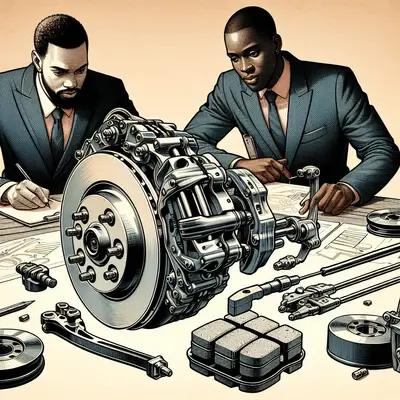
It is tempting to view brakes as a collection of isolated components—pads, rotors, calipers, and fluid. In reality, your braking system behaves more like an orchestra than a toolbox: every element is tuned to work in harmony with the others, and disturbing that balance has consequences.
Today’s systems are designed with specific pad compounds, rotor dimensions, caliper piston sizes, and fluid formulas that match the weight, suspension, and tire characteristics of the vehicle. Even the anti-lock braking system (ABS) and electronic stability control (ESC) are calibrated to those exact hardware choices. Substituting pads with a significantly different friction profile, or rotors with non-standard dimensions, can subtly alter brake balance between the front and rear axles. The car may still stop, but it can do so less predictably at the limit.
For owners of performance or luxury vehicles, preserving factory-equivalent specifications—or choosing upgrades that are engineered as a matched set—is not about aesthetics or brand loyalty. It is about maintaining the carefully choreographed interaction between mechanical grip, electronic assistance, and driver input. Treat the brake system as a unified composition, and every stop becomes smoother, repeatable, and more secure.
Beyond “Soft Pedal”: The Hidden Language of Brake Feel
Brake feel is one of the most sophisticated feedback channels your vehicle offers, yet many drivers reduce it to a single binary—“soft” or “firm.” In practice, the pedal under your foot is communicating a nuanced story about the health and refinement of the system.
A firm, linear pedal—one that builds resistance progressively without sudden changes in travel—suggests that the hydraulic system is intact, the pads are making consistent contact, and the fluid is free of air or significant moisture. A pedal that gradually becomes spongier over weeks or months often signals brake fluid degradation, where absorbed moisture reduces the boiling point and compressibility changes under heat. A slightly sinking pedal at long red lights can reveal an internal seal issue inside the master cylinder long before a warning light appears.
Premium safety practice means not normalizing gradual changes. When you notice that you must press the pedal a bit farther to achieve the same deceleration, or the pedal feel changes noticeably after a long downhill drive, that is the time to investigate—not when you finally trigger the ABS in an emergency. Drivers who train themselves to interpret these subtleties gain an early-warning system far more sophisticated than any dashboard icon.
The Thermal Reality: Heat Management as the True Measure of Safety
Braking is the controlled conversion of kinetic energy into heat, and in spirited driving or heavy traffic, the volumes of heat involved are substantial. How your system manages that heat—rather than the sheer size of your calipers—is the true hallmark of a confident, repeatable stop.
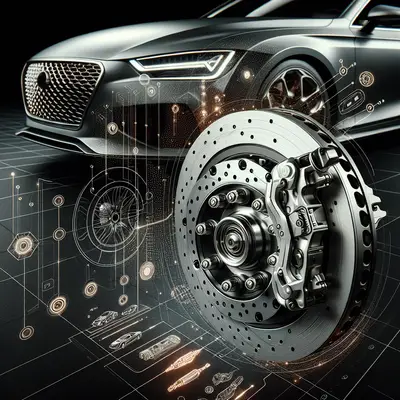
Rotors act as heat sinks and air pumps, pulling cool air across their vanes to dissipate energy. Pad materials are selected not only for friction levels but also for how consistently they behave as temperatures rise. High-end vehicles frequently pair larger rotors with multi-piston calipers to distribute pressure more evenly and reduce localized hot spots. Even the wheel design plays a role, as open-spoke wheels allow more effective airflow across the rotor surface.
From a driver’s standpoint, the refined approach to heat is behavioral. After a long downhill, resting your foot lightly on the pedal at a complete stop can “heat soak” the section of the rotor trapped under the pad, leading to uneven deposits and pulsation over time. Allowing brief coasting intervals between heavy braking events, maintaining appropriate following distances, and downshifting when appropriate on long descents give your brakes critical cooling windows. Thinking in terms of thermal management—rather than only stopping distance—moves your habits into the realm of professional-grade safety.
Brake Fluid and the Calendar: Why Time Matters More Than Mileage
Brake fluid is arguably the most understated safety component in the car. Unlike pads or rotors, its degradation is rarely visible, and yet it directly influences pedal firmness and ABS performance in high-demand situations. Almost all modern brake fluids are hygroscopic: they slowly absorb moisture from the air, even in a closed system.
This absorbed moisture gradually lowers the boiling point of the fluid. Under an emergency stop or repeated hard braking, localized temperatures at the calipers can be high enough to boil aged fluid, creating vapor bubbles that compress under pressure. The result is a long, vague pedal right when you need precision and authority. Importantly, this is a function of time and environment, not just distance driven.
A premium safety routine therefore treats brake fluid like a time-dependent asset. Even low-mileage vehicles benefit from periodic fluid replacement—often in the 2–3 year range, or as recommended by the manufacturer—especially in humid climates. Owners who drive only occasionally, or store high-value vehicles for long periods, are particularly vulnerable to overlooking this. Monitoring service records for fluid age, not just pad thickness, is one of the most sophisticated yet underused ways to preserve consistent braking performance.
The “Invisible” Influence of Tires and Suspension on Your Brakes
Brake hardware may provide the force, but tires and suspension determine how effectively that force is translated into deceleration. Many drivers treat these systems as separate concerns, yet they are intricately linked. A brake system can only be as good as the grip and composure that support it.
Tires with fading tread depth, hardened rubber, or uneven wear dramatically increase stopping distances—even when the calipers, pads, and rotors are in perfect condition. Advanced safety features like ABS and stability control rely on predictable traction to modulate brake pressure effectively; compromised tires force these systems to work overtime, often with less refined results. Similarly, worn shocks or struts allow weight to transfer abruptly under braking, reducing grip at the rear tires and increasing nose dive, especially in emergency maneuvers.
For safety-conscious owners, evaluating brake performance without considering tire quality and suspension health is incomplete. A truly elevated approach to braking recognizes the entire dynamic platform: precise, well-maintained suspension geometry and high-quality, properly inflated tires transform the same set of brakes from merely adequate to confidently exceptional.
The Refinement of Proper Bedding and Break-In Techniques
One of the least-discussed, yet most impactful, practices in brake care is the proper bedding of new pads and rotors. This is not a ceremonial step—it is a physics-driven process that establishes an even transfer layer of pad material on the rotor surface. That ultra-thin layer is what allows the pad and rotor to work together with consistency and silence.
Rushed or incorrect break-in—such as aggressive hard stops on brand new components or extended light use without any structured bedding—can lead to uneven material deposits. These may later be felt as pedal pulsation or heard as intermittent braking noises, often misdiagnosed as warped rotors. In performance and luxury vehicles, where braking systems are engineered for high loads, proper bedding is especially important to achieve the refined, vibration-free pedal feel the car was designed to deliver.
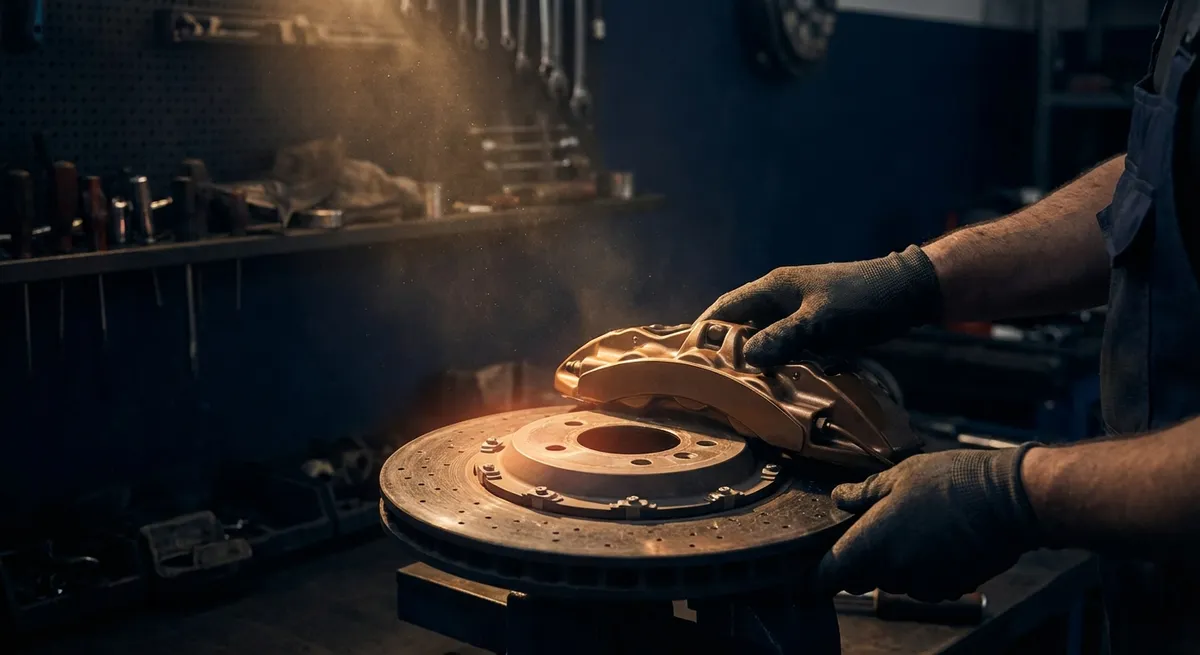
A premium-minded owner will ensure that any significant brake work—especially pad or rotor replacement—is followed by a controlled bedding procedure. This typically involves a series of moderate decelerations from varying speeds, allowing the brakes to cool between runs and avoiding complete stops while the components are extremely hot. The process takes only a short drive yet can dramatically enhance smoothness, noise characteristics, and long-term rotor quality.
Conclusion
Mastering your vehicle’s brake system is less about memorizing part numbers and more about understanding relationships: between heat and control, between fluid age and pedal feel, between tires and stopping distance. When approached thoughtfully, brake care becomes an elegant discipline—one that blends mechanical insight with attentive driving habits.
The truly prepared driver doesn’t wait for a warning light or a harsh vibration to prompt attention. Instead, they cultivate a quiet fluency in how their car decelerates: honoring the system as a precisely tuned whole, respecting the physics of heat and friction, and maintaining each supporting component to the same high standard. In that fluency lies not just superior safety, but a deeply satisfying sense of composure every time the road demands a decisive stop.
Sources
- National Highway Traffic Safety Administration (NHTSA) – Brakes and Safety Technologies – Overview of braking systems, ABS, and related safety technologies from a U.S. government agency.
- Car & Driver – How Brakes Work – Detailed explanation of brake components, heat, and performance considerations from an established automotive publication.
- Tire Rack – The Role of Tires in Braking Distance – Technical discussion of how tire condition and design influence stopping performance.
- University of Nebraska – Brake Fluid Properties and Maintenance – Educational material touching on brake fluid characteristics, hygroscopic behavior, and maintenance intervals.
- Bosch Mobility Solutions – Brake Systems Overview – Manufacturer’s perspective on modern brake system architecture and components.
Key Takeaway
The most important thing to remember from this article is that this information can change how you think about Brake Systems.