Brake repair is often treated as a rushed necessity—something you address only when the car makes a scene. Discerning drivers know better. True confidence behind the wheel comes from understanding not just that your brakes work, but how and why they perform the way they do. This guide is crafted for car owners who care about precision, composure, and safety as much as they care about aesthetics and refinement. Rather than overwhelming you with technical jargon, we will explore the nuances of brake repair choices, craftsmanship, and safety, and highlight five exclusive insights that quietly separate the merely functional from the genuinely exceptional.
The Foundation: How Quality Brake Repair Protects More Than Just Stopping Distance
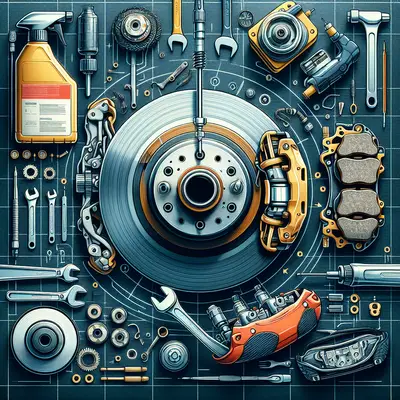
Your brake system is not a single component but a carefully orchestrated ensemble: pads, rotors, calipers, brake lines, fluid, master cylinder, and electronic assists all work in concert. Poorly executed repair in one area can compromise the integrity of the entire system. For example, fitting premium pads onto neglected, uneven rotors can create hot spots, vibration, and a deceptive sense of security. Similarly, ignoring brake fluid health can leave advanced anti-lock and stability systems underperforming when you need them most.
A sophisticated approach to brake repair starts with understanding that every intervention—whether it’s replacing pads, resurfacing rotors, or flushing fluid—should be evaluated as part of a complete safety system, not a single transaction. Quality repair prioritizes consistent pedal feel, predictable stopping, and thermal stability during repeated braking, especially at highway speeds or in mountainous terrain. The result is not simply shorter stopping distances, but a calm, composed response under pressure—an attribute that seasoned, safety-conscious drivers value deeply.
Exclusive Insight #1: Matching Brake Pad Compounds to Your Driving Personality
Most drivers are offered a simplistic choice: “ceramic or semi-metallic?” In reality, brake pad selection should be a tailored decision that reflects how and where you drive.
- Ceramic pads typically offer quieter operation, less brake dust, and smoother engagement. They perform beautifully for refined daily driving, light commuting, and urban environments, where comfort and cleanliness matter.
- Semi-metallic pads often provide stronger initial bite and better performance under repeated hard braking. They can be noisier and produce more dust but excel in spirited driving, heavy vehicles, and routes involving steep grades or towing.
- Low-metallic or performance compounds can offer even higher temperature tolerance and fade resistance but may introduce more noise, rotor wear, or cold-performance trade-offs.
The sophisticated choice is not “the most expensive option,” but the most appropriate compound for your real-world use. Drivers who value quiet, dust-free wheels and gentle, progressive pedal feel might favor a well-engineered ceramic pad. Those who regularly traverse mountain passes, tow trailers, or drive at higher sustained speeds may be safer and more confident with a premium semi-metallic option. Your brake repair is elevated when pad selection is treated like fitting a bespoke suit—precisely tailored, not off-the-rack.
Exclusive Insight #2: Rotor Finish, Not Just Rotor Thickness, Defines Braking Refinement
Most repair conversations around rotors focus on minimum thickness, warping, or whether to “turn” (resurface) or replace. While these are essential considerations, the quality of the rotor surface and its relationship with the chosen pad compound can make the difference between coarse braking and silk-smooth deceleration.
A rotor with correct lateral runout (minimal side-to-side wobble) and a precision-machined surface ensures even pad contact and balanced braking forces. Poorly finished rotors can produce:
- Pulsation through the pedal at highway speeds
- Uneven pad deposits that feel like “warped” rotors
- Hot spots that accelerate wear and reduce confidence under hard braking
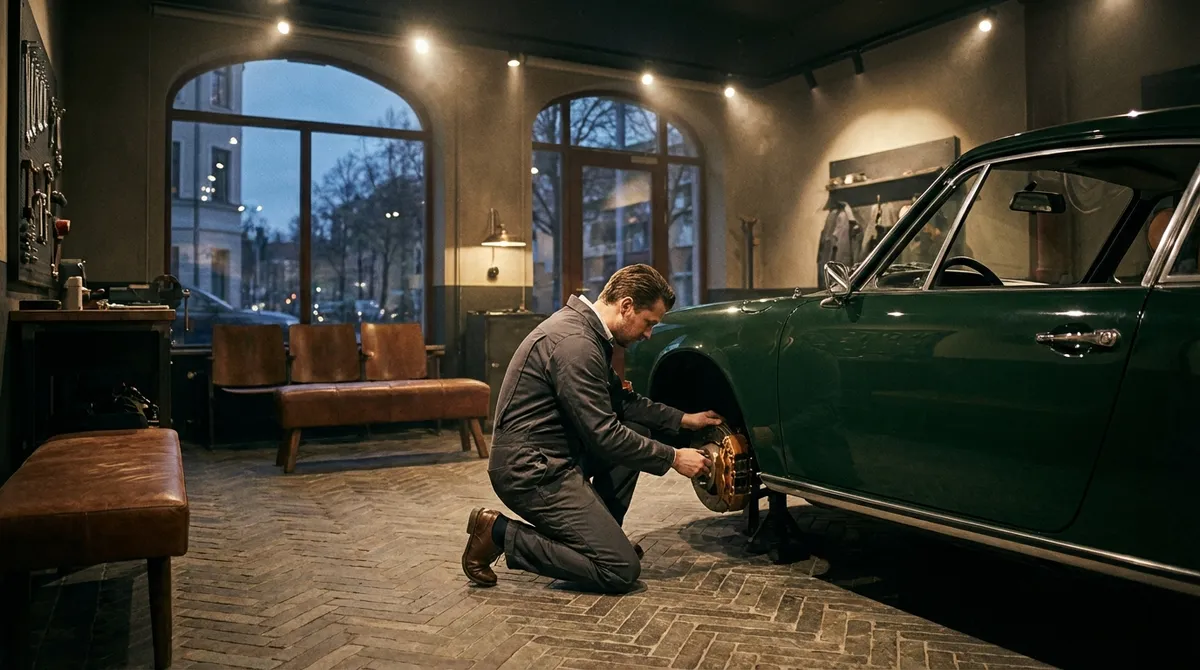
Premium repair goes beyond simply installing new metal. It includes checking hub cleanliness, using a torque wrench on lug nuts to manufacturer specifications, and confirming rotor runout with proper measurement tools. A clean, true, and correctly torqued rotor assembly not only feels better at the pedal—it also prolongs pad life and preserves consistent stopping performance over thousands of miles.
Exclusive Insight #3: Brake Fluid as a Silent Guardian of Advanced Safety Systems
Brake fluid is one of the least glamorous yet most critical elements of a sophisticated braking system. It is hygroscopic—it absorbs moisture over time—which lowers its boiling point and introduces the risk of vapor bubbles under severe braking. That can mean a soft, sinking pedal just when rapid, consistent braking is non-negotiable.
Modern vehicles rely heavily on brake fluid not only for mechanical braking, but also for electronic assists:
- Anti-lock braking systems (ABS)
- Electronic stability control (ESC)
- Advanced driver-assistance features that apply selective braking
Moisture-contaminated or aged fluid can degrade the responsiveness of these systems. Temperature extremes, such as mountain descents or spirited highway driving, can expose weak fluid in unsettling ways.
Refined brake care includes:
- Adhering to the vehicle manufacturer’s brake fluid replacement interval (often 2–3 years, or as specified)
- Using the correct fluid specification (DOT 3, 4, or 5.1), never guessing or mixing incompatible types
- Having a professional check for moisture content and contamination, especially in older vehicles or those exposed to humidity or heavy use
Treat brake fluid service as you would a high-end watch service: periodic, precise, and essential for the instrument to keep perfect time.
Exclusive Insight #4: The Art of Pedal Feel—What It Really Reveals About Your Brakes
Many drivers unconsciously adapt to gradual changes in pedal feel, accepting them as “aging” instead of warning signs. For a safety-focused car owner, pedal feel is an early diagnostic tool—one that can reveal deeper issues long before a warning light appears.
Consider the following nuances:
- A high, firm pedal that remains consistent during repeated stops typically indicates a healthy hydraulic system and well-matched components.
- A gradually softening pedal during repeated braking may point to fluid boiling, caliper issues, or internal master cylinder wear.
- A low pedal that firms up when pumped can signal air in the lines or uneven caliper function.
- A pedal that feels “gritty” or uneven might indicate rotor surface irregularities or pad material inconsistencies.
A refined approach to repair means your technician doesn’t just replace parts but also reconciles them with the desired pedal character: solid yet progressive, responsive yet not abrupt. Communicating clearly how the pedal feels to you—when cold, after a long drive, or during downhill braking—can help a skilled professional pinpoint subtle issues that standard inspections may overlook.
Exclusive Insight #5: Verifying Brake Work With a Controlled Post-Repair Road Test
Many brake jobs effectively “end” when the invoice is printed. For the safety-focused driver, the true completion is a measured, controlled road test designed to validate not just function, but refinement.
A proper post-repair evaluation should include:
- Gentle, repeated stops from low speed to confirm smooth engagement and absence of noise
- Moderate braking from suburban speeds to evaluate stability, steering feedback, and pedal linearity
- Verification that the car remains straight and composed under braking, with no pulling or vibration
- A careful check that any ABS activation feels normal, without chatter or unexpected pedal behavior
Additionally, newly installed pads and rotors often benefit from a deliberate bedding-in procedure—gradually building heat with progressively firmer stops to allow pad material to transfer uniformly onto the rotor surface. Done correctly, this improves braking consistency and reduces the risk of future judder or uneven thickness. Treat your first 200–300 miles after brake service as a refinement phase: no sudden panic stops unless necessary, and a conscious effort to let the system settle into its best behavior.
Elevating Your Brake Repair Standard
Brake repair, at its most refined, is not a single decision but a series of thoughtful choices: correct pad compounds, carefully prepared rotors, fresh and appropriate brake fluid, attentive reading of pedal feel, and a validating road test to confirm the system works as elegantly as it looks on the invoice.
Car owners who are genuinely concerned about safety do not need to become technicians, but they benefit enormously from understanding the questions that distinguish premium work from basic replacement. Ask how pad and rotor choices complement your driving, request clarity on fluid condition and specification, and insist on a post-repair evaluation that goes beyond a quick drive around the block.
When these elements come together, braking ceases to be an afterthought and becomes a quiet assurance—subtle, composed, and ready when it matters most. That is the standard worthy of a truly discerning driver.
Sources
- [National Highway Traffic Safety Administration (NHTSA): Brake Safety Information](https://www.nhtsa.gov/equipment/brakes) - Federal guidance on brake systems, performance, and safety considerations
- [U.S. Department of Transportation – Federal Motor Carrier Safety Administration: Brake Systems](https://www.fmcsa.dot.gov/safety/vehicle-safety/brake-systems) - Technical and regulatory information on brake performance and inspection standards
- [University of Michigan – Brake Systems Overview (ME 458 Course Material)](https://deepblue.lib.umich.edu/handle/2027.42/91244) - Educational material explaining brake components, dynamics, and system interactions
- [Brembo Technical Insights: Brake Pads and Rotors](https://www.brembo.com/en/company/news/brake-pads-and-discs-the-complete-guide) - In-depth explanation of pad compounds, rotor properties, and their impact on performance and comfort
- [Continental Teves (ATE) – Brake Fluid and ABS/ESC Systems](https://www.ate-brakes.com/products/brake-fluids/) - Technical details on brake fluid types, moisture absorption, and compatibility with advanced safety systems
Key Takeaway
The most important thing to remember from this article is that this information can change how you think about Repair Guides.