The most discerning drivers don’t simply press the brake pedal; they curate every aspect of how their vehicle comes to a halt. Behind that single, smooth motion lies an intricate system whose condition directly shapes your safety, comfort, and confidence. Understanding how your brake system behaves under varied conditions is the difference between routine motoring and truly intentional driving.
This guide explores the brake system with a focus on nuance: how it should feel, sound, and respond when operating at its best. Along the way, you’ll find five exclusive insights—subtle, often-overlooked details—that drivers who expect more from their vehicles quietly rely on.
The Architecture of Modern Brake Systems
A modern brake system is a carefully orchestrated network of mechanical, hydraulic, and electronic components designed to do one thing superbly: convert motion into controlled, predictable deceleration.
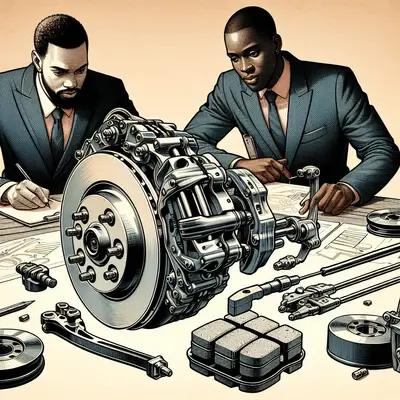
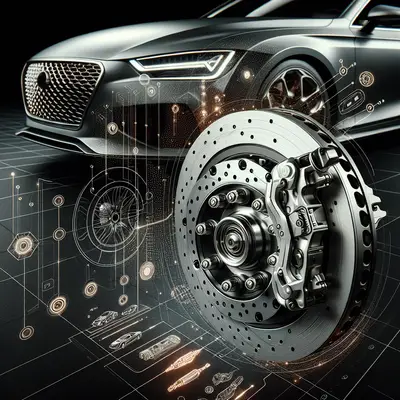
At its core, the system starts at the pedal, where your input is amplified by a brake booster and translated into hydraulic pressure via the master cylinder. That pressure travels through steel lines and flexible hoses to calipers at each wheel, which clamp brake pads against rotors (or, in some vehicles, shoes against drums) to generate friction. This friction converts kinetic energy into heat, which must then be managed without compromising performance.
Layered over this mechanical foundation is a suite of electronic safeguards: Anti-lock Braking Systems (ABS) to prevent wheel lockup, Electronic Brakeforce Distribution (EBD) to balance braking between front and rear, and often stability control systems that can subtly adjust braking at individual wheels. When everything works in concert, the result is not merely the ability to stop, but the ability to stop smoothly, straight, and predictably—even in less-than-ideal conditions.
A truly premium braking experience is not about sheer stopping force alone; it’s about consistency, composure, and the way the system communicates its limits to the driver long before they are reached.
How a Premium Brake System Should Feel
For drivers who measure quality in refinement rather than noise and drama, the brake pedal is one of the most revealing touchpoints in the car.
A properly functioning system should deliver a firm, progressive pedal—initial travel is smooth and predictable, followed by a linear build-up of resistance. There should be no sponginess, no sinking pedal when held at a stop, and certainly no vibration under normal braking. The vehicle should track straight, with no pulling to one side, even under more assertive stops.
High-end brake performance is also defined by consistency. The pedal you feel on a cool morning commute should be essentially the same in stop-and-go traffic after an hour or during a swift highway deceleration. Any noticeable shift—more travel, softer resistance, or noise—signals that the system is asking for attention.
A refined brake system also operates with minimal drama. You should not routinely trigger ABS in everyday driving; when you do, the pedal feedback should be firm but controlled, without harsh judder. The car should settle confidently, not pitch violently forward. That composure, more than raw specification sheets, is what separates adequate braking from genuinely elevated stopping quality.
Exclusive Insight #1: The Signature Sound of a Healthy Brake System
Most drivers only pay attention when brakes are loud, but refined brake care begins with recognizing when they are quiet in the right way.
A properly maintained brake system has a distinctive acoustic signature: a largely silent operation during light to moderate stops, accompanied by only a soft, brief rust-cleaning noise after the car has been sitting or in wet conditions. What it does not have is chronic squealing, grinding, or rhythmic scraping.
However, high-performance or premium pads may occasionally produce a faint, high-frequency chirp when cold or at very light pedal pressures. This is not inherently a defect; it’s often the trade-off for improved performance or rotor compatibility. The key is consistency: a sound that is soft, predictable, and does not worsen is often acceptable; a sound that appears suddenly, grows louder, or is accompanied by vibration is not.
Refined drivers notice when the soundtrack changes—not just when it becomes loud. A new, faint squeak, a subtle increase in noise after a long downhill drive, or an occasional chirp during parking maneuvers can be early clues that a pad is glazing, a shim is shifting, or a wear indicator is just beginning to kiss the rotor. Addressing these early doesn’t just maintain quiet; it preserves rotor surfaces and helps avoid hurried, less controlled repair decisions.
Exclusive Insight #2: Temperature Management—The Hidden Currency of Brake Performance
Every brake application is fundamentally a heat management exercise. For those who care deeply about safety and precision, understanding how your brakes shed heat is an underappreciated advantage.
During hard or repeated braking, rotors can reach extremely high temperatures. Quality pads are engineered to perform within a specific temperature window; when that window is exceeded, the result can be brake fade—where the pedal may feel normal, but stopping distances increase and confidence erodes. On a long mountain descent or during spirited driving, this change can be subtle at first.
Refined drivers pay attention to patterns: if the pedal feels slightly longer after several firm stops, or if there’s a faint smell of hot brakes, that isn’t something to ignore. It’s a sign that the system is approaching its thermal comfort zone. The response is equally refined: using lower gears on descents, allowing cooling intervals on demanding roads, and ensuring high-quality brake fluid that resists boiling under stress.
Moreover, wheel design and cleanliness matter. Excessive brake dust buildup or tightly sealed wheel designs can trap heat. Regular wheel and caliper area cleaning, and avoiding cheap, low-spec pads that generate excessive dust, help maintain a cooler, more consistent system—an advantage you’ll feel not just in performance, but in predictable, fade-free braking under pressure.
Exclusive Insight #3: The Subtle Role of Brake Fluid as a Luxury-Level Safety Component
Brake fluid is often treated as a commodity, but for drivers who appreciate fine margins of safety, it is an essential, high-impact component.
Brake fluid is hygroscopic—it absorbs moisture over time. As water content rises, the fluid’s boiling point falls, increasing the risk of vapor formation under heavy braking. Vapor compresses, unlike fluid, leading to a soft or sinking pedal and a significant loss of braking authority right when you need it most. Even if you never drive aggressively, humidity, climate, and vehicle age quietly shape your fluid’s condition.
While many owners rely on mileage intervals, sophisticated maintenance considers time, environment, and use. A vehicle that spends its life in a humid coastal city or that frequently tows may benefit from more frequent fluid changes than a lightly used car in a dry climate. Choosing a fluid that meets or exceeds the manufacturer’s DOT specification—and ensuring it comes from a trusted source—further reduces the risk of performance drop-off.
Premium-level attention also means ensuring proper bleeding. Entrapped air or rushed fluid changes weaved into an otherwise careful brake service can undermine the entire system. For someone who values a firm, perfectly consistent pedal, the clarity and freshness of the fluid is as central as the pads and rotors themselves.
Exclusive Insight #4: Brake Balance—Why Symmetry Matters More Than You Think
Stopping isn’t just about how quickly the car slows; it’s about how evenly that deceleration is distributed. That balance—front to rear, and side to side—is one of the quiet hallmarks of a well-kept, safety-focused brake system.
From the factory, modern vehicles are designed with a deliberate front-rear bias and sophisticated electronic systems that help modulate brake force. Over time, however, uneven pad wear, partially seized caliper slides, ageing hoses, or imbalanced rotor conditions can subtly disturb that equilibrium. The result may be a car that requires slight steering correction under braking, or that dives more than it should, or that feels oddly unsettled when stopping on uneven surfaces.
Discerning drivers notice these delicate changes: a gentle tug in the steering wheel on harder stops, a repeated need for minor steering adjustment late in braking, or front pads wearing significantly faster than rears without corresponding driving behavior. These are more than mild annoyances—they can be early indicators of caliper issues, incorrect pad specifications, or a hydraulic imbalance.
Addressing brake service as a system rather than a series of isolated parts is key. Replacing pads and rotors in symmetric pairs (both front wheels or both rear wheels), verifying caliper freedom of movement, and evaluating brake performance on a test drive that includes straighter, firm stops help restore that engineered equilibrium. The result is a car that remains composed and honest under braking—hallmarks of a truly confidence-inspiring vehicle.
Exclusive Insight #5: The Refined Driver’s Inspection Ritual—Beyond the Dashboard Light
Luxury-level brake safety is rarely reactive. Instead, it grows from a set of quiet, deliberate habits that detect issues long before a warning light or grinding noise appears.
A refined inspection ritual doesn’t require advanced tools, only attentiveness:
- Visual Check Through the Wheel: When the wheels allow, glance at pad thickness—both inner and outer pads. Significant difference between the two can hint at caliper or slide pin concerns.
- Rotor Surface Assessment: From a safe vantage point, look for deep grooves, blue discoloration (a sign of heat), or heavy rust ridging at the rotor edge. These suggest the rotor is nearing the end of its refined service life.
- Pedal Consistency Test: Periodically apply firm pedal pressure at a standstill. The pedal should remain stable, not gradually sinking. A change here deserves immediate attention.
- Parking Brake Behavior: Test your parking brake on a gentle incline. It should engage firmly, hold the vehicle confidently, and release cleanly—no dragging, no binding. This is especially vital on vehicles with rear drum brakes or integrated electronic parking systems.
- Environmental Awareness: After heavy rain, a car wash, or a long downhill drive, note any changes in behavior. Transient noises or slight surface rust are normal; persistent changes are not.
These habits don’t replace professional inspections; they elevate them. When you arrive at a service appointment able to describe not just that something seems “off,” but how it has changed—pedal feel, sound, symmetry—you enable more precise, efficient, and higher-quality repair decisions.
Conclusion
For drivers who value composure as much as capability, the brake system is not simply a set of wear items—it is a finely tuned safety instrument that deserves thoughtful attention. When you understand how healthy brakes should feel, sound, and respond, you move from merely owning a vehicle to actively curating your driving experience.
The most sophisticated approach to brake safety is neither anxious nor indifferent; it is quietly observant, grounded in subtle cues and consistent habits. By appreciating temperature management, respecting brake fluid as a critical component, insisting on balance and symmetry, and adopting a refined inspection ritual, you elevate every journey—from urban commutes to extended highway drives—into something not just safer, but meaningfully more controlled.
In a world where acceleration often steals the spotlight, those who invest in the art and science of stopping with intention enjoy a rarer luxury: the confidence that their vehicle will respond with calm precision when it matters most.
Sources
- NHTSA – Brakes and Brake Assist Systems - U.S. government overview of brake system safety features and design considerations
- U.S. Department of Transportation – FMVSS No. 135: Light Vehicle Brake Systems - Federal safety standard that defines performance requirements for light vehicle brake systems
- SAE International – Brake Systems Engineering Resources - Technical references and standards shaping modern brake design and performance expectations
- AAA – Understanding Your Vehicle’s Braking System - Consumer-focused explanation of brake components and maintenance considerations
- Penn State Behrend – Automotive Braking Systems Teaching Resources - Educational material outlining brake system fundamentals, components, and behavior
Key Takeaway
The most important thing to remember from this article is that this information can change how you think about Brake Systems.