For the discerning driver, true confidence on the road is not loud or showy—it is quiet, composed, and engineered into every press of the brake pedal. Brake repairs are often treated as emergency fixes, but owners who value refinement and safety see them instead as deliberate decisions that shape how the car behaves in its most critical moments. This guide is written for that owner: the one who expects precision, insists on clarity, and understands that elevated safety is never an accident.
Below are five exclusive, detail-focused insights that help you move beyond basic “fix it when it fails” thinking and toward a more deliberate, informed approach to brake repairs.
Understanding Brake Feel as a Precision Instrument
Most drivers only react when the brakes are obviously failing—squealing, grinding, or fading. A more refined approach is to treat brake feel the way a musician treats an instrument: subtle changes matter.
A properly functioning brake system should offer a firm, progressive pedal. The initial pedal travel should be short and confident, followed by a predictable increase in resistance as you press harder. A spongy pedal, delayed response, or inconsistent resistance—especially when the car is fully warmed up—often indicates underlying issues such as air in the brake lines, moisture-compromised fluid, or a master cylinder beginning to weaken.
Sophisticated drivers routinely “benchmark” their brake feel in familiar conditions: same stretch of road, similar speeds, same gentle pressure. This consistent reference point makes deviations stand out. Rather than waiting for an obvious failure, you can bring subtle changes to a qualified technician early, when a repair is simpler, cleaner, and more controlled.
The Elegance of Proper Brake Pad and Rotor Pairing
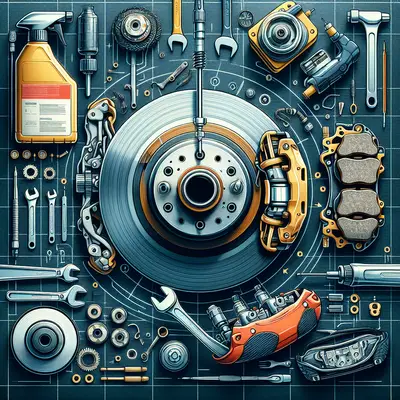
Brake pads and rotors are not just parts; they are a matched system. Many owners replace pads without considering rotor condition or compatibility, which often leads to noise, premature wear, or inconsistent stopping distances—issues that feel anything but refined.
High-quality pads are engineered with specific friction characteristics and heat behavior. When paired with rotors of the wrong material, thickness, or finish, you can end up with glazing, hotspots, or uneven deposits, all of which translate into vibration or shudder at the pedal. In premium driving, even small vibrations are unacceptable; they undermine both comfort and confidence.
When planning brake repairs, request:
- Pads and rotors from reputable manufacturers with published performance data
- Rotors machined or replaced as a set where necessary, not “spot fixed”
- A focus on smooth, uniform rotor surfaces rather than simply “within spec” thickness
The result is braking that feels composed rather than merely functional—linear, quiet, and predictable, even under repeated stops.
Brake Fluid: The Most Overlooked Element of Premium Stopping Power
Brake fluid rarely receives the attention it deserves, yet it is central to how the pedal translates your input into stopping force. Over time, brake fluid absorbs moisture, which lowers its boiling point and can lead to vapor bubbles forming under heavy braking—resulting in a soft, fading pedal precisely when you need firmness.
Refined brake care means treating brake fluid like a performance component, not a forgettable consumable. Rather than waiting for a vague “flush every few years,” request a moisture-content test or boiling-point check during service, especially if you drive in humid climates, mountainous regions, or frequently encounter stop‑and‑go traffic.
Two important practices distinguish a careful owner:
- Insisting on a complete fluid exchange rather than a quick top-off
- Ensuring the correct DOT specification is used, matching (or exceeding) the manufacturer’s recommendation without mixing incompatible types
This attention to fluid quality doesn’t just enhance stopping capability; it preserves internal components such as calipers, ABS valves, and the master cylinder by minimizing corrosion and internal wear.
Caliper Condition: The Quiet Guardian of Even Braking
Brake calipers work quietly in the background, but their condition has a profound influence on both safety and refinement. A caliper that fails to slide freely or retract cleanly can cause uneven pad wear, dragging brakes, and a subtle pull to one side that only becomes obvious during emergency stops or long drives.
Meticulous brake repairs always include a close look at caliper hardware:
- Guide pins cleaned, inspected, and lubricated with the correct high‑temperature grease
- Boots and seals checked for cracks, tears, or hardened rubber
- Piston movement verified smoothly and symmetrically
Many owners accept slightly uneven pad wear as normal; a more refined approach treats it as data. If one wheel’s pads consistently wear faster than the others, it is a quiet signal to investigate caliper function, hose condition, or even underlying ABS issues. Addressing these early not only improves stopping consistency but also keeps noise, heat, and rolling resistance under control—hallmarks of a truly well‑maintained vehicle.
Verification Drives: Elevating the Post-Repair Experience
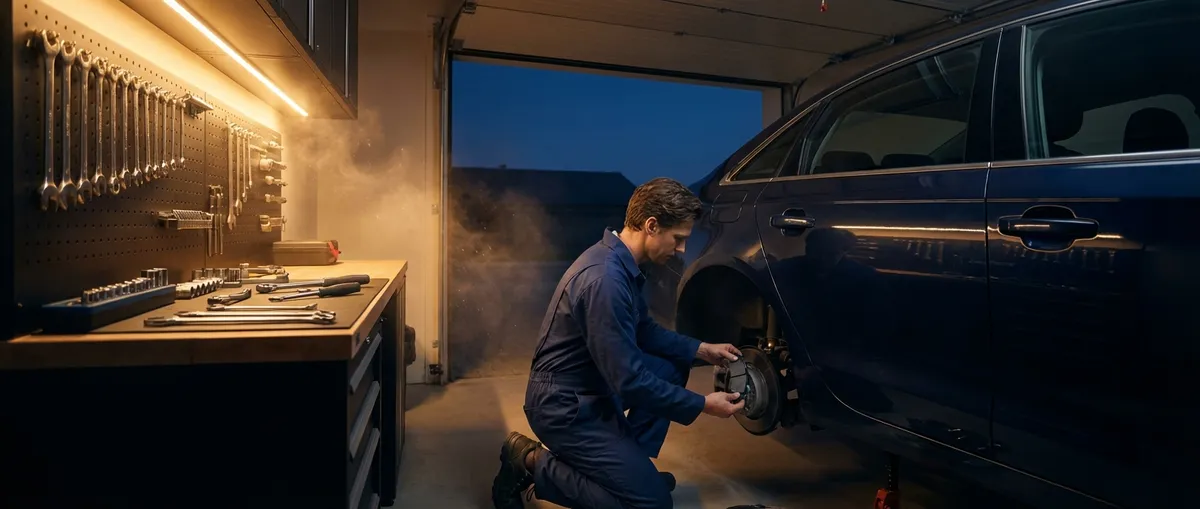
A truly premium brake repair does not end when the tools are put away; it ends when the car proves itself on the road. Too often, post‑repair testing is rushed or generic. A more elevated approach is to treat the test drive as a final quality audit tailored to your driving style.
When you collect the vehicle, ask the technician or service advisor how the brakes were tested. A thoughtful verification process should include:
- Low-speed stops to check for noise, initial bite, and smoothness
- Repeated moderate stops to confirm consistency and absence of fade
- Straight-line braking from higher speeds to confirm the vehicle tracks true
- Quiet-surface driving (like a smooth lot) to listen for subtle clicks, rattles, or scraping
As the owner, perform your own verification on a familiar route: gentle city braking, a few firmer stops in a safe, open area, and a short stretch at highway speeds. Notice not only how quickly the car stops, but how composed it feels—pedal firmness, steering stability, and absence of vibration or delay. This personal validation completes the repair process and ensures the car’s braking character aligns with your expectations.
Conclusion
For the attentive driver, brake repairs are about far more than replacing worn parts. They are an opportunity to refine the car’s most critical safety system with intent and precision. By treating brake feel as an instrument, pairing pads and rotors thoughtfully, managing fluid as a performance asset, preserving caliper integrity, and insisting on meaningful verification drives, you move beyond reactive maintenance into a realm of quiet confidence.
The reward is subtle yet unmistakable: a brake pedal that responds with calm authority, a chassis that remains poised under pressure, and the assurance that every stop is backed by deliberate, informed choices rather than hurried fixes. This is the silent strength of a truly well‑maintained braking system—and the standard a refined driver can comfortably demand.
Sources
- [National Highway Traffic Safety Administration (NHTSA) – Brake Safety Information](https://www.nhtsa.gov/equipment/brakes) – Federal guidance on brake system safety, performance, and common issues
- [Federal Trade Commission – Auto Repair Basics](https://consumer.ftc.gov/articles/0211-auto-repair-basics) – Practical advice for working with repair shops and understanding service quality
- [SAE International – Brake Systems Technical Papers](https://www.sae.org/browse/?pg=1&taxonomy=4092) – Engineering insights into brake design, performance, and testing (technical but authoritative)
- [AAA – Braking System Maintenance Recommendations](https://exchange.aaa.com/automotive/maintenance/braking-system/) – Consumer-focused recommendations on proper brake maintenance and inspection
- [Penn State University – Fundamentals of Automotive Brake Systems](https://extension.psu.edu/fundamentals-of-automotive-brake-systems) – Educational overview of brake system components and how they work together
Key Takeaway
The most important thing to remember from this article is that this information can change how you think about Repair Guides.