In refined driving, true confidence is rarely loud. It lives in the quiet assurance that every stop will be smooth, measured, and utterly predictable. Brake safety is not simply about avoiding failure; it is about cultivating meticulous habits that preserve control in the moments that matter most. For the discerning driver, brakes are not a background system—they are the final word in safety, composure, and command of the road.
Below are five exclusive, detail-focused insights that elevate brake safety from routine maintenance to a quiet form of craftsmanship behind the wheel.
1. Reading Brake Feel Like a Professional Test Driver
Most drivers notice their brakes only when something feels dramatically wrong. A more sophisticated approach treats pedal feel as a daily diagnostic tool.
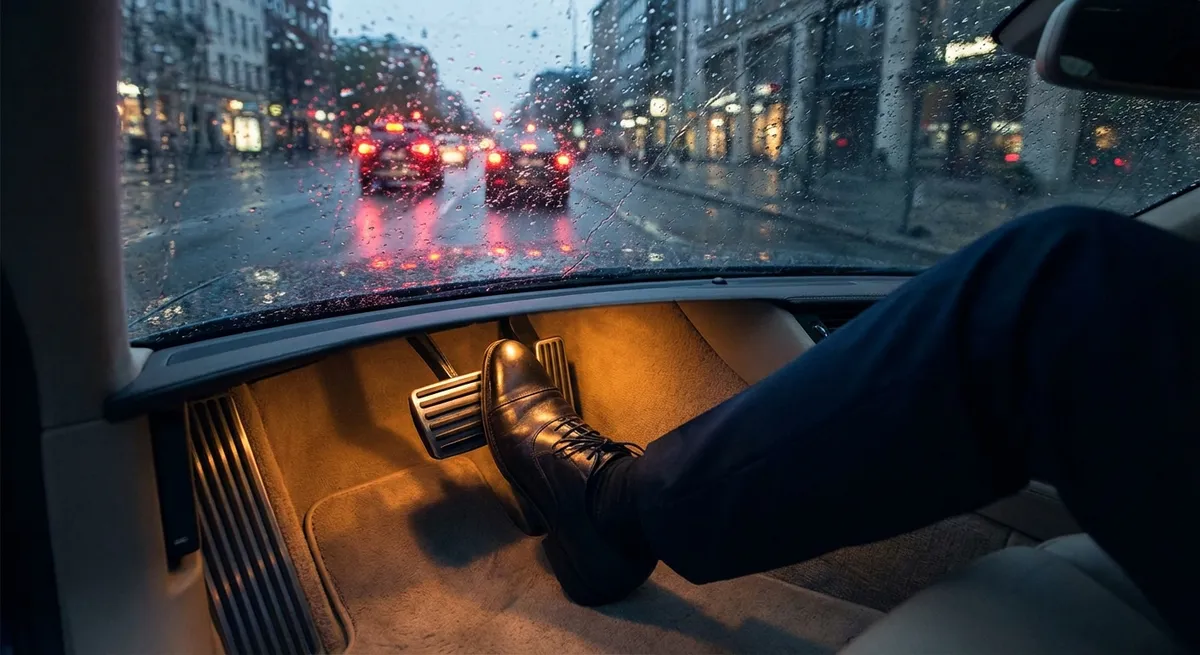
A consistent brake pedal should feel firm, progressive, and predictable. Over time, learn the subtle baseline: how far the pedal travels, how the resistance builds, and how quickly the vehicle responds from light to moderate pressure. Any deviation—slight softness, delayed engagement, a new vibration, or a faint pulsing at low speeds—is early data, not an inconvenience. These micro-changes can point to issues such as air in the brake lines, worn pads, uneven rotor surfaces, or even a failing master cylinder.
A premium safety practice is to perform a brief “feel check” on a quiet, straight road once a week: a smooth, moderate stop from neighborhood speed, followed by a slightly firmer stop. Observe pedal travel, pressure, and noise. Logging these impressions mentally—or even briefly in a driver’s notebook—helps you catch problems long before warning lights appear or stopping distances lengthen.
2. Temperature Awareness: Managing Heat Before It Manages You
Brake components live in a world of temperature extremes, and heat is quietly responsible for much of the degradation drivers attribute to “normal wear.” An elevated safety standard means driving in a way that respects how brakes handle thermal load.
Under spirited or downhill driving, repeated hard braking can lead to brake fade, where the pedal remains firm but stopping power diminishes as pads and fluid overheat. Rather than relying on the brakes alone, an attentive driver uses engine braking intelligently—downshifting or selecting lower gears in automatic and CVT transmissions—so the drivetrain assists with speed control. This reduces rotor temperatures, prevents glazing of brake pads, and preserves consistent performance in emergencies.
After a demanding drive, avoid abruptly coming to a dead stop with extremely hot brakes and holding the pedal down hard for long periods. This can create uneven heat spots on the rotors, encouraging judder and vibration later. When possible and safe, allow the car to roll the final few inches and use lighter pedal pressure to let rotors cool more uniformly. It’s a small behavior shift with disproportionately large benefits for both safety and refinement.
3. Protecting Brake Performance Through Tire and Suspension Discipline
Truly elevated brake safety looks beyond the brake system itself. Stopping distance is not just a function of calipers and pads; it is the outcome of an entire chassis working in concert.
Tires are the final link. Even the most advanced brake system is limited by the grip available at the contact patch. Underinflated tires can lengthen stopping distances, while uneven wear can cause the vehicle to pull under hard braking. Adhering meticulously to the manufacturer’s recommended tire pressures—checked when cold—and rotating on schedule is as much a brake safety measure as a tire care habit.
Suspension and alignment are equally important. Worn shocks or struts allow excessive weight transfer under braking, reducing stability and increasing stopping distance. Misalignment can cause the vehicle to drift or tug during emergency stops, forcing you to correct with the steering at precisely the moment you should be fully focused on braking. For drivers who value quietly capable safety, a proactive stance on suspension inspections and precise alignment is non-negotiable. It is not about a softer ride—it is about preserving laser-straight, predictable stops.
4. Curating Your Braking Style for Maximum Control
The way you brake day-to-day subtly trains your vehicle’s systems—and your own reflexes—for how they will behave under stress. A premium braking style is smooth, anticipatory, and deliberate.
Instead of late, abrupt stops, begin decelerating earlier with gentle, progressive pressure. This helps maintain higher friction material quality on pads, reduces rotor stress, and keeps brake fluid temperatures lower over time. It also keeps drivers behind you better informed through predictable brake light use, lowering the risk of being rear-ended.
Learn to modulate braking in stages: an initial light application to settle the vehicle, followed by a firmer phase to accomplish most of the deceleration, then a slight easing just before the complete stop. This three-phase approach refines passenger comfort but more importantly keeps you intimately familiar with how the car transitions between grip levels. When you do need to brake hard in an emergency, this practice makes it more natural to apply decisive pressure without panic or over-correction.
5. Elevating Routine Checks Into a Personal Safety Ritual
For the sophisticated driver, brake checks are not a hurried glance during an oil change; they are a recurring personal standard.
At least monthly, perform a deliberate walk-around in good light. Look through the wheels if possible: examine pad thickness, check for uneven rotor coloration, and note any rust ridges or scoring. Listen intentionally on your first drive of the day, with the radio off and windows slightly cracked: any new scraping, grinding, metallic chirping, or rhythmic thumps under braking deserve attention immediately, not “when it’s convenient.”
Complement this with a yearly professional inspection—even if mileage is low. Ask the technician for specifics: actual pad thickness in millimeters, rotor condition and measurements, fluid moisture content, and any signs of caliper sticking or uneven wear. Treat the inspection report as a safety document, not a formality. The goal is not to spend more on service; it is to eliminate uncertainty. Brake systems rarely fail without warning, but the warnings are subtle. Turning these checks into a quiet ritual ensures those signals are never missed.
Conclusion
Brake safety, at its most refined, is not dramatic. It is the calm assurance that every stopping maneuver—from a gentle approach to a valet stand to a sudden evasive brake on the highway—will be composed, linear, and under your complete control. By reading pedal feel with precision, respecting heat, maintaining the broader chassis, curating your braking style, and elevating routine checks into a personal ritual, you transform brake safety from a checklist into a discipline.
In that discipline lies the most premium luxury of all: knowing that when you ask your vehicle to stop, it will do so faithfully, predictably, and without compromise.
Sources
- National Highway Traffic Safety Administration (NHTSA) – Brake Safety - Overview of brake system components, failure modes, and safety guidance from a U.S. government authority
- U.S. Department of Transportation – Tire Safety and Maintenance - Explains how tire condition and pressure affect braking performance and overall vehicle safety
- Car Care Council – Brake System Maintenance - Practical recommendations for routine brake inspections and recognizing early warning signs
- Bridgestone – How Brakes Work and Why Brake Maintenance Matters - Clear technical overview of braking components and the impact of driving habits on brake life
- AAA – Common Brake Problems and Warning Signs - Describes subtle indicators of brake trouble and why timely attention is critical for safety
Key Takeaway
The most important thing to remember from this article is that this information can change how you think about Safety Tips.