Every journey, whether a quick city errand or a sweeping drive along the coast, is governed by one unspoken expectation: you will be able to stop—calmly, precisely, and on command. For drivers who hold safety to a higher standard, brake care is not merely a maintenance task; it is a discipline. This guide explores refined, safety‑first practices that go beyond routine service intervals, revealing subtleties in sound, feel, and driving behavior that quietly separate the cautious from the merely compliant.
The First Indicator Is You: Training Your Senses for Early Warnings
Long before a warning light glows on the dashboard, your senses begin recording data about your brakes. The most safety‑conscious drivers cultivate an almost intuitive awareness of what “normal” feels like—then notice, immediately, when that changes.
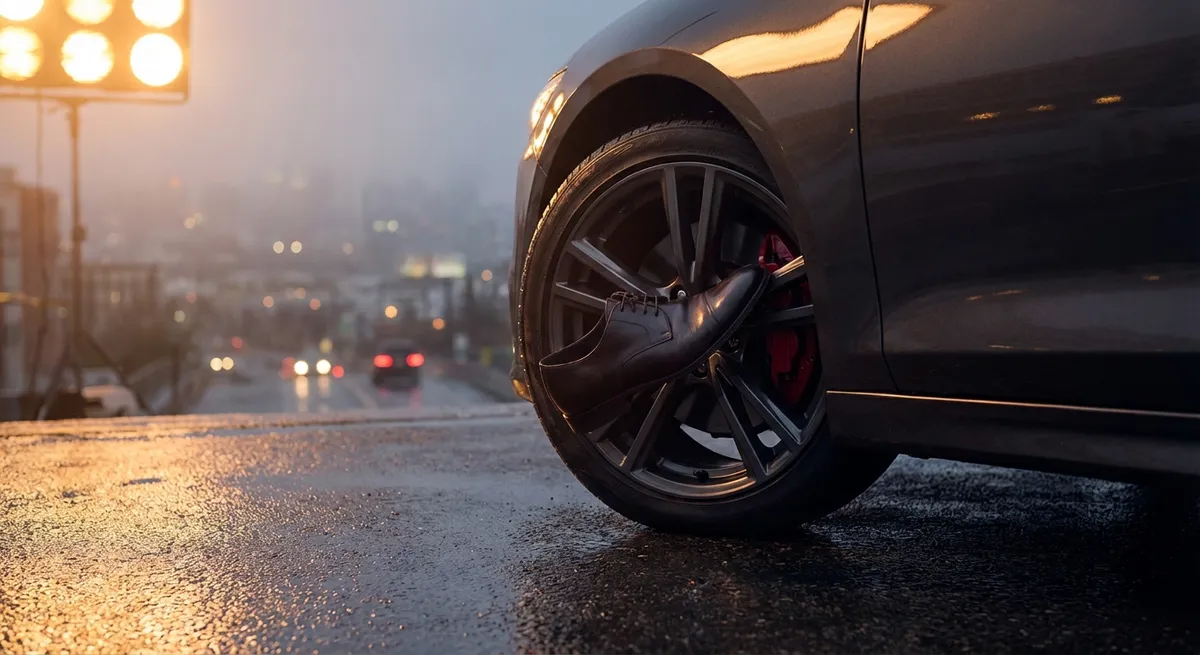
Pay attention to pedal feel during your first stop of the day. A pedal that suddenly feels softer, travels further, or requires more pressure than usual may signal air in the lines, moisture‑contaminated fluid, or an emerging hydraulic issue. Similarly, subtle pulls to one side can reveal an early imbalance between front wheels, often caused by a sticky caliper, uneven pad wear, or a developing hydraulic problem.
Sound also plays a vital role. Not all noise indicates disaster, but new or evolving noises should never be dismissed: a faint, periodic chirp may signal a wear indicator brushing the rotor, while a grinding tone usually means the friction material is gone and metal is contacting metal. Train yourself to perform a brief “sensory check‑in” once a week: one quiet, window‑down braking test in a low‑traffic area, noting sound, vibration, and stopping feel. This is not paranoia—it is proactive safety.
Beyond “Stop/Go”: Understanding Brake Behavior Under Stress
Brakes do not reveal their true character in mild city traffic; they reveal it under stress. A safety‑minded driver deliberately learns how the car behaves in demanding—but controlled—conditions, so that surprises are minimized when emergency stops are necessary.
In a safe, open space such as an empty parking lot, practice firm, straight‑line stops from moderate speed to get acquainted with how your vehicle’s ABS (anti‑lock braking system) intervenes. Note the pulsing in the pedal and the buzzing sound when ABS activates; that sensation should feel familiar before you ever need it on a wet highway. If your car pulls, feels unstable, or takes longer than expected to stop, that information is invaluable and warrants a professional inspection.
Pay attention to how your brakes respond after repeated use, such as descending a long hill. A spongier pedal, fading performance, or a burning odor can indicate brake fade, overheated pads, or fluid that has absorbed too much moisture. Drivers who value safety treat these signs not as inconveniences, but as immediate prompts to reduce speed, increase following distance, and schedule a detailed brake check.
The Hidden Safety System: Brake Fluid as a Performance Indicator
Brake fluid is often overlooked precisely because it is out of sight. Yet this clear or slightly amber liquid is one of the most critical components of your braking system—and one of the most telling indicators of its health.
Brake fluid is hygroscopic: it absorbs moisture over time, lowering its boiling point and reducing its ability to function reliably under heavy braking. A system filled with aged, moisture‑laden fluid is more susceptible to vapor lock and fade, especially during repeated hard stops or mountain descents. For a driver who prioritizes safety, fluid is not changed only when something fails; it is renewed preemptively according to time and usage, often more frequently than the absolute minimum suggested in the owner’s manual.
Take a moment every month to visually inspect the brake fluid reservoir under the hood. The level should sit between the marked minimum and maximum lines, and the fluid should not be markedly dark or cloudy. A slow, consistent drop can reflect normal pad wear, but sudden changes or visible contamination are red flags. Treat brake fluid as you would a fine lubricant in a performance machine: something to maintain with intention, rather than ignore until it becomes a liability.
Precision in the Everyday: Driving Habits That Quietly Protect Your Brakes
The most advanced brake hardware cannot fully compensate for poor driving habits. Conversely, refined, deliberate driving can dramatically extend brake effectiveness and preserve a crucial safety margin, without sacrificing travel time.
Smooth, anticipatory driving is the foundation. Look further ahead than the car in front of you—scan multiple vehicles ahead, watch traffic signals, and observe brake lights in the distance. Begin gently easing off the accelerator early rather than surging forward and relying on last‑second, aggressive braking. This habit not only reduces wear but preserves brake performance for the moments you truly need it: sudden cut‑ins, unexpected obstacles, or changing road conditions.
Resist the habit of “riding the brakes” on long descents. Instead, use engine braking by downshifting appropriately in vehicles where this is recommended, and apply the brakes in short, firm intervals to allow cooling between applications. On wet or dirty roads, assume your stopping distance is significantly greater and double the space you leave to the car in front. These understated techniques may seem modest, but collectively they create a reserve of brake capacity that can make a critical difference when the unexpected occurs.
When “Good Enough” Isn’t: Selecting and Verifying Professional Work
For drivers who take safety seriously, brake service is not a commodity; it is a specialized, safety‑critical procedure. The shop you choose and the questions you ask directly influence the quality and reliability of the work performed.
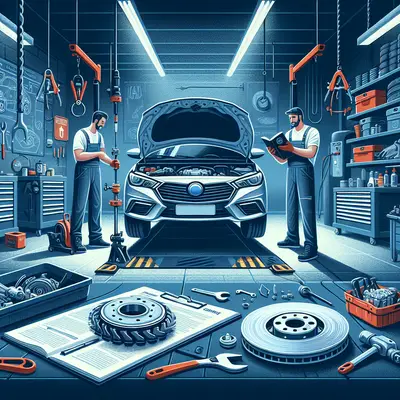
Begin with certification and transparency. A reputable shop should have certified technicians, follow the manufacturer’s specifications, and be willing to walk you through what they will inspect: pad thickness, rotor condition and minimum thickness, caliper function, hoses, lines, and fluid. Ask for a detailed, written estimate that distinguishes between urgent safety items and “recommended” or optional services. A premium‑minded driver is not paying for jargon; they are paying for clarity.
After service, do not simply drive away and assume perfection. Conduct your own calm, methodical verification: in a safe area, perform multiple progressively firmer stops to confirm that pedal feel is consistent, the vehicle tracks straight, and there are no new noises or vibrations. Review the invoice for specific part descriptions (including pad material type and rotor brand or specification) rather than vague “brake job” line items. When it comes to brakes, “good enough” is not a standard; verifiable, repeatable stopping performance is.
Conclusion
Exceptional brake safety is rarely about a single grand gesture. It is the sum of small, deliberate behaviors: a weekly sensory check, a measured response to warning signs, a respect for brake fluid, thoughtful driving habits, and a discerning approach to professional service. For the driver who views every stop as a quiet promise kept—to passengers, to other road users, and to themselves—these practices are not excessive. They are simply the standard. In cultivating them, you transform every journey from routine transportation into something more considered: controlled, composed, and confidently safe.
Sources
- [National Highway Traffic Safety Administration (NHTSA) – Brakes Safety Information](https://www.nhtsa.gov/equipment/brakes) - Federal safety guidance and background on brake systems and performance
- [U.S. Department of Transportation – ABS and Braking Basics](https://www.transportation.gov/mission/safety/anti-lock-braking-system-abs) - Overview of how ABS functions and why it matters for emergency braking
- [AAA Exchange – Understanding Brake Systems and Maintenance](https://exchange.aaa.com/automotive/automotive-insight/understanding-brake-systems/) - Consumer‑focused explanations of brake components and care
- [YourMechanic – Signs of Bad or Failing Brake Pads](https://www.yourmechanic.com/article/symptoms-of-bad-or-failing-brake-pads) - Practical examples of common symptoms drivers may notice
- [Federal Trade Commission (FTC) – Auto Repair Basics](https://consumer.ftc.gov/articles/auto-repair-basics) - Guidance on choosing repair shops, understanding estimates, and verifying work
Key Takeaway
The most important thing to remember from this article is that this information can change how you think about Safety Tips.