In an era where vehicles accelerate faster and traffic grows denser, the true luxury is not horsepower—it is the confidence that your car will stop, precisely and predictably, every single time. For drivers who value refinement over drama, the brake system is not a mere collection of components; it is a carefully tuned safety instrument. Understanding how it works, how it ages, and how to preserve its integrity transforms you from a passive owner into a discerning steward of your vehicle’s most critical safeguard.
The Brake System as a Safety Ecosystem, Not a Single Part
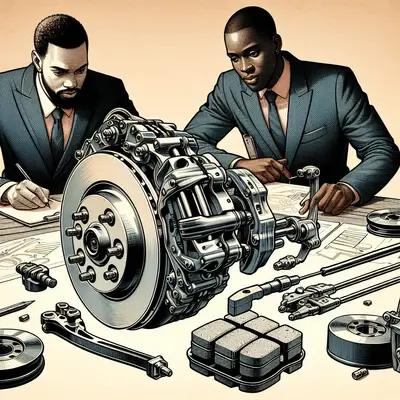
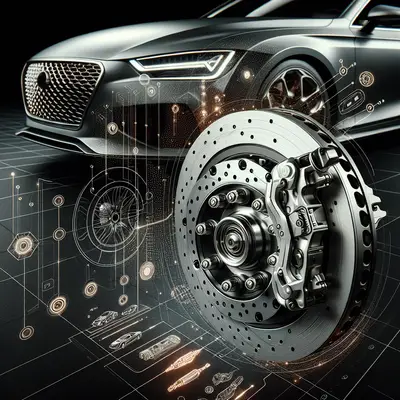
Brakes are often spoken of in fragments—pads, rotors, calipers—yet their effectiveness depends on an ecosystem working in unison. When you press the brake pedal, a sequence unfolds: the pedal moves a pushrod, the master cylinder converts that movement into hydraulic pressure, fluid transmits that pressure through lines and hoses, calipers clamp pads against rotors, and friction converts kinetic energy into heat. Any weakness along this chain dilutes the outcome at the wheels.
Modern vehicles add layers of electronic intelligence—ABS (anti-lock braking system), ESC (electronic stability control), and sometimes brake assist—each monitoring wheel speed, vehicle behavior, and pedal input. These systems can compensate for a sudden emergency stop or a slick surface, but they cannot compensate for severely worn pads, contaminated fluid, or neglected hardware. Seeing the brake system as a unified whole reframes maintenance from “pad swaps” into preserving a cohesive, interdependent safety network.
Elegance in Feel: What Your Brake Pedal Is Quietly Telling You
A refined braking system speaks through the pedal. The most safety-conscious drivers pay attention not only to whether the car stops, but to how it feels as it does so. A confident, well-maintained system offers a predictable response: initial pedal travel is smooth and progressive, followed by a firm, linear build-up in resistance. You should not need to guess where the brakes will “bite”; their behavior should feel repeatable, day after day.
Subtle changes in pedal personality often precede more obvious symptoms. A gradually softening pedal can hint at moisture-laden or aging brake fluid, microscopic leaks, or internal deterioration of rubber hoses. A notchy or slightly pulsating pedal under light braking may be the earliest sign of rotor thickness variation or uneven pad deposits—issues that compromise both smoothness and stopping distance long before obvious vibration appears. The attentive driver treats these small shifts as early warning signals, not as quirks to be ignored.
Exclusive Insight #1: Pedal Memory as a Safety Habit
Drivers who cultivate a mental “baseline” for pedal feel notice deviations sooner. Periodically evaluate your brakes in a controlled environment—straight road, light traffic, moderate speed—and pay attention to the pedal’s travel, firmness, and response. This quiet practice helps you detect small changes weeks or months before they become a legitimate safety concern.
Heat, Fade, and the Hidden Limits of Everyday Brakes
Every braking event is a conversion of energy into heat. In stop-and-go traffic or spirited highway driving, components can reach temperatures that challenge their design. A refined brake system does not merely stop the vehicle; it manages heat gracefully so each stop feels like the first, not the final effort of an overworked system.
Brake fade is the moment when heat overcomes friction. It can manifest as a longer pedal travel, reduced deceleration despite firm pedal pressure, or a smell of overheated material. Street-oriented pads and rotors are engineered for everyday conditions, not repeated, aggressive high-speed stops. Heavy loads, mountain descents, towing, or performance driving can push them to their thermal limits much sooner than one might expect.
Exclusive Insight #2: Strategic Cooling Through Driving Technique
Rather than riding the brake on long descents, a safety-conscious driver uses a combination of lower gears and intermittent, firm braking. This allows the brakes to cool between applications, keeping temperatures within a safe range and preserving both pad material and rotor integrity—an understated but highly effective protection of your stopping performance.
Brake Fluid: The Understated Lifeline of Stopping Power
Brake fluid is the invisible hero of the system, yet it is frequently the most neglected. Its job is deceptively simple: translate pedal pressure into hydraulic force with absolute reliability. Because brake fluid is hygroscopic—it slowly absorbs moisture from the air—its performance degrades over time. That absorbed water lowers the boiling point and invites internal corrosion of metal components and ABS valves.
Under intense braking, fluid contaminated with moisture can begin to boil, forming vapor pockets. Vapor compresses easily; fluid does not. The result is a spongy pedal, delayed braking response, or in extreme cases, a near-complete loss of braking force until the fluid cools. This degradation often happens so gradually that owners acclimate to the diminished performance without realizing how far the system has drifted from its original capability.
Exclusive Insight #3: Fluid Color Is Not a Reliable Indicator of Health
Many owners glance at the fluid reservoir and assume “light color” means “safe.” In reality, moisture content and boiling point cannot be reliably judged by appearance alone. A professional brake fluid test, which measures moisture or boiling point directly, offers a much more precise picture. For drivers who value utmost safety, incorporating such testing into routine service elevates their maintenance standard beyond the typical visual inspection.
Precision in Hardware: Rotors, Pads, and the Geometry of Smooth Stops
Brake pads and rotors are often treated as consumables, swapped when thin and forgotten in between. Yet their geometry, materials, and installation quality shape the character of every stop. Premium pads use advanced friction materials tuned for predictable performance across a wide temperature range, low noise, and controlled dust. Quality rotors maintain tight tolerances in thickness and runout to avoid pedal pulsation and uneven wear.
Seemingly minor issues—improper torque on wheel lug nuts, poor cleaning of mating surfaces, or skipping hardware replacement—can introduce distortions in rotor alignment and caliper movement. Over time, this creates uneven contact, hotspots, and noise that no amount of pad compound can fully mask. The refined braking experience is not just about what parts are used, but how meticulously they are installed.
Exclusive Insight #4: Hardware and Lubrication as Noise and Feel Insurance
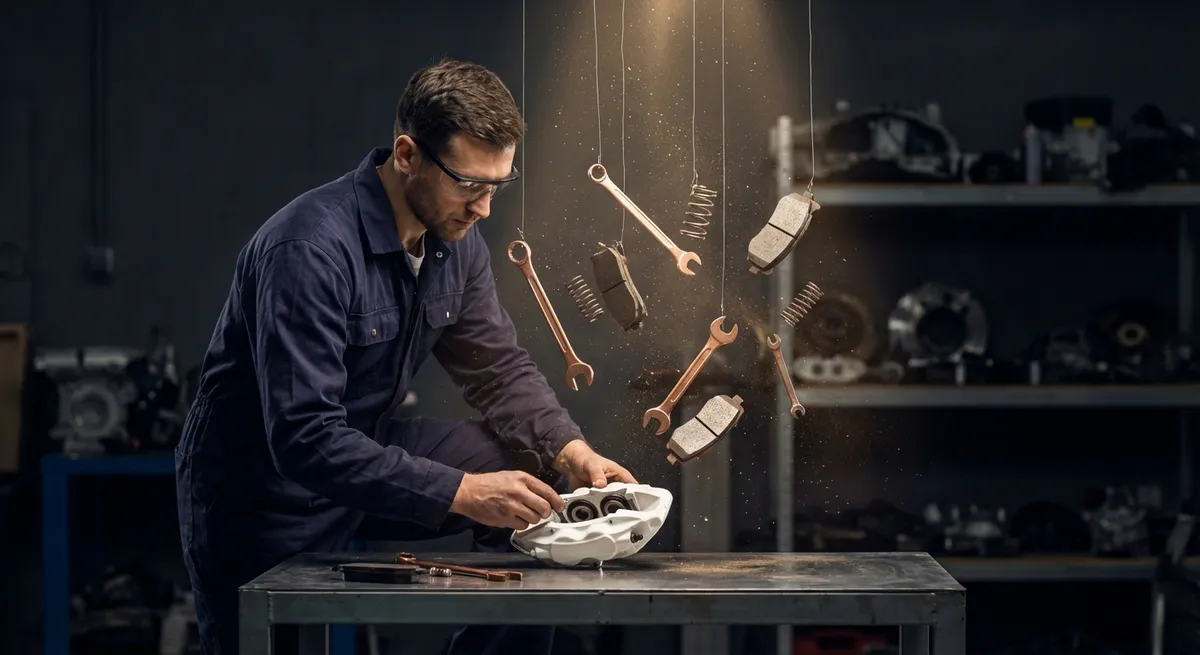
The most detail-oriented brake services replace not only pads and rotors, but also essential hardware—shims, clips, and sometimes guide pins—while applying the correct high-temperature brake lubricant sparingly and precisely. This reduces the likelihood of brake squeal, sticking calipers, and uneven pad wear. For discerning drivers, asking specifically about hardware and lubrication during service is a subtle yet powerful way to elevate both comfort and safety.
Electronics and Assist Systems: Partners, Not Substitutes, for Good Maintenance
Modern vehicles often mask marginal brake performance with sophisticated electronics. ABS prevents wheel lock-up, stability control helps keep the vehicle composed, and brake assist can apply full braking force when it senses a panic stop. These systems are remarkably effective, but their interventions are built on the assumption that the underlying mechanical system is healthy.
ABS that activates frequently in everyday situations—gentle stops on dry pavement, for instance—can be a sign of compromised traction or uneven braking force, not simply an “overactive system.” Likewise, an increasing reliance on stability control to correct minor slides may hint at tire, suspension, or brake imbalances. Software can enhance physics; it cannot rewrite them. Proper brake maintenance ensures these systems function as a refined safety net, not as a constant crutch.
Exclusive Insight #5: Reading the “Language” of Warning Lights and Events
Rather than viewing ABS or stability control activations as isolated incidents, attentive drivers treat them as data points. A new warning light, a sudden change in how frequently these systems intervene, or a shift in when the ABS pulses during braking can signal deeper issues. Documenting when and how these events occur—and sharing that detail with a qualified technician—can dramatically accelerate accurate diagnosis and preserve safety.
Conclusion
For the truly discerning driver, a brake system is not merely a means to reduce speed; it is the quiet, precise guardian that makes every journey feel composed and secure. By listening to the pedal, respecting heat, taking brake fluid seriously, insisting on meticulous hardware practices, and understanding the role of electronics, you move beyond basic maintenance into a realm of intentional, elevated safety.
This is the essence of sophisticated motoring: not louder engines or brighter screens, but the serene confidence that when you call upon your brakes—whether in a gentle glide to a stop or a sudden emergency—they will answer with silent precision, time after time.
Sources
- [National Highway Traffic Safety Administration (NHTSA) – Brake Safety Information](https://www.nhtsa.gov/equipment/brakes) - Federal guidance on brake system components, performance, and safety considerations
- [U.S. Department of Transportation – Brake Fluids Standard (FMVSS No. 116)](https://www.ecfr.gov/current/title-49/subtitle-B/chapter-V/part-571/subpart-B/section-571.116) - Official technical standards governing brake fluid performance and requirements
- [AAA – Brake System Basics and Maintenance](https://exchange.aaa.com/automotive/automotive-test-center/brake-system/) - Consumer-focused explanation of brake system operation and recommended maintenance practices
- [SAE International – Brake System Technology Overview](https://www.sae.org/binaries/content/assets/cm/content/topics/automated_connected_brake_steer.pdf) - Technical perspective on modern braking and control systems from an engineering standards body
- [University of California, Berkeley – Vehicle Dynamics and Control Resources](https://vehicle.me.berkeley.edu/) - Research insights into vehicle dynamics, braking behavior, and stability control systems
Key Takeaway
The most important thing to remember from this article is that this information can change how you think about Brake Systems.