For many drivers, brakes are an afterthought—felt only in the final few feet before a stop. Yet for those who demand composure, control, and genuine safety, the brake system is the vehicle’s quiet masterpiece. Understanding how this system is engineered, how it ages, and how to care for it with intention transforms every stop from a routine action into a deliberate, refined choice in safety.
This is not a primer on “how to change pads.” It is a deeper look into how sophisticated brake systems behave in the real world—and five exclusive, lesser-known insights that safety‑focused owners can use to elevate every journey.
The Modern Brake System, Deconstructed
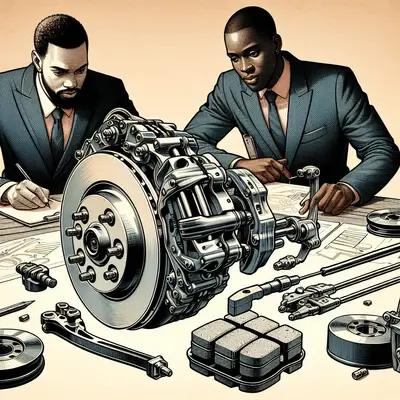
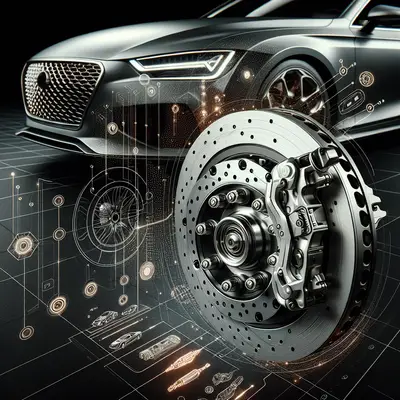
A contemporary brake system is a coordinated network rather than a collection of simple parts. At its core are the friction components—pads or shoes clamping onto rotors or pressing into drums—to convert kinetic energy into heat. These are controlled by the hydraulic system: a master cylinder, brake lines and hoses, and calipers or wheel cylinders, all working to transmit your pedal input precisely and consistently.
Overlaying this mechanical foundation is electronic intelligence. Anti-lock braking systems (ABS) modulate pressure to prevent wheel lockup. Electronic brake-force distribution (EBD) shifts braking effort across the axles to maintain stability. Brake assist systems detect emergency braking behavior and apply full stopping force faster than a human typically would. Many vehicles now integrate these systems with traction control and stability control, forming a safety net that operates in milliseconds.
When maintained with care, these components deliver a stopping experience that is not merely effective, but composed: a firm, linear pedal; minimal noise; balanced deceleration; and predictable performance in the rain, on a steep descent, or during an unexpected stop. It is this predictability—engineered and preserved—that defines true brake sophistication.
Insight 1: The Pedal’s “Personality” Reveals More Than You Think
Most drivers notice only two states: “the brakes work” and “the brakes feel off.” Discerning owners understand that the brake pedal has a distinct personality—one that quietly evolves over time and provides early, valuable clues about system health.
A gradual increase in pedal travel before engagement may signal pad wear, fluid degradation, or minor air intrusion in the hydraulic system. A pedal that feels spongy, rather than smoothly firming up, is often associated with moisture‑contaminated fluid or a developing leak. A pedal that becomes unusually hard with reduced stopping power may indicate a failed vacuum booster or an issue within the ABS modulator.
The refined practice is to consciously note the pedal’s character during a calm, controlled stop once or twice a month: where it begins to bite, how quickly it firms up, whether it feels consistent from morning to evening. Subtle changes over weeks—rather than sudden, dramatic symptoms—often provide the earliest and safest opportunity for intervention, long before true danger arises.
Insight 2: Brake Fluid Aging Is a Slow, Invisible Threat
Brake fluid is one of the most underestimated elements of the system, precisely because it fails quietly. As a hygroscopic fluid (in most vehicles using DOT 3, DOT 4, or DOT 5.1), it gradually absorbs moisture from the air. Over time, this lowers its boiling point and increases corrosion risk inside the brake lines, calipers, and master cylinder.
When fluid boils under heavy braking—such as on a mountain descent or during aggressive highway stops—microscopic vapor bubbles form, compress under pressure, and cause a soft, unpredictable pedal feel. Even drivers who never see a steep incline may experience degraded ABS performance or internal corrosion purely due to aging fluid.
A sophisticated maintenance approach does not rely solely on the calendar. Instead, it combines time-based intervals (often 2–3 years for many modern vehicles, or per manufacturer guidance) with condition-based evaluation. Clear, light-colored fluid in the reservoir is a good sign; dark, tea‑colored fluid suggests oxidation and potential moisture contamination. For higher-value vehicles or demanding driving conditions, periodic testing of fluid boiling point—with a professional service tool—is a discreet but powerful layer of safety.
In essence, replacing brake fluid on a sensible schedule is less about “fixing a problem” and more about preserving the original braking character the vehicle had when it left the factory.
Insight 3: Rotor Surfaces Tell a Story of Heat, Habits, and Health
Rotors are not just metal discs; they are thermal storytellers. Their visible surfaces can reveal how the braking system is being used, abused, or aging beneath the surface.
A smooth, uniform gray surface typically reflects healthy contact between pad and rotor. Faint, even circular marks are normal. In contrast, deep grooves or scoring suggest either trapped debris, worn pads exposing their backing plate, or corrosion that has been scraped away unevenly. This can reduce effective pad contact area and introduce vibration or noise.
Bluish discoloration indicates past overheating events—perhaps a long downhill descent using constant pedal pressure instead of controlled, intermittent braking. Localized hotspots, appearing as darker patches, may be early signs of rotor hard spots, which can contribute to pulsation and uneven braking. Rust rings near the inner or outer edge often point to incomplete pad contact, sometimes caused by pad design, sticky caliper slides, or infrequent use.
Rather than waiting for obvious vibration at highway speeds, a refined owner occasionally inspects the visible rotor face behind open‑spoke wheels or requests a rotor inspection during routine service. Reading rotor condition as a narrative of heat and usage allows timely correction of driving habits or component issues, preserving both safety and refinement.
Insight 4: Brake Noise Is a Diagnostic Language, Not an Irritation
To the untrained ear, all brake noise is “squealing.” In reality, the sounds your brakes make can be translated into specific mechanical and material messages.
A light, high‑pitched squeal at low speed—especially in damp conditions—may be normal pad vibration or a by-product of certain high‑performance friction materials. However, a consistent squeal during most stops can be an early wear indicator: many pads incorporate a small metal tab that intentionally contacts the rotor when friction material reaches a defined minimum, producing a sharp, metallic sound that is impossible to ignore.
A harsh grinding noise is more serious, typically signaling that friction material has been worn away entirely, allowing the metal backing plate to contact the rotor. This not only compromises safety but quickly damages the rotor, turning what could have been a targeted pad replacement into a more extensive—and more expensive—repair.
Intermittent clunks or knocks while braking can indicate loose caliper hardware, worn slide pins, or play in the suspension. A faint chirping that changes with wheel speed, even without brake application, may hint at a dragging pad or a misaligned shield lightly touching the rotor.
The elevated approach is to treat new or changing brake sounds as early warning signals rather than merely annoyances—seeking evaluation promptly, before the system transitions from “noisy” to compromised.
Insight 5: How You Decelerate Shapes Long-Term Brake Behavior
Brake longevity and consistency are shaped as much by driving style as by parts quality. Owners who value a precise, repeatable braking feel understand that every deceleration is, in effect, a small shaping of the system’s future.
Abrupt, late braking repeatedly heats the pads and rotors more intensely than necessary, accelerating wear and increasing the risk of glazing (a hardened, glassy pad surface) that reduces friction and invites noise. Riding the brakes on long descents sustains high temperatures that can promote rotor warping sensations, uneven pad deposits, and fluid boiling.
By contrast, looking farther ahead and decelerating progressively allows the system to operate comfortably within its thermal envelope. On steep grades, alternating between engine braking (downshifting appropriately in vehicles where this is recommended) and firm, intermittent pedal applications gives the components time to shed heat between braking phases.
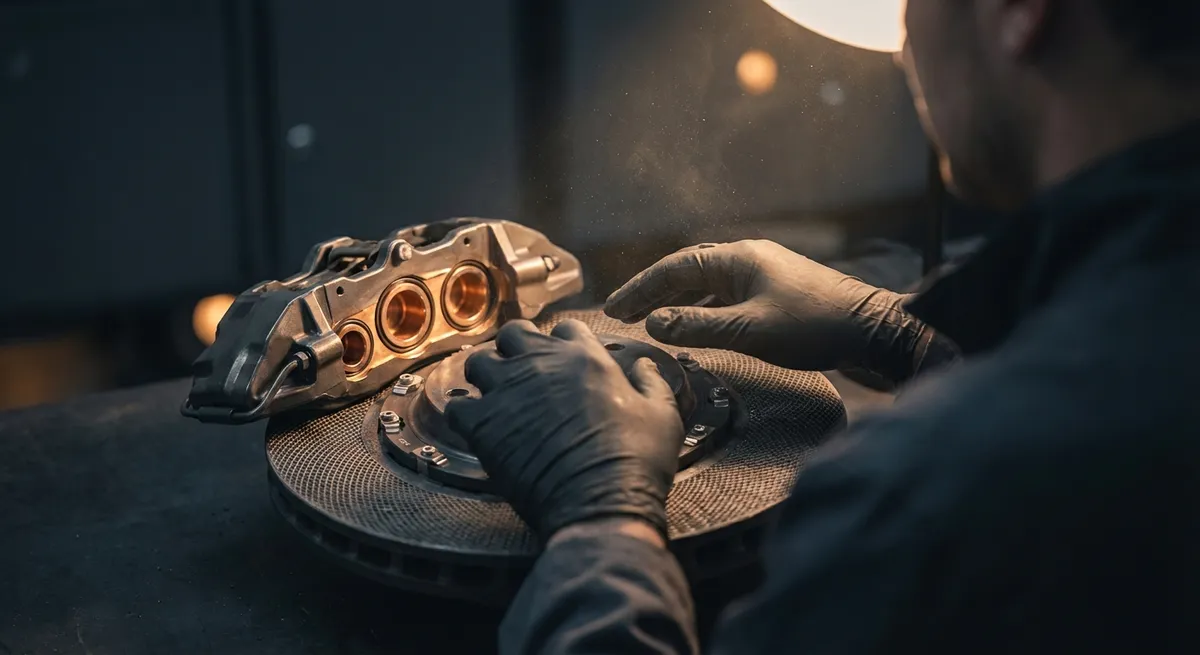
After new pads and rotors are installed, the way you “bed them in”—a series of controlled stops to gradually build a consistent friction layer on the rotor surface—can define how quietly and smoothly they perform for tens of thousands of miles. While many owners delegate installations entirely to professionals, those who value refinement ask not just what parts are being used, but also whether the shop follows proper bedding-in procedures recommended by the manufacturer.
Over time, this thoughtful approach to deceleration yields brakes that respond with a satisfying, predictable precision—a daily reward for intentional driving.
Conclusion
A brake system is most successful when it is almost invisible in daily use—when each stop is uneventful, composed, and free from drama. Achieving that level of quiet excellence is not a matter of chance, but of understanding and respect for the system’s complexity.
By listening to the pedal’s changing character, respecting the hidden vulnerabilities of brake fluid, learning to read rotor surfaces, treating brake noise as a meaningful diagnostic language, and refining deceleration habits, car owners can move beyond basic “maintenance” into a realm of deliberate, elevated brake care.
The result is not only enhanced safety, but a driving experience that feels calm, controlled, and meticulously curated at every stop—exactly as a modern, well‑engineered vehicle was meant to be experienced.
Sources
- [National Highway Traffic Safety Administration (NHTSA) – Brakes and Safety Systems](https://www.nhtsa.gov/equipment/brakes) - Overview of brake system safety, components, and federal safety perspectives
- [U.S. Department of Energy – How Regenerative Braking Works](https://www.energy.gov/eere/vehicles/articles/fotw-1040-june-3-2019-what-regenerative-braking-and-how-does-it-work) - Explains braking concepts and energy conversion in modern systems
- [SAE International – Brake System Fundamentals](https://www.sae.org/binaries/content/assets/cm/content/topics/bp/systems/brake-systems.pdf) - Technical background on brake system design and operation
- [YourMechanic – Symptoms of Bad or Failing Brake Fluid](https://www.yourmechanic.com/article/symptoms-of-bad-or-failing-brake-fluid) - Practical discussion of brake fluid degradation and its consequences
- [Advance Auto Parts – Understanding Brake Noise](https://shop.advanceautoparts.com/r/car-projects/under-the-hood/what-does-that-brake-noise-mean) - Breakdown of common brake noises and what they can indicate
Key Takeaway
The most important thing to remember from this article is that this information can change how you think about Brake Systems.