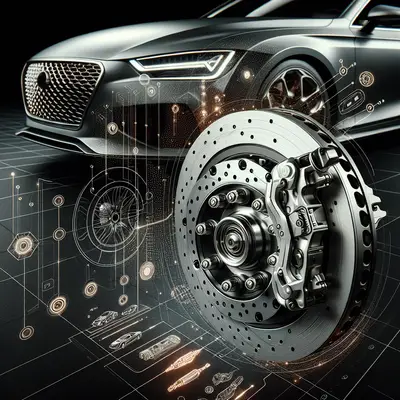
For the driver who expects a car to feel composed, not merely functional, the brake system is less a set of parts and more a safety instrument. Far beyond pads and rotors, contemporary brake technology is a carefully orchestrated network of hydraulic precision, electronic intelligence, and thermal control. Understanding this system through a more discerning lens invites not anxiety, but a calm assurance: you know how your car will behave when it matters most.
Below are five exclusive, detail‑oriented insights into brake systems that particularly resonate with owners who place a premium on refined safety and consistency.
The Subtle Language of Brake Pedal Feel
Brake pedal feel is the primary conversation between you and the system, yet many drivers treat it as background noise. In reality, the way the pedal responds under your foot is an early‑warning diagnostic tool.
A brake pedal that is consistently firm, progressive, and predictable signals healthy hydraulic pressure, minimal air in the lines, and well‑matched friction materials. A pedal that slowly sinks at a stop can indicate an internal master cylinder leak; a pedal that feels spongy often points to air or moisture in the brake fluid. Even a slightly “gritty” sensation—perceptible to the attentive driver—may foreshadow uneven pad deposits or rotor surface irregularities.
Refined drivers learn to notice micro‑changes: a touch more travel before engagement, the need for slightly more pressure to get the same response, or a faint pulsing that wasn’t there last month. These nuances are seldom sudden failures; they are the brake system quietly asking for attention. When you recognize pedal feel as a diagnostic cue rather than a vague sensation, routine drives become subtle safety checks instead of guesswork.
Thermal Management: How Brakes Behave When Hot, Not Just When New
Most owners judge their brakes in casual city traffic, when components are relatively cool. Yet modern brake systems are designed to perform within a specific temperature window—and their true character often emerges under heat.
Every stop converts kinetic energy into heat at the pad–rotor interface. Quality brake pads are engineered to maintain consistent friction as temperatures rise, while rotors act as thermal reservoirs that absorb and shed heat. When components are mismatched or degraded, you may experience brake fade—a softening of response as temperatures climb, often mistaken for “weak brakes.”
A premium safety mindset acknowledges that an occasional firm stop from highway speeds, executed in a controlled environment, can be revealing. Do the brakes remain consistent on the second and third hard stop, or does the pedal feel longer, the smell of hot brakes more pronounced than expected? Such behavior can indicate worn pads, low‑quality friction material, under‑spec rotors, or even dragging calipers causing chronic overheating.
Thermal management is not just a performance conversation; it is a safety one. A system that remains composed under heat is more likely to behave predictably when you need to brake hard—on a downhill grade, with passengers on board, and no room for uncertainty.
Brake Fluid as a Precision Instrument, Not a Commodity
Brake fluid is often treated as an afterthought—something that exists, vaguely, in a reservoir. In reality, it is a highly stressed hydraulic medium that determines how faithfully your pedal input is translated into stopping force.
Most modern vehicles use glycol‑based fluids (DOT 3, 4, or 5.1) that are hygroscopic: they absorb moisture over time. This absorbed moisture lowers the fluid’s boiling point and invites internal corrosion in calipers, lines, and ABS components. Under high heat, compromised fluid can begin to vaporize, introducing compressible gas into a system that depends on incompressible fluid. The result is a soft, unreliable pedal exactly when you require precision.
Drivers with a refined approach to safety treat brake fluid like they might treat fine engine oil: not something you wait to fail, but something you proactively preserve. Rather than relying solely on mileage, consider the combination of age, climate (humid regions accelerate moisture absorption), and usage (frequent downhill driving or towing). A clear, lightly amber fluid viewed in the reservoir is not a perfect metric, but a dark, contaminated fluid is a clear invitation to act.
Brake fluid service intervals published by manufacturers are an excellent baseline, but the attentive owner watches for subtle signs: diminished pedal crispness under repeated hard stops, or a chronically “mushy” feel after long descents. These are cues that your hydraulic precision is being quietly compromised.
The Quiet Role of ABS and Stability Systems in Everyday Braking
Antilock Braking Systems (ABS) and Electronic Stability Control (ESC) are usually discussed in the context of emergencies: panic stops, evasive maneuvers, wet or icy roads. Yet their influence on brake system safety begins long before that dramatic moment.
ABS allows you to maintain steering control under heavy braking by rapidly modulating brake pressure to prevent wheel lockup. ESC goes further, using individual wheel braking to correct understeer or oversteer and help keep the vehicle on its intended path. These systems rely on an orchestra of sensors—wheel speed sensors, steering angle sensors, yaw rate sensors—and a hydraulic control unit that can adjust braking force faster than any human.
For the discerning driver, the key insight is that ABS and ESC do not replace good braking habits; they refine and support them. A well‑maintained brake system—with fresh fluid, healthy pads, and proper rotor condition—gives these electronic guardians the consistency they need to intervene precisely, not crudely. Conversely, poorly maintained brakes can force ABS and ESC to work harder, for longer, sometimes masking underlying mechanical shortcomings until they become acute.
Another subtlety: the brief rumble or pulsation you feel through the pedal during ABS activation is not a flaw; it is the system performing as designed. Understanding this sensation beforehand prevents panic in the moment. When you recognize the feel of ABS engagement as controlled intervention rather than failure, you react with calm correction rather than confusion.
Matching Brake Components to Your Driving Character
Not all brakes are created—or used—the same way. An understated but vital insight is that your brake system’s ideal configuration depends on how and where you drive, and what you expect from the car.
Daily urban commuting with frequent, light stops places different demands on the system than long highway drives with periodic emergency braking, mountainous terrain, or towing. Premium vehicles, performance models, and SUVs often have larger rotors, multi‑piston calipers, and specific pad compounds engineered for particular use cases and vehicle weights.
When replacement time arrives, a refined owner doesn’t simply “get brakes.” Instead, they consider:
- Pad compound characteristics: Some are quieter and produce less dust but may trade off initial bite; others offer stronger high‑temperature performance but can be noisier.
- Rotor design and quality: OE‑equivalent solid or vented rotors are appropriate for most drivers; drilled or slotted designs can aid cooling and gas evacuation under demanding conditions but must be selected carefully to avoid unnecessary noise or premature wear.
- Vehicle electronics compatibility: Modern cars integrate brake components with ABS, ESC, and advanced driver assistance systems. Using components that meet or exceed the manufacturer’s specifications ensures these systems remain precisely calibrated.
The result is not a sportier car for its own sake, but a brake system tailored to your actual life: the weight you carry, the roads you frequent, and the level of composure you expect. This alignment between driving character and component choice transforms routine braking from a generic function into a bespoke safety experience.
Conclusion
A modern brake system is more than a maintenance line item; it is a quiet, highly engineered safety partner whose subtleties reward the attentive driver. Pedal feel becomes a conversation rather than a mystery. Heat behavior reveals real‑world reliability, not just showroom promise. Brake fluid earns the respect accorded to any precision medium. ABS and ESC shift from abstract acronyms to trusted, intelligent allies. And component choices begin reflecting your actual driving life, not the generic minimum.
When you view your brakes through this more refined lens, every unremarkable stop is no longer taken for granted—it becomes a small, daily confirmation that your car is ready, composed, and prepared to protect you when the road ahead is anything but certain.
Sources
- National Highway Traffic Safety Administration (NHTSA) – Brakes - Federal safety information on braking systems, including ABS and related technologies
- U.S. Department of Transportation – ABS Fact Sheet - Overview of antilock braking systems and their role in vehicle control
- AAA – Understanding Brake Systems - Consumer-focused explanation of brake components, function, and maintenance considerations
- SAE International – Brake Fluid and Hydraulic System Considerations - Technical discussion of brake fluid properties, moisture absorption, and performance implications
- Car and Driver – How Your Car’s Brakes Work - Detailed yet accessible breakdown of modern brake systems, including ABS and stability control
Key Takeaway
The most important thing to remember from this article is that this information can change how you think about Brake Systems.