For discerning drivers, true confidence on the road is rarely loud. It’s quiet, deliberate, and built into the components you never see but always rely on—your brake system. Beyond the basic understanding of pads and rotors lies a more refined layer of decision‑making: how your choices in materials, maintenance intervals, and driving habits shape both safety and driving character. This article explores the brake system through a more elevated lens, with five exclusive insights tailored to drivers who expect their vehicle to respond with composure, not drama, when it matters most.
Understanding the Brake System as a Complete Safety Ecosystem
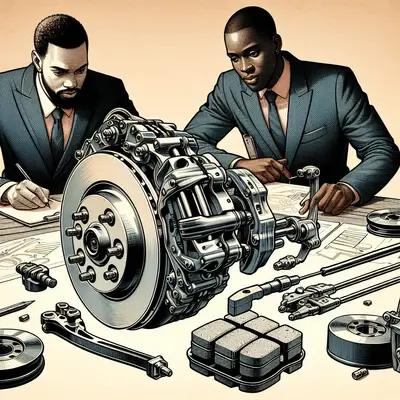
Most conversations about brakes fixate on a single component—usually pads. In reality, a brake system is an ecosystem: pads, rotors, calipers, hoses, fluid, master cylinder, ABS modules, and electronic stability systems all interact in milliseconds. When one element is overlooked, the entire system’s finesse deteriorates.
A refined approach to brake care treats these components as interdependent. New pads on deeply grooved rotors, for example, may stop the vehicle, but they compromise bite, introduce vibration, and reduce pad life. Aging rubber hoses may still function, yet subtly increase pedal travel and response time. Drivers who prioritize safety and refinement consider system integrity, not just part replacement. The result is a vehicle that not only stops within a safe distance, but does so with consistency, predictability, and a reassuringly stable feel.
Insight 1: Brake Feel Is Not a Luxury—It’s an Early Warning Instrument
Many drivers dismiss brake “feel” as a matter of preference. In truth, pedal feel is one of the most nuanced early-warning tools a driver has. A slightly longer pedal travel, a hint of sponginess, or a faint pulsing can all be the system whispering that conditions are changing long before a dashboard light illuminates.
A crisp, linear pedal—with increasing resistance as you press deeper—suggests healthy hydraulic pressure and minimal air or moisture in the system. Conversely, a soft pedal that firms up after a quick pump can indicate air in the lines or flexible hoses that have begun to deteriorate internally. Subtle pulsation under steady braking may reflect rotor thickness variation or developing warpage. Attentive drivers note these micro‑changes and act early, scheduling inspections before performance degrades into a true safety concern. In a premium approach to safety, sensation is treated as data, not as an inconvenience.
Insight 2: Brake Fluid Is the Quiet Guardian of High-Stakes Moments
Brake fluid is often the most neglected safety-critical fluid in a vehicle, despite its central role in emergency stops. Almost all modern cars use glycol-based brake fluids (DOT 3, DOT 4, or DOT 5.1), which are hygroscopic—they absorb moisture over time. This absorbed water gradually lowers the fluid’s boiling point. Under heavy braking—descending long grades, towing, or repeated highway stops—fluid that has absorbed moisture can boil, introducing compressible vapor bubbles into the lines and causing sudden brake fade or a dangerously soft pedal.
For drivers who prioritize composure under pressure, brake fluid is not “lifetime” anything. A sophisticated maintenance plan includes periodic fluid testing or replacement at defined intervals (often every 2–3 years, or as specified by the manufacturer). Fresh fluid preserves a high boiling point, improves pedal precision, and ensures that the braking system responds the same way on the tenth hard stop as it did on the first. It’s a discreet investment in resilience for those rare moments when you need every fraction of braking performance available.
Insight 3: Rotor and Pad Materials Shape Your Car’s Character
Just as tire choice defines how a vehicle feels through the steering wheel, pad and rotor materials shape how it feels under braking. Many owners are surprised to learn that “brakes that stop well” can still be mismatched to their expectations for refinement, noise, dust, or longevity.
Organic or NAO (non-asbestos organic) pads are often quieter, with a softer, more progressive feel, suited to comfort-oriented driving. Semi-metallic pads offer stronger bite and better heat resistance, often chosen for spirited driving or heavier vehicles, but can produce more dust and noise. Ceramic pads, popular in many modern premium applications, typically offer low dust, less noise, and consistent performance over a wide temperature range, though they can be more expensive and demand quality rotors to match.
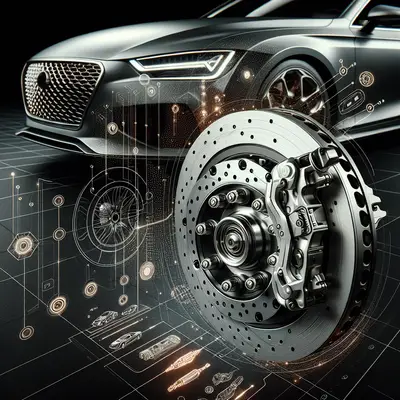
Rotors, too, vary in metallurgy, cooling vane design, and surface treatment. Slotted or drilled rotors may appeal visually and can aid gas and water evacuation, but for many daily drivers, high-quality plain rotors with appropriate ventilation deliver superior refinement and durability. A thoughtful pairing of pad and rotor, aligned with how and where you drive, yields a braking experience that feels deliberately tuned, not merely functional.
Insight 4: Heat Management Is the Invisible Line Between Confidence and Fade
Heat is the natural consequence of braking—kinetic energy transformed into thermal energy. When that heat is not efficiently managed, performance erodes. This is not just a concern for track days. Long downhill descents, urban stop‑and‑go traffic in summer, towing a trailer, or driving a fully loaded vehicle all push brake temperatures higher than most drivers realize.
Signs of poor heat management include a change in pedal effort required for the same stopping distance, a faint burning smell after repeated braking, or a soft pedal that recovers after a brief cooldown. Rotors that discolor (blueing near the edges) or pads that glaze (shiny, hardened surfaces) are physical evidence of heat stress. The refined solution is threefold: ensure rotors and pads are correctly matched, keep calipers sliding freely with proper lubrication, and maintain brake fluid in good condition.
In some cases, a driver’s use case (mountainous terrain, frequent towing, performance driving) justifies upgraded components such as higher-temperature pad compounds or rotors with improved cooling design. The goal is not overbuilding, but harmonizing the system with the realities of your driving, so that heat never turns into surprise.
Insight 5: Electronic Brake Systems Reward Subtle Driving Discipline
Modern vehicles rely on a network of electronic systems—ABS, Electronic Brakeforce Distribution (EBD), traction control, and stability control—to enhance safety. While these systems add layers of protection, they also introduce a subtle reality: aggressive, abrupt driving habits can accelerate wear and overwork these safeguards.
Hard, late braking forces ABS interventions more frequently, which not only stresses pads, rotors, and fluid but also masks underlying issues until they are more severe. By contrast, a calm, anticipatory driving style—planning deceleration earlier, allowing more following distance, and using firm but progressive pedal input—lets the braking system operate within its ideal range. The electronics remain a silent safety net rather than a constantly engaged crutch.
Attentive owners also remain alert to seemingly minor warning lights. An ABS, traction, or stability control light is not merely an electronic curiosity; it often signals that the car’s ability to manage complex braking situations has been compromised. Addressing such warnings promptly, rather than adapting to their presence, is a hallmark of responsible, high-standard vehicle stewardship.
Conclusion
Brake systems are most admirable when they are least conspicuous—when every stop feels calm, controlled, and consistent, regardless of conditions. For drivers who treat safety as a discipline rather than an afterthought, the difference lies in the details: listening to brake feel as a diagnostic tool, respecting the quiet importance of brake fluid, selecting materials that complement their driving character, managing heat intelligently, and driving in a way that partners with modern electronics instead of leaning on them.
Refined brake care is not about obsession; it is about intentionality. By understanding and applying these exclusive insights, you elevate your vehicle from merely roadworthy to genuinely confidence‑inspiring—where every deceleration reflects the same standards you expect from every other aspect of your life.
Sources
- National Highway Traffic Safety Administration (NHTSA) – Brakes and Safety Systems - Overview of brake system safety, components, and regulatory context
- U.S. Department of Transportation – FMVSS No. 135: Light Vehicle Brake Systems - Federal safety standards governing passenger vehicle braking performance
- University of Nebraska–Lincoln – Brake System Basics (Transportation Safety) - Educational discussion of brake components and their role in vehicle safety
- Brembo – Brake Pads, Rotors, and Performance Considerations - Technical insights into pad and rotor materials, performance, and heat behavior
- Continental – Brake Fluid and ABS/ESC Technologies - Information on modern hydraulic brake systems, brake fluid, and electronic stability technologies
Key Takeaway
The most important thing to remember from this article is that this information can change how you think about Brake Systems.