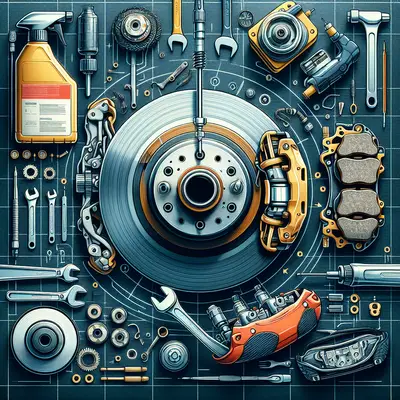
The most discerning drivers know that true confidence on the road is quiet, composed, and unmistakably intentional. It’s not about how quickly you accelerate—it’s about how gracefully and reliably you come to a stop. For owners who demand more than basic safety checklists, brake repair is not a transaction; it is a curated decision-making process that protects both your vehicle’s integrity and your own peace of mind. This guide explores a more elevated way to approach brake repair, with five exclusive insights that go beyond routine advice and speak directly to the driver who refuses to leave safety to chance.
Understanding Brake Behavior as a “Signature,” Not Just a Symptom
Every well-maintained vehicle has a distinct brake “signature”—the feel, sound, and response that becomes familiar over time. Rather than waiting for obvious failures, sophisticated drivers pay attention to subtle shifts in that signature.
A slightly longer pedal travel, a faint change in pedal firmness, or a new, almost imperceptible vibration at low speed are early indicators that the braking system is asking for attention. These changes often appear before warning lights or loud squeals. When you treat your brake feel as a baseline to be monitored, you can address emerging issues while they are still minor: a caliper beginning to stick, a pad compound aging unevenly, or brake fluid starting to absorb moisture.
This approach transforms brake repair from an emergency reaction into a precise, scheduled refinement—one that protects rotors from unnecessary damage, preserves braking consistency, and maintains the vehicle’s composed character under every stop.
Insight 1: Reading Brake Noise with the Nuance of a Professional
Not all brake noise is equal, and refined drivers learn to distinguish between harmless sounds and those that demand immediate attention.
A brief, light squeak on a cold, damp morning can simply reflect surface rust on rotors or the characteristics of certain performance pad compounds. By contrast, a persistent high-pitched squeal that appears at low speeds and disappears when braking more firmly often indicates a wear indicator contacting the rotor—a deliberate design cue that your pads are nearing the end of their useful life.
Grinding, on the other hand, is never to be negotiated with. A coarse, metallic grind usually signals that the friction material is worn away and the metal backing plate is cutting into the rotor. Continuing to drive under these conditions not only dramatically lengthens stopping distance but can also escalate a straightforward pad replacement into a full rotor replacement and potentially caliper damage.
By recognizing the specific character of brake sounds, you can schedule service with calm precision instead of waiting for a crisis that compromises both safety and cost efficiency.
Insight 2: Evaluating a Repair Shop’s Standards—Before They Touch a Bolt
Choosing where to service your brakes is as critical as deciding when. For a driver who values safety and refinement, the goal is not the cheapest quote, but the most transparent and technically competent partner.
A trustworthy brake specialist will:
- Perform a road test before and after any repair, documenting pedal feel, noise, and vibration.
- Measure rotor thickness and runout with proper tools, rather than “eyeballing” rotor condition.
- Explain pad material options (ceramic, semi-metallic, low-metallic) and recommend what suits your driving style and vehicle category.
- Provide before-and-after measurements and be willing to show you worn parts without hesitation.
- Discuss brake fluid age and condition as part of the inspection, not as an afterthought.
Refined ownership means expecting this level of detail as standard. When a shop can calmly explain why they recommend a particular procedure—and support it with measurements and manufacturer guidance—you know your braking system is being managed with the seriousness it deserves.
Insight 3: Treating Brake Fluid as a Precision Component, Not a Footnote
Brake fluid is often overlooked, yet it is the lifeblood of a modern braking system. It is hygroscopic, meaning it absorbs moisture over time. As water content increases, boiling point decreases, and under demanding conditions—mountain descents, spirited driving, or fully loaded highway braking—the fluid can begin to vaporize, leading to a soft or fading pedal.
A sophisticated brake maintenance philosophy treats fluid not as an indefinite component, but as a scheduled, documented service item. Many manufacturers recommend replacement around every two to three years, regardless of mileage, particularly in climates with high humidity or temperature swings.
Beyond time-based intervals, the most meticulous owners may request a brake fluid boiling point test or moisture content check during inspections. This simple diagnostic can distinguish between “still adequate” and “quietly compromised,” providing a level of assurance that goes well beyond a cursory visual check. In refined terms, fresh, properly specified brake fluid is not a luxury—it is a fundamental element of predictable, confident stopping performance.
Insight 4: Matching Brake Components to How—and Where—you Drive
Not all brake pads and rotors are created for the same purpose. A thoughtful driver considers how their vehicle is used: urban commuting, long highway touring, mountain routes, towing, or occasional spirited drives on open roads.
For city-focused driving, low-dust ceramic pads can deliver clean wheels, consistent response, and quiet operation—qualities prized in a premium ownership experience. For heavier vehicles, frequent high-speed braking, or towing, a more robust semi-metallic pad paired with high-quality rotors may provide superior heat management and fade resistance.
Likewise, slotted or drilled rotors can offer aesthetic appeal and improved gas and debris evacuation under certain conditions, but may not be necessary—or even ideal—for every daily-driven car. The refined approach is to avoid purely cosmetic choices in favor of components matched to real-world use, manufacturer recommendations, and professional advice.
When your braking setup is aligned with your exact driving profile, you reduce unnecessary wear, avoid compromise in braking feel, and maintain that composed, confident deceleration that separates a merely functional vehicle from a truly well-sorted one.
Insight 5: Using Subtle Road Tests to Confirm the Quality of a Repair
A brake repair is only as good as how it performs once you’re back on the road. The most attentive drivers adopt a brief, deliberate post-service evaluation—calm, controlled, and highly informative.
After any brake work, find a safe, lightly trafficked area and perform a sequence of gentle to moderate stops from different speeds. Observe:
- Pedal consistency: Does the pedal feel stable, neither spongy nor excessively firm?
- Straight-line stability: Does the vehicle track straight under braking, without pulling to one side?
- Noise: Are there any new sounds? Some mild noise while pads bed in can be normal, but should diminish with time.
- Vibration: Is there any pulsing or shudder through the pedal or steering wheel?
Next, after a few days of normal driving, reassess. A refined driver will notice whether braking has become more linear, more predictable, and more confidence-inspiring—or whether something feels slightly off and merits a return visit.
This quiet, methodical evaluation closes the loop on the repair process, ensuring that the work performed not only meets basic safety standards, but aligns with your expectations for smoothness, silence, and control.
Conclusion
Brake repair, at its highest standard, is not about reacting to glaring problems—it is about cultivating a calm, informed relationship with the system that protects you every time you drive. By listening closely to your vehicle’s brake “signature,” choosing service partners with rigorous standards, treating brake fluid as a critical performance element, matching components to your real driving world, and validating every repair with discreet road tests, you elevate safety from obligation to art.
The result is silent confidence: a vehicle that decelerates with precision, a driver who knows exactly why, and a braking system that reflects the same level of care you bring to every other facet of your life.
Sources
- National Highway Traffic Safety Administration (NHTSA) – Brakes and Safety - Federal guidance on brake system safety, recalls, and component performance
- U.S. Department of Transportation – Brake Fluid Standard FMVSS No. 116 - Technical standards and classifications for automotive brake fluids
- AAA – How to Know When Your Brakes Need Service - Consumer-focused explanations of brake symptoms and service intervals
- University of Texas at Austin – Materials in Brake Pads - Educational insight into friction materials and their performance characteristics
- Brembo Official Technical Insights - Manufacturer perspectives on modern brake system design, components, and behavior
Key Takeaway
The most important thing to remember from this article is that this information can change how you think about Repair Guides.