For the genuinely discerning driver, brake safety is not merely the absence of warning lights—it is the quiet assurance that every stop is precisely as controlled as every start. Modern brake systems are far more intricate than many owners realize, blending hydraulics, electronics, friction materials, and software into a tightly choreographed safety network. Appreciating how that network works—and how it subtly signals its needs—transforms routine maintenance from an obligation into a deliberate act of self‑protection.
This article explores the architecture of today’s brake systems and offers five exclusive, less-discussed insights that safety‑focused owners can use to elevate their standards well beyond “good enough.”
The Modern Brake System: A Composed Network, Not Just a Pedal
Most owners picture their brakes as a simple chain: pedal, pads, rotors, stop. In reality, modern systems resemble a well‑orchestrated ensemble where each component plays a defined role, with electronic systems subtly adjusting performance in the background.
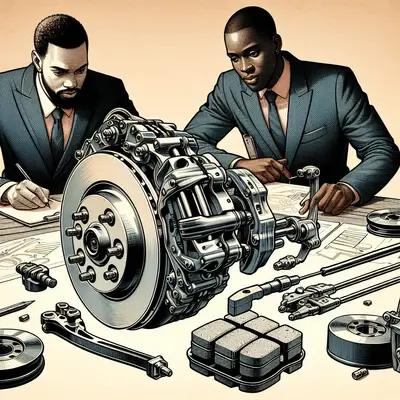
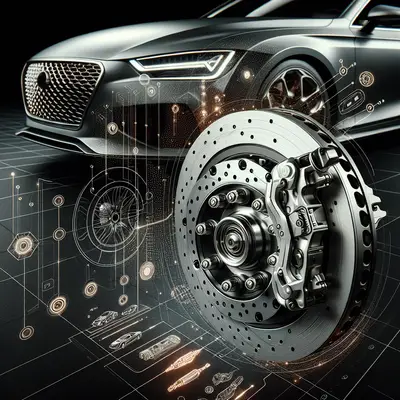
At the core is the hydraulic circuit: when you press the brake pedal, a master cylinder converts that mechanical input into hydraulic pressure that travels through brake lines to calipers at each wheel. Those calipers clamp brake pads against spinning rotors, converting kinetic energy into heat via friction. Anti-lock braking systems (ABS), electronic brake-force distribution (EBD), and stability control then refine how that clamping is applied—reducing wheel lockup, redistributing force between axles, and stabilizing the vehicle during evasive maneuvers.
What distinguishes premium braking performance is how seamlessly these elements integrate. The pedal should feel linear and predictable; there should be no sense of “step” or sudden bite that undermines confidence. A refined brake system rewards the attentive driver with a consistently progressive response, whether navigating wet city streets or descending a mountain pass.
Exclusive Insight #1: The “Pedal Signature” That Reveals System Health
Most drivers only react when the pedal feels obviously soft or spongy. Owners who care deeply about brake safety, however, learn their vehicle’s “pedal signature”—the unique combination of initial travel, firmness, and resistance that feels correct when the system is healthy.
A subtle increase in pedal travel before engagement can signify pad wear or minor air intrusion into the hydraulic system. A pedal that feels slightly springy, even if braking power seems adequate, can indicate moisture-contaminated fluid beginning to boil under hard use or deteriorating rubber hoses expanding under pressure. Conversely, a pedal that suddenly becomes unusually hard may reflect a failing brake booster or vacuum supply issue.
The refined approach is to sit in a quiet environment, engine running, and press the brake pedal with a light, consistent force. Notice where engagement begins, how rapidly resistance builds, and whether the firmness remains steady. Repeat this monthly and after any high‑demand event (such as a long downhill descent or emergency stop). Document any changes, however minimal. Over time, you develop a reference memory—an internal benchmark that lets you detect issues long before a warning light or obvious performance loss appears.
Exclusive Insight #2: How Brake Fluid Quietly Ages—and Why Time Matters More Than Mileage
Brake fluid is often treated as an afterthought, yet it is the lifeblood of your brake system. Most modern vehicles use glycol‑based DOT 3, DOT 4, or DOT 5.1 fluid, all of which are hygroscopic—they absorb moisture from the air over time, even in a “closed” system. That absorbed moisture lowers the fluid’s boiling point and promotes internal corrosion.
Crucially, this degradation is more about age than mileage. A carefully garaged, infrequently driven car can have dangerously compromised brake fluid simply because it is five or six years old. Under high braking loads, moisture-laden fluid can begin to boil, introducing compressible vapor bubbles into the hydraulic circuit. To the driver, this manifests as pedal fade—the pedal travels further and feels softer as the braking event continues, despite constant foot pressure.
A premium standard for safety-focused owners is to treat the manufacturer’s recommended interval as a minimum, not a maximum. Many European marques recommend fluid replacement every two years, and that cadence is a sound benchmark even if your manual suggests longer. For those driving in mountainous regions or towing frequently, fluid testing with a professional-grade boiling-point tester once a year provides precise data rather than guesswork. Quiet, consistent pedal feel under demanding conditions is the reward.
Exclusive Insight #3: The Role of Rotor Mass and Vent Design in Real-World Safety
Brake rotors are rarely discussed beyond “are they worn or not?” Yet for drivers who demand unflinching brake performance, the rotor’s design, material, and mass are central to safety.
A rotor’s mass—its thickness and overall weight—governs its ability to absorb and dissipate heat. Under repeated hard stops, rotors with more thermal capacity heat more slowly and cool more consistently, reducing the risk of fade and minimizing the chance of distortion (often referred to as warping, though it frequently involves uneven pad material transfer). Ventilated rotors with well‑engineered internal vanes channel air more effectively, improving cooling and promoting uniform temperatures across the rotor face.
This has practical implications when it’s time for replacement. Opting for the thinnest, lowest-cost aftermarket rotors may meet dimensional requirements but can compromise thermal performance and longevity. Owners who value premium braking should pay attention to:
- Rotor thickness compared to the original equipment (OE) specification
- Internal vent design (straight versus curved vanes, where applicable)
- Surface finish and runout tolerances
Matching or exceeding OE quality ensures that the brake system behaves as the manufacturer engineered it—particularly during extended downhill driving, spirited highway use, or emergency maneuvers. The difference may not be visible, but it is very much felt when it matters.
Exclusive Insight #4: ABS and Stability Systems as Silent Partners—Not Last-Resort Devices
Many drivers think of ABS, traction control, and electronic stability control (ESC) as emergency-only systems. In reality, they are constantly monitoring wheel speeds, steering angle, yaw, and pedal inputs, ready to intervene within milliseconds. For brake safety, this means your braking performance is not just about raw friction—it’s about how effectively these systems can apply that friction.
The nuance here is that your tires, alignment, and suspension condition dramatically influence how these electronic systems perform. A vehicle with unevenly worn tires, mismatched compounds, or neglected alignment forces ABS and ESC to work harder and less predictably, especially under panic braking or on wet surfaces. The software is attempting to correct physical imbalances it cannot fully overcome.
For the safety‑conscious owner, this reframes routine maintenance: tire rotations, precise alignment, and timely suspension repairs are not only comfort or wear issues; they are integral to how your brake system functions at the limit. The more balanced and predictable the chassis, the more precisely ABS and ESC can modulate braking force, shortening stopping distances and maintaining directional control when you need it most.
Exclusive Insight #5: Reading Brake Noise and Smell Like a Connoisseur
Most people notice only the loudest squeals or grinding noises. A more refined approach is to learn the subtler acoustics and scents that accompany a well‑functioning brake system—and the early deviations that warrant attention.
A clean, healthy system will typically operate with little more than a muted, low‑frequency rustle under moderate stops. Occasional light squeaks after rain or car washes, caused by surface rust being scrubbed away, are usually transient. By contrast, persistent high‑pitched squeal in both dry and wet conditions can signal glazing of pads or rotors, contamination (such as oil or road film), or hardware issues like missing shims or clips.
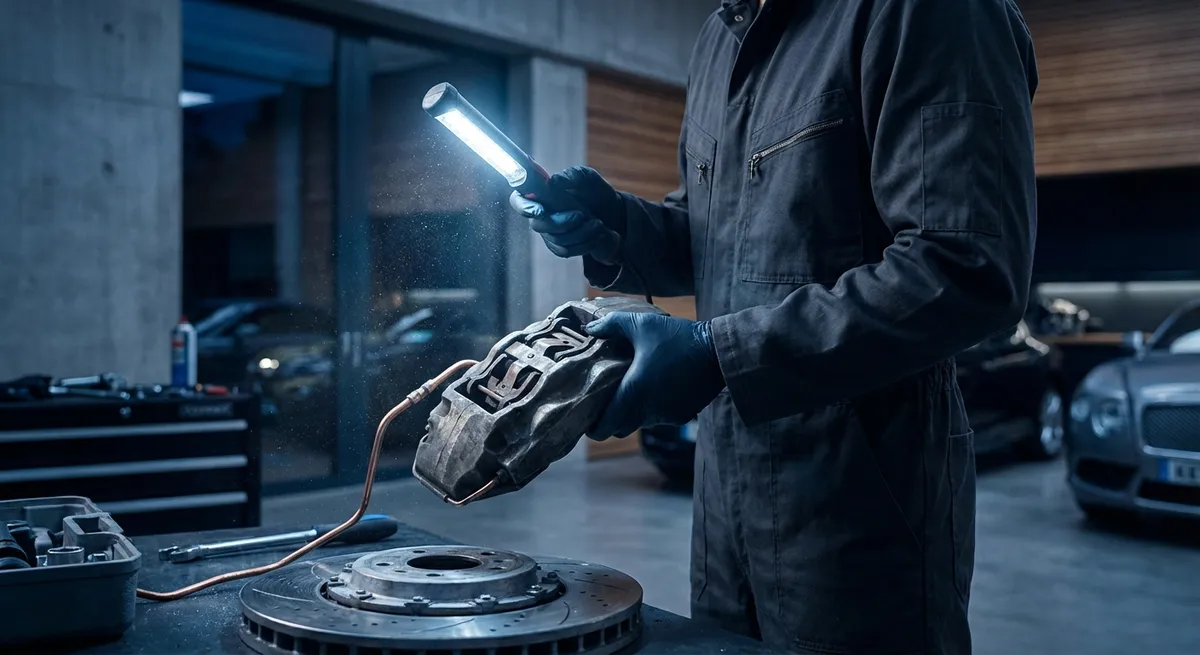
Smell is equally telling. A faint, hot-metal smell after an aggressive mountain descent is expected; it should dissipate quickly once driving conditions normalize. However, a sharp, acrid burning odor during everyday use—especially accompanied by a vehicle pulling to one side—can indicate a dragging caliper or seized slide pins. Even if the car still “stops fine,” this condition overheats the system, accelerates wear, and can eventually lead to brake fade or component failure.
Treat these subtle cues the way a sommelier evaluates aroma and finish: not with anxiety, but with disciplined, informed curiosity. Document when and how they appear, and consult a trusted professional before minor irritations evolve into genuine hazards.
Conclusion
Exceptional brake safety is not achieved solely by reacting to dashboard lights or waiting for pads to reach their wear indicators. It emerges from a deeper understanding of the system’s architecture, an appreciation of how fluids, rotors, and electronics interact, and a cultivated sensitivity to the fine changes in pedal, sound, and smell that precede genuine trouble.
By internalizing your car’s unique pedal signature, respecting the quiet aging of brake fluid, choosing rotors for their thermal integrity, supporting ABS and stability systems with a well‑maintained chassis, and learning to “listen” to your brakes with sophistication, you position yourself in a different category of driver—one for whom every stop is a deliberate, engineered outcome rather than a hopeful expectation.
In that space, brake maintenance is no longer a reluctant expense; it becomes an investment in composure, control, and the quiet authority that comes from knowing your vehicle will respond exactly as you intend, exactly when you need it most.
Sources
- National Highway Traffic Safety Administration (NHTSA) – Brake Safety Overview – Government guidance on brake systems, safety technologies, and maintenance importance.
- AAA – Brake System Service and Repair – Practical explanations of brake components, fluid, and service intervals for everyday drivers.
- Car and Driver – How Anti-Lock Brakes Work – In-depth look at ABS function and its role in modern braking performance.
- U.S. Department of Transportation – Electronic Stability Control – Technical and safety background on ESC and its interaction with braking systems.
- University of California, Berkeley – Vehicle Braking and Safety Systems Lecture Notes (ME C85/CE C30) – Academic-level material on vehicle dynamics and braking principles (course description and resources).
Key Takeaway
The most important thing to remember from this article is that this information can change how you think about Brake Systems.