Brakes are the quiet guardians of every journey—felt more than seen, trusted more than discussed. For drivers who expect more than the bare minimum from their vehicles, brake repair is not a commoditized service; it is a matter of precision, discernment, and respect for physics and craftsmanship. This guide is designed for owners who care deeply about safety, refinement, and the long-term integrity of their car’s most critical system.
Rather than recycling generic advice, we will examine how to approach brake repair with the same care you’d bring to choosing a surgeon or a financial advisor: informed, selective, and uncompromising. Along the way, you’ll find five exclusive insights that elevate your decisions well beyond “Do I just need pads?”
Understanding Brake Repair as Risk Management, Not Routine Maintenance
Most drivers think of brake work as “just another service” alongside oil changes and tire rotations. In reality, brake repair is a form of risk management, directly tied to how your car behaves in the few seconds that matter most.
When a shop recommends pads and rotors, they are not simply selling parts; they are shaping how your vehicle will respond under hard braking, at highway speeds, in the rain, and during emergency maneuvers. A premium approach starts with reframing the conversation: you are not purchasing components—you are buying distance, control, and predictability.
Ask your technician how proposed repairs will influence stopping distance, pedal feel, and fade resistance during repeated hard stops. An attentive shop should be able to explain how different pad compounds, rotor designs, and hardware choices affect safety and performance, not just quote part numbers and labor rates. For the discerning driver, the quality of that explanation is often a better indicator of competence than the price on the invoice.
Anatomy of a Confident Stop: What a Proper Repair Actually Addresses
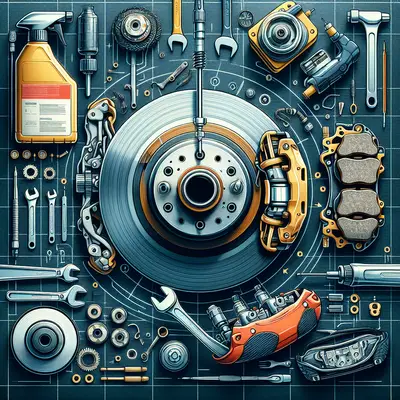
A meaningful brake repair is not limited to replacing worn pads. It’s an orchestrated intervention across several components, each with a distinct role:
- Pads convert kinetic energy into heat through friction; their material controls noise, feel, and fade characteristics.
- Rotors absorb and dissipate that heat; thickness, quality, and machining precision directly influence vibration and effectiveness.
- Calipers apply clamping force; sticky slides or seized pistons can ruin even the finest pads.
- Brake fluid transmits pressure; contaminated or old fluid can boil, introducing compressible gas and sudden pedal softness.
- Hoses and lines carry that pressure; corrosion or internal collapse can create asymmetrical braking and dangerous pull.
An elevated repair procedure includes inspection of all these elements, documentation of measured rotor thickness, pad wear patterns, and fluid condition, and a clear explanation of what is borderline versus what is unsafe. When you treat each brake visit as a structured assessment of the whole system, not merely an opportunity to “swap parts,” you dramatically reduce the risk of unpleasant surprises.
Five Exclusive Insights for Owners Who Refuse to Guess About Brake Safety
For drivers who demand more than “good enough,” these five insights can sharpen your decision-making and help you recognize truly professional brake work.
1. Pad Material Should Be Matched to Your Driving Style, Not Just Your Car
Most shops default to what’s available or what’s cheapest in their catalog. You can—and should—ask for more nuance.
- Ceramic pads tend to be quieter, cleaner, and gentle on rotors, suited to refined daily driving with minimal dust.
- Semi-metallic pads often perform better under high heat and spirited driving but may generate more dust and noise.
- Low-metallic or performance compounds can provide excellent bite and high-temperature stability, at the cost of more noise and dust.
A premium choice isn’t automatically “ceramic”; it’s whatever best reflects your actual usage: frequent highway trips, mountain driving, towing, or urban stop-and-go. The refined question to ask: “Which pad compounds do you recommend given my driving pattern, and how will they change noise levels, dust, and cold/hot braking performance?”
2. Rotor Replacement Should Be a Measured Decision, Not Habit
Many shops habitually replace rotors at every brake job. Sometimes this is appropriate; sometimes it is simply profitable.
A sophisticated approach insists on measured rotor thickness, not guesswork. Each rotor has a stamped minimum thickness—below that line, it cannot safely dissipate heat or resist warping. If a rotor is safely above this minimum, shows no deep scoring, and does not exhibit runout or vibration, it may be serviceable.
That said, combining new pads with badly glazed, heat-spotted, or uneven rotors compromises stopping consistency. The premium position is not “always replace” or “never replace,” but “show me the measurements and condition, then justify the decision.” You are entitled to see these readings on your service report.
3. Brake Fluid Age is a Silent Risk Indicator You Should Treat Seriously
Brake fluid rarely triggers a dashboard warning, yet its condition can profoundly affect emergency braking. Over time, fluid absorbs moisture, which lowers its boiling point and invites internal corrosion in lines, calipers, and ABS components.
Many manufacturers recommend brake fluid replacement approximately every 2–3 years, or based on boiling-point testing. A refined owner doesn’t wait for a visible symptom; they ask the shop to:
- Test fluid moisture content or boiling point.
- Document when fluid was last flushed.
- Explain whether a complete system flush is needed or if a partial service is sufficient.
If you drive in hilly terrain, tow, or brake heavily in hot climates, fresh, high-quality fluid is not a luxury—it is a critical safeguard against pedal fade when you need maximum braking over repeated stops.
4. Road Testing and Bedding-In Are Part of the Repair, Not an Afterthought
Even the best parts are underwhelming if not correctly bedded in. Bedding is a controlled process of heat-cycling new pads and rotors to transfer a uniform layer of pad material onto the rotor face. When done properly, it:
- Improves initial bite and consistency.
- Reduces the likelihood of vibration and judder.
- Helps minimize noise over the life of the pads.
A competent shop will perform a structured road test after brake work: verifying pedal feel, checking for pull, confirming ABS operation, and beginning the bedding process. You should also receive clear guidance on how to drive during the first several hundred miles—typically avoiding hard, prolonged braking when possible to allow surfaces to mate evenly.
If a shop cannot describe their road-test and bedding procedures in detail, consider that a warning sign.
5. Caliper and Hardware Care Distinguish a Quick Job from a Lasting One
Truly meticulous brake work spends as much time on what is reused as on what is replaced. Caliper guides, abutment clips, anti-rattle hardware, and pad contact surfaces all determine how smoothly your brakes operate over time.
A refined repair will typically include:
- Cleaning and lubricating caliper slide pins with the correct high-temperature grease.
- Replacing worn hardware (clips, shims, boots) rather than simply reusing old, corroded pieces.
- Ensuring pads move freely in the brackets, without binding.
- Inspecting for uneven pad wear that suggests caliper or hardware misbehavior.
This attention doesn’t just prevent squeaks; it reduces the risk of dragging brakes, overheated components, and premature pad failure. When your provider treats hardware as important as pads, you are more likely to enjoy quiet, consistent braking throughout the service interval.
Choosing a Brake Service Provider with Precision in Mind
With so much nuance involved, selecting the right shop becomes as important as choosing the right parts. A premium-oriented provider typically shares several characteristics:
- Transparency: Willingly shows old parts, explains measurements, and walks you through their findings.
- Measurement-driven decisions: Uses micrometers, dial indicators, and fluid testers, not just visual guesses.
- Documentation: Provides a clear, itemized report describing condition, recommendations, and what can safely wait.
- Consistency: Follows torque specifications, uses proper tools, and respects manufacturer guidelines.
- Communication: Welcomes detailed questions and provides calm, technically grounded answers rather than fear-based selling.
Before authorizing any work, ask how they:
1) measure rotors,
2) evaluate fluid,
3) handle bedding and road testing, and
4) treat caliper hardware. Their responses will quickly reveal whether you’re dealing with true professionals or mere part-installers.
Conclusion
For the discerning driver, brake repair is far more than a transaction; it is a carefully managed collaboration between you, your vehicle, and a skilled technician. By understanding how pad materials, rotor decisions, fluid condition, hardware care, and bedding influence real-world safety, you move beyond vague assurances and into informed control.
You do not need to become a brake engineer to insist on clarity and rigor. You need only ask the right questions, expect measured evidence rather than vague claims, and treat every brake visit as an opportunity to preserve the feel, confidence, and safety you demand from your car. In the end, the luxury is not in the parts themselves—it’s in the certainty that, when you ask for a stop, your vehicle responds with calm, predictable precision.
Sources
- National Highway Traffic Safety Administration – Brakes and Safety - Overview of brake safety, system components, and the importance of properly functioning brakes
- Federal Motor Carrier Safety Administration – Brake System Facts - Technical and safety-focused information on brake inspections and performance, applicable to understanding best practices
- AAA – Brake System Inspection and Maintenance - Consumer-oriented guidance on what proper brake service should include and how to work with repair shops
- Continental – Brake Fluids and Safety - Manufacturer explanation of brake fluid properties, moisture absorption, and replacement intervals
- MIT – How Brakes Work (Lecture Notes) - Educational material explaining braking physics, energy conversion, and heat dissipation in brake systems
Key Takeaway
The most important thing to remember from this article is that this information can change how you think about Repair Guides.