Body transformations are trending again. Today’s timelines are full of before‑and‑after photos, like the viral “26 Inspiring Body Transformations” compilation circulating on Bored Panda, where people reveal the disciplined, often invisible work behind impressive results. It is a cultural moment obsessed with the idea that meaningful change comes not from a single dramatic act, but from small, consistent, intentional habits.
For discerning drivers, there is a powerful parallel in brake safety. The most sophisticated brake systems do not protect you because of one heroic stop—they protect you because they are cared for quietly, methodically, long before any emergency. In the same way people are reengineering their health through meticulous routines, you can reengineer your car’s stopping power through a different kind of “transformation”: a disciplined, almost ritual approach to brake care.
Below are five exclusive, high‑level insights designed for drivers who see their vehicle not as a disposable appliance, but as an instrument that deserves precision, foresight, and respect.
1. Treat Brakes Like a Long‑Term Training Plan, Not a Crash Diet
The people featured in today’s body‑transformation stories did not rely on quick fixes; they built systems—nutrition, sleep, training programs—tested and adjusted over months and years. Your brake system demands the same philosophy. A once‑a‑year “look‑over” at a discount shop is the automotive equivalent of a crash diet: visible, reassuring, and often deceptively shallow.
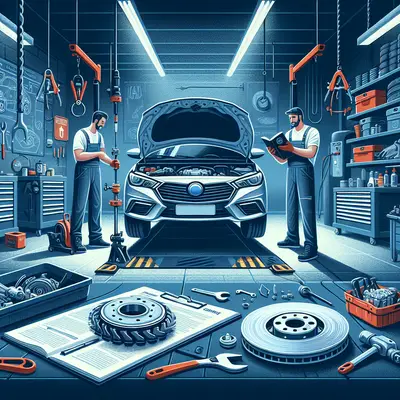
Adopt a schedule that mirrors a serious training plan. At a minimum, insist on a dedicated brake inspection every 12 months or 12,000 miles, and after any hard season of use—such as a summer of mountain driving or a winter of stop‑and‑go commuting on salted roads. During that inspection, your technician should measure pad thickness with a gauge (not just by eye), check rotor runout with a dial indicator, inspect caliper slide pins for free movement, and evaluate brake hoses for subtle swelling or cracking. When you view these steps as a recurring regimen rather than an occasional chore, you dramatically reduce the likelihood of “surprise” failures and extend the life of premium components you’ve already invested in.
2. Upgrade Your Ears: Use “Acoustic Diagnostics” Like a Pro
In the same way transformation stories teach people to listen to their bodies—tracking heart rate, sleep quality, and subtle fatigue—refined drivers learn to listen to their brakes. Modern vehicles constantly talk to you through sound; the skill lies in distinguishing normal voices from distress signals.
A soft, single squeak the first stop on a damp morning may be nothing more than light surface rust burning off the rotors. But a persistent, high‑pitched squeal during light braking is your wear indicator’s way of announcing that pad material is nearing its end. A gritty grinding sound, even faint, is essentially your system screaming that pad material may be gone and metal‑to‑metal contact is underway—each stop at that point is machining your rotors in the worst possible way. Thunks or clunks when shifting from reverse to drive and applying the brakes can signal loose hardware or worn bushings. Rather than turning up the music, cultivate the habit of giving your brakes a few moments of acoustic attention on an empty street each week. That level of attentiveness is what separates the merely cautious from the truly meticulous.
3. Align Your Driving Style With Your Brake Materials
Today’s health narratives emphasize personalization: one training regime does not suit every body. Likewise, one braking solution does not suit every driver—or every environment. Choosing brake components without considering how and where you drive is a subtle but serious safety compromise.
If your daily routine is dense urban traffic with constant stop‑and‑go, a high‑quality ceramic pad paired with vented rotors offers refined, quiet operation and low dust, ideal for comfort and cleanliness. If you regularly descend long grades with passengers or tow a trailer, a more temperature‑resistant semi‑metallic compound and, in some cases, slotted rotors can better manage heat and resist fade. In both cases, insist on premium brands that publish their friction codes and testing standards rather than anonymous “fits most” options. Then refine your driving to match: anticipate lights, brake earlier and more gently, and avoid “left‑foot resting” that keeps pads in constant light contact with the rotor. The goal is harmony between materials and manners—when those are aligned, your braking becomes both safer and more serenely predictable.
4. Elevate Fluid From Afterthought to Safety Asset
People in the transformation spotlight talk less about the gym and more about the hidden choices—hydration, micronutrients, recovery—that make visible change possible. Brake fluid is the equivalent of that overlooked but essential element. It is not simply a liquid topping; it is the hydraulic medium that translates your intention at the pedal into precise clamping force at each wheel.
Over time, brake fluid absorbs moisture from the air, lowering its boiling point and inviting internal corrosion of lines, calipers, and ABS components. Under hard or extended braking, that contaminated fluid can vaporize locally, producing a soft or sinking pedal just when you need firmness most. If your vehicle is more than three years old and the fluid has never been changed, you are likely driving with compromised performance, even if everything “feels” normal in daily commuting. A refined maintenance approach includes testing brake fluid for moisture content and replacing it completely—via a proper pressure or vacuum bleed—about every 2–3 years, or more often for heavy use or performance driving. Insist on the correct DOT specification listed by your manufacturer; “upgrading” to the wrong type can be more dangerous than doing nothing.
5. Design a Personal Stopping Ritual Before Every Drive
Those featured in transformation articles rarely rely on motivation alone; they rely on rituals—small repeated actions that keep them aligned with their goals. You can apply the same discipline to safety with a 15‑second pre‑drive brake ritual that becomes second nature.
Before you pull away, depress the brake pedal fully and hold it for a couple of seconds. Note the initial travel and firmness. Does the pedal sink slowly under steady pressure? That may signal internal leaks or a failing master cylinder. When you start moving, perform one controlled, moderate stop at low speed in a safe space—a driveway, parking lot, or quiet side street. Observe whether the car tracks straight, whether the pedal feels consistent, and whether you hear any unusual noise. As conditions change—heavy rain, first freeze, steep hills, or a fully loaded vehicle—repeat this test when it is safe. Over days and weeks, you build an intuitive “baseline” for how your car should feel. The moment that baseline shifts, you notice—and that awareness gives you time to address an issue while it is still minor, not catastrophic.
Conclusion
The cultural obsession with transformation that is dominating today’s feeds carries a subtle truth: the most impressive changes are not dramatic at the moment of crisis; they are quiet in the months that precede it. Brakes are no different. A safe, composed emergency stop is simply the visible tip of an iceberg formed by regular inspections, attentive listening, tailored component choices, fluid discipline, and a personal pre‑drive ritual.
For drivers who expect more than basic transportation—for those who value control, composure, and the peace of mind that comes from knowing their vehicle is genuinely ready—brake care becomes more than maintenance. It becomes a crafted practice. And in a world moving faster and closer together every day, that level of refinement is not a luxury. It is your most understated, and most essential, safety asset.
Key Takeaway
The most important thing to remember from this article is that this information can change how you think about Safety Tips.