For the discerning driver, flawless braking is not merely a function—it is a signature. A car can be polished, detailed, and meticulously garaged, yet if its brakes are neglected, the entire driving experience feels imprecise and unfinished. Thoughtful brake maintenance is less about anxiety over what might fail and more about cultivating a calm, predictable response every time your foot moves to the pedal. This article explores a refined approach to brake care, with five exclusive insights that reward those who value composure, control, and exceptional safety.
Brake Feel as a Diagnostic Language
Before warning lights illuminate or squeals become obvious, your brake pedal is already communicating. The “feel” underfoot is a nuanced language, and learning to interpret it is one of the most sophisticated tools a driver can develop.
A consistent, firm pedal that responds progressively is the hallmark of a healthy hydraulic system. If the pedal begins to feel spongy or requires more travel before engagement, it may indicate air in the lines, moisture-contaminated fluid, or early internal wear in the master cylinder. A gradually hardening pedal can suggest restricted brake hoses or a failing booster, particularly if effort increases during low‑speed stops or parking maneuvers.
Cultivated drivers pay attention to pedal behavior over weeks, not just during emergencies. Subtle changes—needing slightly more pressure in traffic, or a faint delay before braking “bites”—are often the earliest warnings. Documenting these impressions (even briefly, in a notes app) before a service appointment allows you to give a precise description to your technician and ensures that small anomalies are not dismissed as “just how the car is.”
Exclusive Insight #1: Treat pedal feel as a calibrated instrument, not an afterthought. When something feels “off,” you’re often noticing hydraulic or mechanical changes well before they become obvious failures.
Brake Fluid: The Overlooked Lifespan of Precision
Brake fluid is the quiet custodian of your stopping power, yet it is routinely ignored until it becomes a problem. Most modern brake fluids are hygroscopic—they attract and absorb moisture over time. This design prevents water from pooling in the system but gradually lowers the fluid’s boiling point and invites internal corrosion.
Even if the fluid looks “acceptable” in a reservoir, its performance can be compromised long before it darkens. Hard braking from highway speeds, mountain driving, towing, or spirited driving can push old fluid to its limits, leading to fade—where the pedal sinks or feels soft during repeated stops. That moment of uncertainty is often the direct result of neglected fluid.
Refined maintenance treats brake fluid as a timed component, not a perpetual one. Many manufacturers recommend replacement every two to three years, yet owners often wait until a major brake job. Testing the fluid’s moisture content or boiling point during routine service is a subtle but powerful habit; it transforms brake care from reactive to preventative.
Exclusive Insight #2: Schedule brake fluid replacement by time and usage, not just mileage. If you drive infrequently, fluid can still age in the lines; calendar‑based service keeps hydraulic performance crisp and consistent.
Pads, Rotors, and the Geometry of Controlled Stops
Pads and rotors are the more visible side of brake maintenance, but there is a difference between merely “replacing” components and curating them for feel, noise, and longevity. The geometry of how pad and rotor surfaces mate directly influences stability, stopping distance, and refinement.
Rotor thickness, surface finish, and runout (subtle wobble) all shape pedal feedback and steering feel under braking. Precision machining or replacement with quality rotors ensures that contact is uniform, reducing the likelihood of judder or vibration. Meanwhile, choosing pads that suit your actual driving style—rather than simply opting for the cheapest option—can dramatically reduce noise, dust, and fade.
The most refined brake services pair pad and rotor selection with careful bedding‑in procedures, where controlled stops are used to transfer an even layer of pad material onto the rotor surface. Skipping this step can compromise braking smoothness for thousands of miles, no matter how expensive the parts are.
Exclusive Insight #3: Insist on proper bedding‑in after any pad/rotor service. This deliberate process is the missing link between “new brakes” and brakes that feel silky, stable, and confidence‑inspiring.
The Subtle Role of Tires, Alignment, and Suspension
True brake performance is not isolated to brake components alone. You do not stop on the rotors; you stop on the tires. The mechanical grip at the road surface, and the way the chassis manages weight transfer, are as critical as any caliper or pad.
Underinflated or mismatched tires, worn suspension bushings, and tired shocks all erode braking stability, particularly in real‑world conditions such as wet roads or evasive maneuvers. A car with impeccable brake hardware but poor alignment may still feel unsettled, pulling slightly to one side or requiring longer distances to stop.
What distinguishes a well‑kept car is the recognition that brake maintenance is part of a wider ecosystem. Pairing brake inspections with tire condition checks, alignment verification, and suspension evaluation produces a more composed, predictable response in panic stops, not just during gentle commutes.
Exclusive Insight #4: Integrate brake care with tire and alignment checks at the same visit. Treating these systems as one safety suite yields a car that not only stops quickly but stays poised and controllable while doing it.
Listening Beyond the Squeal: Sound, Smell, and Heat
Most owners are conditioned to react only when brakes squeal loudly, but refined maintenance listens—and smells—earlier and more intelligently. There is an entire spectrum of subtle cues that precede obvious noise.
A faint, rhythmic scraping that appears only at low speeds may signal a small stone trapped between rotor and backing plate, or early shield corrosion. A high‑pitched squeak in damp conditions that quickly disappears can be normal surface rust clearing from rotors; persistent metallic sounds, however, warrant inspection. The occasional faint burning odor after heavy braking on a steep descent may be expected, but recurring smell during city driving suggests dragging brakes, a seized caliper slide, or an overworked parking brake mechanism.
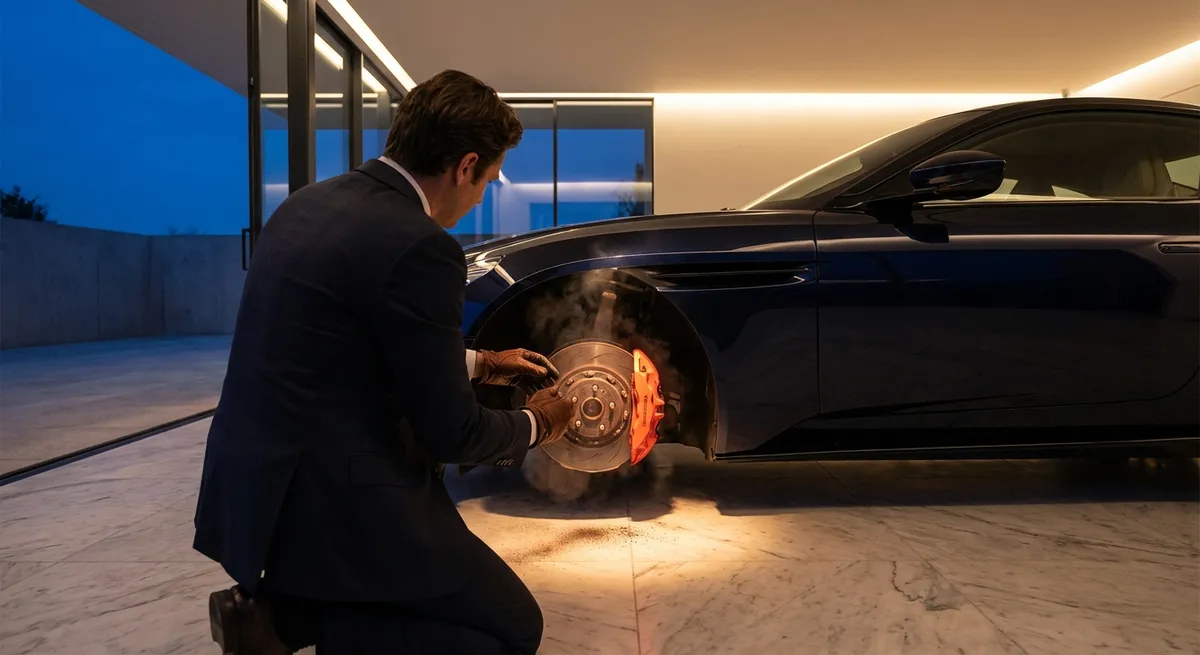
Heat is equally telling. If, after a normal drive, one wheel area feels noticeably hotter than the others (you can sense this carefully from a distance, without touching), it may indicate a sticking caliper or misadjusted parking brake. Addressing this before it escalates prevents rotor warping, pad glazing, and severe fade.
Exclusive Insight #5: Develop a quiet ritual after demanding drives—listen at low speeds, notice any odors when parking, and be aware of asymmetrical heat near the wheels. These discreet observations often reveal issues long before they become expensive repairs.
Conclusion
Brake maintenance, at its most sophisticated, is not about fear of failure—it is about preserving the calm assurance that your vehicle will respond exactly as you intend, under any conditions. By treating pedal feel as a language, respecting the service life of brake fluid, curating pad and rotor pairings, integrating tires and alignment into your safety strategy, and attuning your senses to sound, smell, and heat, you transform “routine maintenance” into a deliberate craft.
In the world of attentive ownership, flawless braking is not an accident. It is the result of quiet, consistent choices that prioritize control, composure, and the kind of safety that never needs to announce itself.
Sources
- National Highway Traffic Safety Administration (NHTSA) – Brakes and Safety - Federal guidance on brake performance, recalls, and safety information
- U.S. Department of Transportation – Brake System Overview (FMVSS 135) - Technical federal standards governing passenger car brake systems
- AAA – How to Know When You Need Brake Service - Consumer-focused explanations of common brake symptoms and service intervals
- Consumer Reports – Car Brakes: Maintenance, Repair, and Safety - Independent guidance on brake maintenance best practices and warning signs
- University of California, Berkeley – Vehicle Braking and Tire Traction Notes - Educational material detailing the interaction of braking forces, tires, and vehicle dynamics
Key Takeaway
The most important thing to remember from this article is that this information can change how you think about Maintenance.