For the discerning driver, brakes are more than a mechanical necessity—they are the quiet guardians of every confident arrival. While oil changes and tire rotations often steal the spotlight, it is meticulous brake care that ultimately separates routine motoring from truly refined driving. Executed correctly, brake repair is not a crude, messy task; it is a disciplined craft that rewards precision, patience, and respect for detail.
This guide is designed for drivers who want more than “good enough.” If you care how your vehicle feels underfoot during a sudden stop, how it sounds when you glide through the city at dusk, and how it behaves on a wet downhill curve, then these insights are written for you. Below are five elevated, often-overlooked dimensions of brake repair that bring your maintenance routine in line with premium safety standards.
1. Treat Brake Pedal Feel as a Diagnostic Instrument, Not an Afterthought
Most drivers treat the brake pedal as a simple on/off switch. A refined driver understands it as a sensitive diagnostic instrument that speaks a quiet but precise language. During any brake repair or inspection, pay close attention to how the pedal travels under your foot—its firmness, its initial bite, and how consistently it responds as the brakes heat up over a drive. A pedal that sinks gradually at a stoplight may indicate internal seal wear or tiny leaks that visual checks can miss. A pedal that feels firm at first but then subtly pulses can hint at rotor irregularities before they become severe. After any pad or rotor replacement, take a short, controlled test drive with deliberate, progressive stops, focusing only on pedal response. Document your impressions—verbally or in a note on your phone—so you can compare them over time. This careful, repeatable attention to pedal feel turns everyday driving into a continuous safety audit, allowing you to catch subtle changes long before they rise to the level of “emergency.”
2. Elevate Rotor Care: From Simple Replacement to Surface Precision
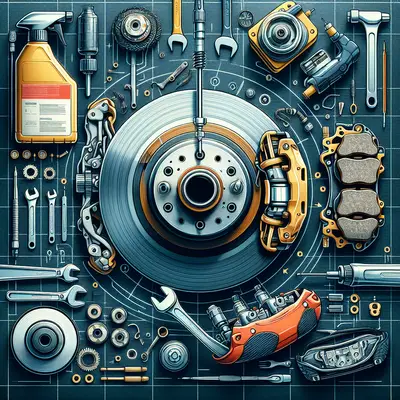
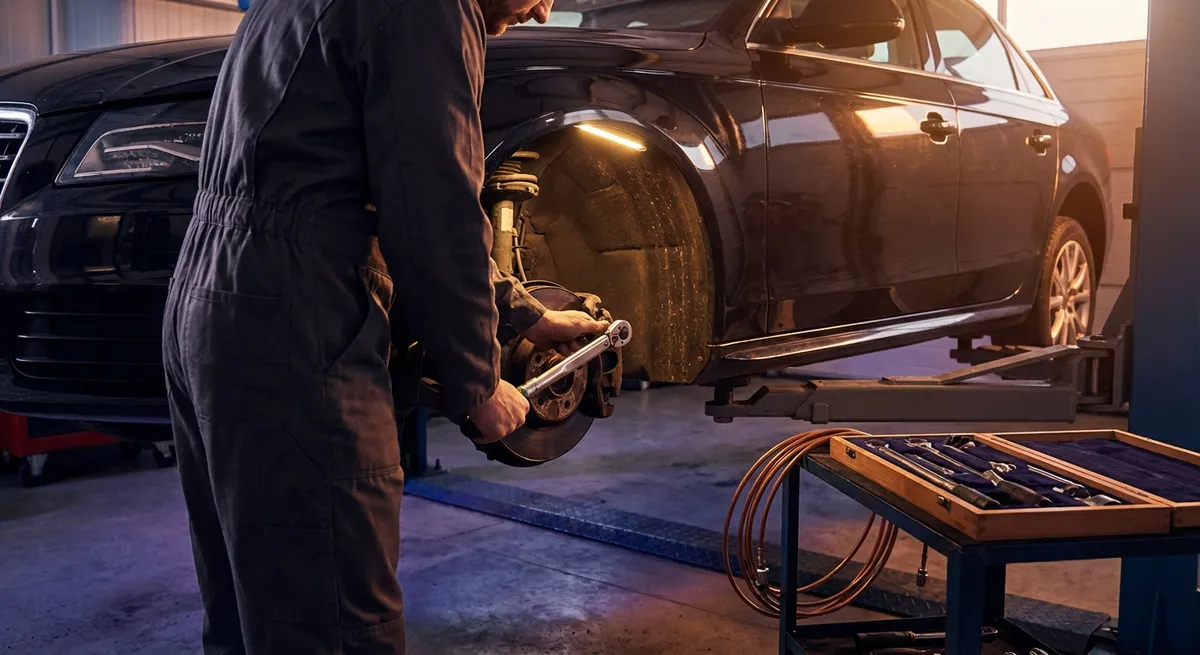
Rotors are often treated as commodities: worn ones are discarded, new ones bolted on, and the job is declared finished. A more sophisticated approach treats rotors as precision surfaces that must be matched to your vehicle’s driving environment and your personal standards of refinement. Before installation, high‑quality rotors should be carefully inspected for machining residue, uneven coating, and any surface imperfections; a quick clean with proper brake cleaner and a lint‑free cloth is not optional, it is foundational. During installation, meticulous torque application on lug nuts and caliper bracket bolts is crucial—over‑tightening lugs can subtly distort new rotors, creating the very vibration you hoped to eliminate. After installation, the bedding‑in process should be deliberate, following a structured sequence of moderate stops to transfer an even film of pad material onto the rotor surface. This controlled ritual transforms raw metal into a stable braking platform, reducing noise, vibration, and premature wear in a way that is immediately perceptible to a discerning driver.
3. Consider Brake Fluid a Luxury Item—And Maintain It Accordingly
Brake fluid is often ignored until a shop recommends a flush, yet it is the medium that transmits every ounce of your intent from pedal to caliper. Over time, it absorbs moisture, which lowers its boiling point and quietly introduces inconsistency into hard stops—especially during spirited or downhill driving. Instead of waiting for obvious issues, treat brake fluid like a fine consumable with an intentional replacement cadence. Use high‑quality, brand‑name fluid that meets or exceeds the specification in your owner’s manual; the difference in temperature stability and pedal consistency is subtle but very real. During a fluid service, insist on a thorough system bleed, including the farthest caliper first, to purge air and old fluid from the longest lines. Afterward, carefully evaluate the pedal’s firmness and responsiveness during a controlled drive, making mental notes of how quickly the brakes “come on” and how steadily they hold during longer stops. This elevated standard for brake fluid transforms it from a forgotten detail into a core component of predictable, confidence‑inspiring braking.
4. Make Caliper Integrity a Non‑Negotiable Part of Any Repair
Pads and rotors receive most of the attention, but calipers are the quiet conductors that orchestrate every stop. Overlooking their condition is one of the most common ways otherwise decent brake work falls short of a truly premium standard. During any repair, the caliper should be inspected with the same seriousness you give to pad thickness: slide pins must move freely, without sticking or binding; dust boots should be intact with no cracks or tears; and the piston should retract smoothly without hesitation. A single sticky pin can cause uneven pad wear, pulling, or subtle steering wheel vibration under braking. When reinstalling calipers, apply the correct high‑temperature lubricant sparingly and only where appropriate—excess grease on the wrong surfaces can attract debris and compromise braking over time. Treat each caliper as a precision device, not just a bracket holding pads in place. For the safety‑conscious driver, ensuring caliper health is what separates “new brakes” from “brakes you can trust in the worst‑case scenario.”
5. Align Brake Repairs With Your Driving Style and Environment
A sophisticated brake repair strategy accounts not only for the vehicle, but also for how and where it is driven. Urban stop‑and‑go traffic with frequent hard braking, mountain descents, towing, and high‑speed highway use all impose different thermal loads on your braking system. Elite‑level brake maintenance starts with an honest assessment of your driving patterns: Do you regularly carry passengers or cargo? Do you drive in coastal, humid, or heavily salted winter environments that accelerate corrosion? With that understanding, choose friction materials and hardware that complement your reality rather than an abstract “average driver.” For example, a commuter in dense city traffic may value low‑noise, low‑dust ceramic pads, while a driver who often descends long grades may benefit from pads and rotors designed for superior heat management. Corrosion‑resistant hardware, premium shims, and stainless clips may not be visually obvious, but they preserve braking refinement over years, not just months. By aligning every repair decision with your actual use, you curate a braking system that feels intentionally tailored—reliable, quiet, and composed precisely when it matters most.
Conclusion
Impeccable brakes are not the result of a single repair, but of a philosophy: that every detail between your foot and the road deserves respect. When you treat pedal feel as a diagnostic tool, rotors as precision surfaces, brake fluid as a critical consumable, calipers as vital instruments, and parts selection as a reflection of your driving style, you elevate brake work from routine maintenance to a cultured safety practice.
For the refined driver, this is the true luxury: not just a well‑appointed cabin or a polished exterior, but the quiet certainty that when you ask your vehicle to stop—whether gently at dusk or urgently in the rain—it will respond with composure, precision, and unwavering reliability.
Key Takeaway
The most important thing to remember from this article is that this information can change how you think about Repair Guides.