For the driver who prefers composure over drama, true confidence on the road begins long before a panic stop. It lives deep within the brake system: in the way fluid is cared for, hardware is chosen, and tiny details are monitored long after the showroom shine has faded. This is not about generic brake “tips.” It is about understanding the quiet, mechanical diplomacy that keeps a two-ton vehicle obedient at your slightest command—and learning how to preserve that assurance with intention and precision.
Below are five exclusive, often-overlooked insights that elevate brake safety from “good enough” to genuinely exceptional.
The Fluid Horizon: Treating Brake Fluid as a Wear Item, Not an Afterthought
Many owners meticulously track engine oil changes while leaving brake fluid untouched for years. Yet brake fluid is the silent medium that translates your foot’s pressure into controlled deceleration. It is hygroscopic, meaning it naturally absorbs moisture from the air over time. That moisture slowly lowers the fluid’s boiling point, making it more vulnerable to vaporization during hard or repeated braking—when you most need predictable performance.
A refined maintenance approach treats brake fluid with the same seriousness as any other critical component. Rather than waiting for dark, murky fluid or a spongy pedal, consider brake fluid changes on a time-based schedule that reflects your driving: more frequent for performance, mountainous, or hot-weather use. A professional test of fluid boiling point or moisture content can guide this decision with data, not guesswork.
Premium-quality, manufacturer-approved fluid is essential; mixing incompatible types can compromise seals and ABS components. The goal is not merely to “have fluid,” but to maintain fluid that preserves a generous thermal safety margin, ensuring firm, consistent braking under pressure. This quiet discipline turns an invisible detail into a tangible layer of protection.
Exclusive Insight #1:
Approach brake fluid like a curated resource with a life cycle, not a permanent fixture. Insist on periodic testing or scheduled replacement to maintain the system’s thermal margin—especially if you drive in hot climates, downhill routes, or spirited conditions.
Pad Personality: Matching Friction Material to Your Driving Identity
Brake pads are often discussed in terms of price or brand, but discerning owners think in terms of friction characteristics, temperature behavior, and noise profile. Organic, semi-metallic, and ceramic pads each bring distinct traits: some warm up quickly and bite confidently at low speeds, others excel under repeated high-energy stops, and some prioritize quiet, low-dust operation above all.
The refined question is not “Are these pads good?” but “Are these pads right for how I drive, in my environment, with my vehicle’s weight and power?” A city commuter who values silence and minimal dust might gravitate toward a high-quality ceramic pad, while someone who routinely tows or traverses long mountain descents may prioritize fade resistance and high-temperature performance—often found in performance-oriented or semi-metallic formulas.
Equally important is whether the pad is engineered and tested to work harmoniously with your vehicle’s specific braking system. Original-equipment (OE) or OE-equivalent pads are designed to cooperate with the ABS, stability control, and brake bias settings programmed into your car. That integration matters for consistency.
Exclusive Insight #2:
Select pads as you would fine footwear: tailored to your use, climate, and expectations. Demand a conversation about friction material and intended driving style—not just brand and price—so that your brakes behave exactly as you intend in both everyday and emergency situations.
Rotor Reality: Surface, Structure, and the Myth of “Any Disc Will Do”
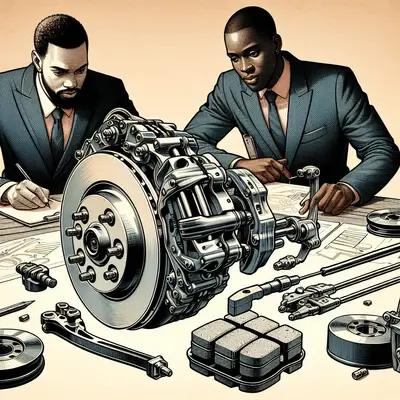
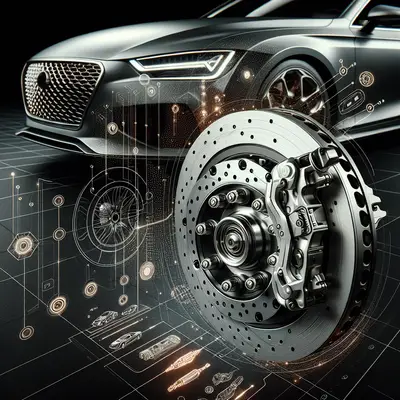
Rotors are not passive slabs of metal; they are engineered heat managers. Their job is to transform kinetic energy into heat and then shed that heat gracefully. Thickness, metallurgy, vane design, and surface treatment all influence how quickly a rotor absorbs, distributes, and releases thermal load.
A premium approach looks beyond simple replacement and asks: Are the new rotors genuinely compatible with the chosen pads, and are they designed for my vehicle’s weight, performance, and intended use? Cheap, low-quality rotors may be more prone to uneven thickness variation, leading to pedal pulsation and steering-wheel vibration—symptoms that many mislabel as “warped rotors.” In reality, uneven pad deposits and rotor thickness variation are often to blame.
Visually, a rotor can appear acceptable while already at or near minimum thickness. Once below specification, its ability to handle heat is compromised, increasing the risk of fade and lengthened stopping distances, especially under repeated or emergency braking. This is why a precise micrometer measurement is vastly more informative than a quick glance.
Exclusive Insight #3:
Treat rotors as precision thermal instruments, not commodities. Insist that your technician measure rotor thickness, confirm it exceeds minimum specifications with a healthy margin, and pair the rotors with pads that are engineered to work together—especially if you frequently brake from highway speeds or tow loads.
Line Integrity: The Subtle Art of Hydraulic Confidence
Brake lines and hoses are often overlooked until there is a dramatic failure, but refined brake safety is rarely about drama. It’s about quietly preventing it. Over years, rubber hoses can swell internally, crack externally, or deteriorate from exposure to heat, road salt, and contaminants. This can soften pedal feel, introduce delayed response, or—in severe cases—lead to loss of braking pressure.
Visual inspection alone is not always enough. Very fine cracking or internal swelling may not be obvious. A driver might simply sense that the brakes feel “less crisp” or “less immediate” without any warning lights illuminated. Braided stainless-steel lines, when properly engineered for the vehicle, can reduce expansion and offer a more consistent pedal—though they must be installed to professional standards to avoid chafing and fatigue.
Attention should also extend to hard brake lines running along the chassis, especially in regions with harsh winters and road salt. Corrosion along these lines can progress quietly, only revealing itself when a panic stop exposes their weakness. For a vehicle you intend to keep, proactive line inspection and, when appropriate, replacement is a mark of genuine mechanical stewardship.
Exclusive Insight #4:
Ask specifically for a brake line and hose integrity evaluation during major brake service—especially in older, high-mileage, or winter-driven vehicles. Subtle degradation here can compromise the whole system’s authority long before a leak or failure is obvious.
Intelligent Assistance: Harmonizing Modern Electronics With Mechanical Fundamentals
Modern brake systems are no longer purely mechanical-hydraulic; they are orchestrated by sophisticated software. ABS, electronic brake-force distribution, traction control, and stability control all manipulate braking to keep the vehicle poised and composed, often intervening before the driver even senses a loss of traction.
Yet these intelligent systems rely on impeccable mechanical fundamentals: proper pad and rotor condition, correct fluid quality, accurate wheel-speed sensors, and clean, stable electrical connections. Neglected wheel bearings, damaged tone rings, or contamination on sensors can confuse the system, leading to erratic ABS activation, dash warnings, or, more subtly, compromised stability control performance.
A refined owner embraces these systems as allies—but not as excuses to abandon mechanical diligence. When ABS or stability lights illuminate, the response should be investigative, not dismissive. Similarly, any unusual ABS pulsing, extended stopping distances on wet roads, or strange noises under hard braking merits a professional evaluation that considers both electronics and hardware.
Exclusive Insight #5:
Treat electronic brake aids as a second, highly skilled driver sharing the pedal with you. Keep sensors, wiring, and mechanical components in prime condition so these systems can deliver their full protective capability when conditions deteriorate unexpectedly.
Conclusion
Sophisticated brake care is not about obsessing over worst-case scenarios; it is about crafting a driving experience where control feels effortless, precise, and quietly assured. By elevating your attention to brake fluid quality, friction material selection, rotor integrity, line health, and the harmony between electronics and hardware, you move beyond basic maintenance into a realm of curated safety.
This is the difference between simply “having brakes” and possessing a braking system with true quiet authority—one that responds not just adequately, but elegantly, when you need it most.
Sources
- [National Highway Traffic Safety Administration (NHTSA) – Brake Safety Overview](https://www.nhtsa.gov/brakes) – Government guidance on brake function, safety, and defect reporting
- [U.S. Department of Transportation – FMVSS No. 135: Light Vehicle Brake Systems](https://www.nhtsa.gov/fmvss/brake-systems-fmvss-no-135) – Technical regulatory standards governing brake performance and testing
- [Car and Driver – “How Your Car’s Brakes Work”](https://www.caranddriver.com/features/a15085029/how-your-cars-brakes-work-feature/) – Detailed explanation of brake components and operation for modern vehicles
- [Bosch Auto Parts – Brake System Technology](https://www.boschautoparts.com/en/auto/brakes) – Manufacturer perspective on pads, rotors, ABS, and modern brake technologies
- [AAA – “How to Know When You Need Brake Service”](https://www.aaa.com/autorepair/articles/how-to-know-when-you-need-brake-service) – Consumer-focused guide on brake maintenance indicators and safety considerations
Key Takeaway
The most important thing to remember from this article is that this information can change how you think about Brake Systems.