For the truly meticulous driver, confidence at the wheel is not a matter of optimism; it is the product of quiet, consistent attention to the details most motorists overlook. Among those details, your brake system holds a singular place of importance. Far more than pads and rotors, it is a carefully engineered network of components that must work in perfect synchrony—every time you ask the vehicle to stop. This is an exploration of how your brake system really operates, and five exclusive, refined practices that elevate your approach to brake safety beyond routine maintenance.
The Modern Brake System, Deconstructed
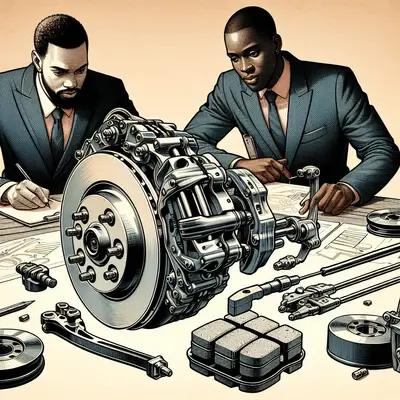
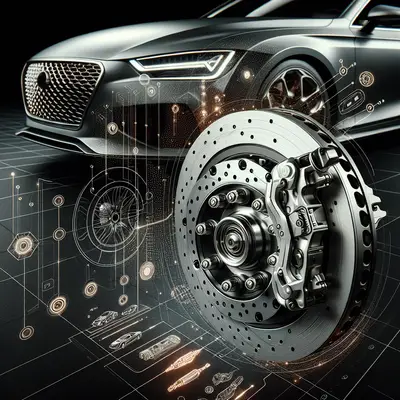
Beneath the polished finish of any well-kept vehicle, the brake system is a study in controlled force and precisely managed friction. Most contemporary passenger cars rely on hydraulic disc brakes at the front, and often at all four corners. When you press the pedal, a master cylinder converts that pressure into hydraulic force, pushing brake fluid through narrow lines to calipers at each wheel. There, pistons clamp brake pads against rotors, transforming motion into heat and dissipating energy in a carefully calibrated instant.
Yet the real sophistication lies in how multiple subsystems quietly coordinate in the background. Anti-lock braking systems (ABS) rapidly modulate pressure to prevent wheel lock-up in emergencies; electronic brakeforce distribution (EBD) continuously balances braking between front and rear wheels; and in many vehicles, stability control uses targeted braking at individual wheels to help maintain directional control. For the discerning owner, thinking of the brakes as a single “part” is no longer sufficient. Every stop you make depends on the integrity of a chain of components—from fluid quality and hose condition to sensor accuracy and caliper slide freedom. Any weak link can compromise the refined, predictable braking feel you should insist on.
Exclusive Insight #1: Pedal Feel Is Your Most Underestimated Diagnostic Tool
Most drivers only react to unmistakable symptoms—screeching, grinding, or shuddering. A more elevated approach begins earlier, with a sophisticated awareness of pedal feel. Your brake pedal is a direct, tactile window into the condition of the entire system, and subtle changes often appear long before obvious noise or visible wear.
A firm, progressive pedal that maintains its height under steady pressure typically indicates healthy hydraulics and well-bled fluid. A pedal that gradually sinks under the same pressure can hint at internal master cylinder leakage or trapped air. An unusually high, hard pedal that requires significant force may signal issues with the brake booster or restricted fluid passages. A pedal that feels spongy or “springy” is frequently an early warning of moisture-contaminated fluid, slight air ingress, or flexible rubber hoses beginning to degrade.
Cultivating this sensitivity means paying attention not just when something feels wrong, but when it feels slightly different. Take note of pedal travel, firmness, and response over time, particularly after heavy braking, extreme weather changes, or service visits. Keeping a brief written record—perhaps in your glovebox or a digital note—turns your subjective impressions into a practical tool you can share with your technician. This quiet discipline often catches issues before they rise to the level of urgent repairs.
Exclusive Insight #2: Brake Fluid Age Matters as Much as Brake Pad Thickness
Brake pads are easy to see and simple to understand: they wear, you replace them. Brake fluid, by contrast, is often neglected because it is less visible and does not have a single, obvious “wear line.” Yet for a sophisticated brake strategy, fluid condition is as critical as pad quality. Brake fluid is hygroscopic—it absorbs moisture over time from the ambient air, even in a closed system. As water content slowly increases, the boiling point of the fluid drops, making it more likely to form vapor bubbles under high heat, which leads to a soft, fading pedal when you need firm braking most.
In addition, moisture accelerates internal corrosion within calipers, ABS modules, and steel brake lines—damage that is costly, subtle, and entirely preventable. Rather than waiting for symptoms, adopt a proactive fluid replacement interval based on time, not mileage alone. Many manufacturers suggest roughly every two to three years, but high-humidity climates, frequent stop-and-go driving, or repeated steep descents may justify shorter intervals. A simple brake fluid test (measuring copper content or boiling point) can bring data to your decisions.
Insisting on the correct fluid type (DOT 3, DOT 4, or DOT 5.1, as specified by your vehicle) and ensuring the reservoir is never left open to the air longer than necessary are hallmarks of a refined maintenance approach. In practice, clean, fresh fluid is one of the least expensive, most effective investments you can make in both brake feel and emergency stopping performance.
Exclusive Insight #3: Brake Performance Is a Tire Conversation, Not Just a Brake Conversation
Stopping distance is often described as a function of brake quality, but the truth is more nuanced: your brakes do not actually stop the car—your tires do. The brake system’s role is to manage how much force is delivered to each wheel, but traction at the contact patch with the road ultimately dictates what is possible. Focusing solely on pads and rotors without equal attention to tires is a subtle, but significant, oversight.
Premium tires with sufficient tread depth, proper speed and load ratings, and the right compound for your climate can dramatically reduce stopping distances—especially in wet, snowy, or cold conditions—compared with budget alternatives. Tire pressure that is even slightly low can lengthen stopping distance and change how ABS and stability control behave; overinflation can reduce the contact patch and compromise grip. Uneven wear patterns may indicate misalignment or suspension issues, both of which interact with braking stability.
A truly elevated brake safety practice includes a deliberate tire strategy: season-appropriate tires, regular pressure checks (preferably with a quality gauge, not just the vehicle’s TPMS), and an eye on remaining tread depth far above the legal minimum. Aligning brake maintenance with tire inspection creates a more complete picture of your vehicle’s real-world stopping capability, rather than treating each system in isolation.
Exclusive Insight #4: Heat Management Separates Everyday Braking from Exceptional Braking
Under normal driving, your brakes may seem almost effortless. But in sustained high-demand scenarios—descending a long mountain road, repeatedly braking from highway speeds, or towing a heavy load—heat buildup becomes the central challenge. Every application of the brakes converts kinetic energy into heat; if that heat is not properly managed, components can overheat and lose efficiency, leading to brake fade, rotor warping, and accelerated pad wear.
Sophisticated drivers recognize that technique plays a major role in thermal management. Using lower gears on long descents (engine braking) reduces the burden on the friction brakes, preserving their capacity for emergency stops. Maintaining greater following distances decreases the need for repeated, heavy pedal applications. When slowing from high speed, a firm, decisive brake application followed by a clean release is usually less punishing to the system than repeated light “feathering” that keeps components hot for longer.
Equipment choices also influence heat control. Ventilated rotors, high-quality pads designed for your driving profile, and clean, properly lubricated caliper slides all contribute to consistent performance. For drivers who tow, travel in mountainous regions, or regularly drive with heavier loads, a conversation with a reputable specialist about brake component upgrades is not excessive—it is simply aligned with how the vehicle is genuinely used.
Exclusive Insight #5: Cleanliness and Precision in Brake Work Are Safety Features, Not Formalities
Many owners focus on what is replaced during brake service—pads, rotors, fluid—but less on how the work is performed. Yet the refinement of execution has a direct impact on both safety and long-term reliability. Brakes operate under extreme temperatures and loads; corners cut during installation can remain hidden until a moment of high demand reveals them.
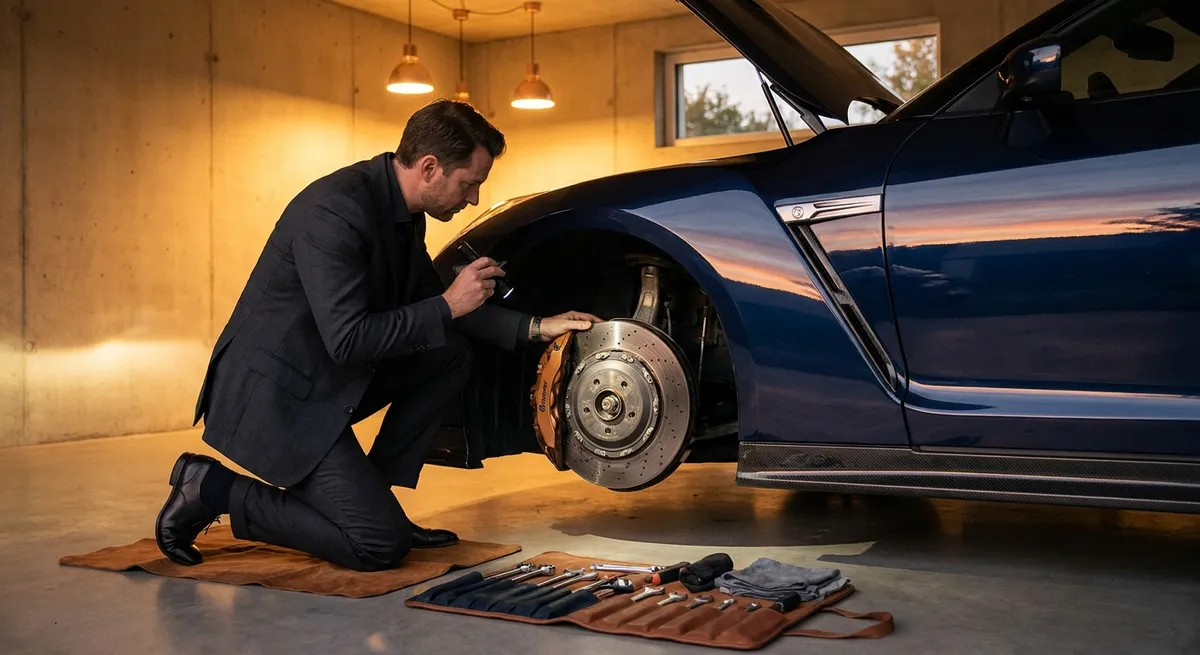
Attention to surfaces is paramount. Rotor faces must be clean and free from oils or machining residues; hub surfaces should be thoroughly cleaned to ensure rotors sit perfectly flat, preventing thickness variation and vibration. Caliper pins should be inspected, cleaned, and lubricated with the correct high-temperature brake grease, ensuring smooth, even movement. Torque specifications for caliper bolts and wheel lug nuts are not suggestions—they are engineered values that protect threads, prevent distortion, and keep components properly seated.
For the premium-minded car owner, this means vetting your service provider with the same rigor you’d apply to any other expert. Ask how they clean hub faces, whether they torque wheels to specification rather than using impact guns alone, and if they bed-in new pads when appropriate. Insist on quality replacement parts from recognized manufacturers, and request that old parts be made available for inspection. The result is a brake system that not only works, but works consistently and quietly, with the composure you expect from a carefully maintained vehicle.
Conclusion
A truly confident stop is not an accident—it is the culmination of disciplined observation, thoughtful maintenance, and respect for the engineering behind every pedal press. When you elevate your understanding of brake systems beyond basic replacement intervals, you move into a realm where subtle cues are noticed, small changes are addressed early, and each component is considered part of a carefully coordinated whole. By tuning into pedal feel, respecting brake fluid as a critical safety component, integrating tire strategy into your braking mindset, managing heat intelligently, and demanding precision in every service procedure, you transform everyday braking into a quiet display of mechanical assurance. For the discerning driver, that assurance is not merely a convenience; it is a standard.
Sources
- National Highway Traffic Safety Administration (NHTSA) – Brakes - Overview of brake safety, ABS, and related federal safety information
- U.S. Department of Energy – Transportation: Braking and Vehicle Technologies - Technical context on braking, energy conversion, and efficiency considerations
- University of Nebraska-Lincoln – Brake Systems Tutorial - Educational material explaining hydraulic brake operation and components
- Continental Automotive – ABS and ESC Technology Overview - Manufacturer-level insight into ABS, brakeforce distribution, and stability systems
- Tire Rack – How Tires Affect Braking Distance - Data and analysis linking tire selection and condition to braking performance
Key Takeaway
The most important thing to remember from this article is that this information can change how you think about Brake Systems.