A truly confident driver doesn’t rely on luck when it comes to braking—they rely on understanding. Beneath every composed stop and every controlled deceleration is a brake system working with quiet precision. For discerning owners, “it works” is no longer an acceptable standard; the benchmark is predictable, repeatable performance in all conditions. This article unpacks how modern brake systems really operate, and offers five exclusive, detail‑oriented insights that elevate brake safety from a checklist to a refined discipline.
The Modern Brake System: More Orchestra Than Single Instrument
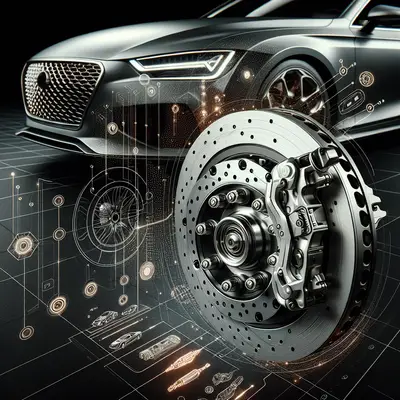
Today’s brake system is less a simple hydraulic circuit and more a carefully tuned orchestra of mechanical, electronic, and thermal components. While the basics remain—pedal, master cylinder, hydraulic lines, calipers, pads, and rotors—the way they collaborate is more sophisticated than many owners realize.
Anti-lock braking systems (ABS), electronic brake-force distribution (EBD), brake assist, traction control, and stability control are no longer separate features; they are interlinked, software‑driven layers of protection. Each sensor input and hydraulic adjustment is designed to keep the vehicle as stable as physics will allow, especially under hard braking or on compromised surfaces.
Understanding this complexity matters. When a warning light appears, a minor change in pedal feel emerges, or the vehicle reacts differently in the rain, these are not random quirks—they are signals from a system that usually maintains decorous silence. The goal is not to become a brake engineer, but to develop a refined sensitivity: knowing when something is “off” before it becomes unsafe.
Inside the System: How Force Becomes Confident Deceleration
At its core, a brake system is an elegant force amplifier and heat-management device. Your foot initiates a chain of events that transforms modest pedal pressure into powerful, controlled stopping forces at each wheel.
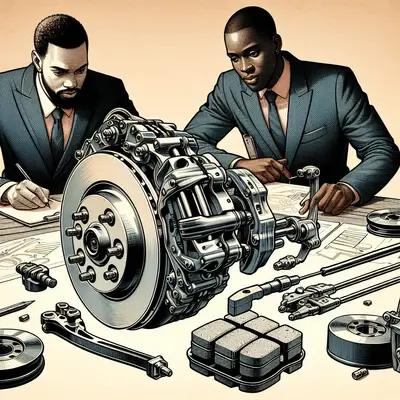
Pressing the brake pedal actuates the master cylinder, generating hydraulic pressure that travels through brake lines to calipers or wheel cylinders. At the front (and often rear) wheels, calipers clamp pads against rotors; in some rear setups, shoes press outward against drums. This friction converts kinetic energy into heat, which is dissipated through the rotors, pads, and surrounding airflow.
Modern systems refine this process with proportioning and electronic logic. Load, speed, grip, and yaw are continuously evaluated, adjusting how much force each wheel receives. On a dry highway, this creates short, predictable stops. On a wet, uneven road, it helps preserve control and direction, preventing the chaotic wheel lockups that once defined emergency braking.
This is why component quality, fluid condition, and proper installation matter so much: the system is calibrated on the assumption that each piece responds within tight tolerances. Any degradation—warped rotors, contaminated fluid, or sticky calipers—unsettles that balance.
Exclusive Insight #1: Brake Pedal “Personality” Is a Diagnostic Tool
Most drivers notice only two states of pedal feel: “normal” and “something’s wrong.” A more discerning approach uses pedal feel as a continuous diagnostic instrument.
A refined driver will notice:
- Initial bite: The very first moment the pads engage. Has it become vague, delayed, or grabby?
- Pedal travel: Has the pedal begun to sink lower before you feel meaningful braking?
- Build‑up of effort: Does pressure build smoothly, or is it spongy, elastic, or notchy?
- Consistency when hot: Does pedal feel change after descending a long hill or braking repeatedly in traffic?
Subtle changes often appear before obvious symptoms or dashboard warnings. A gradually softening pedal may suggest air in the lines, boiled or degraded fluid, or an internal master cylinder issue. A higher, harsher pedal can point to pad glazing or overly aggressive friction material.
The elevated standard is simple: know the normal “signature” of your brake pedal and treat any deviation as a signal, not an inconvenience.
Exclusive Insight #2: Brake Fluid Is Not “Lifetime”—It’s a Silent Lifeline
Brake fluid is one of the most overlooked elements of brake safety, despite its crucial role in how the system feels and responds. Most modern cars use glycol-based DOT 3, DOT 4, or DOT 5.1 fluid, all of which are hygroscopic—they absorb moisture from the atmosphere over time.
This moisture intrusion does two dangerous things:
- Lowers the boiling point: Under hard braking, heat transfers into the fluid. Water-contaminated fluid can form vapor bubbles, causing a sudden soft or sinking pedal, especially on steep descents or after repeated stops.
- Accelerates internal corrosion: Calipers, ABS components, and internal passages can corrode from the inside out, compromising precision and reliability long before visible symptoms appear.
A premium maintenance mindset treats brake fluid like a scheduled safety service, not an afterthought. Many manufacturers recommend flushing the fluid every 2–3 years, regardless of mileage. For drivers who tow, regularly descend mountain passes, or drive spiritedly, that interval may justifiably be shorter.
Transparent, pale fluid with a clean, slightly amber tone is typical; dark, murky, or nearly brown fluid is a clear signal that the hydraulic “lifeblood” of your braking system is overdue for renewal.
Exclusive Insight #3: Rotor and Pad Pairing Defines Your Braking Character
Owners often think of pads and rotors as separate, generic parts. In reality, they function as a matched friction pair—and their characteristics shape the personality of your brakes: initial bite, progression, noise, dust, fade resistance, and even steering-wheel feel under hard braking.
Consider three refined dimensions when selecting replacements:
- Friction profile, not just brand: Some pads deliver a sharp initial bite with less pedal travel; others favor smoother, more progressive engagement. High‑performance compounds may require more heat to perform optimally, which is not ideal for purely urban, gentle driving.
- Thermal behavior: Rotors with adequate mass and thoughtful ventilation manage heat better, reducing fade on long descents. For most road cars, high-quality plain or lightly slotted rotors are preferable to aggressively drilled designs, which can introduce stress points if poorly manufactured.
- Noise and refinement tolerance: Ultra‑aggressive pads may squeal in low-speed, light-brake situations—a compromise some enthusiasts accept, but one many premium daily drivers find unacceptable.
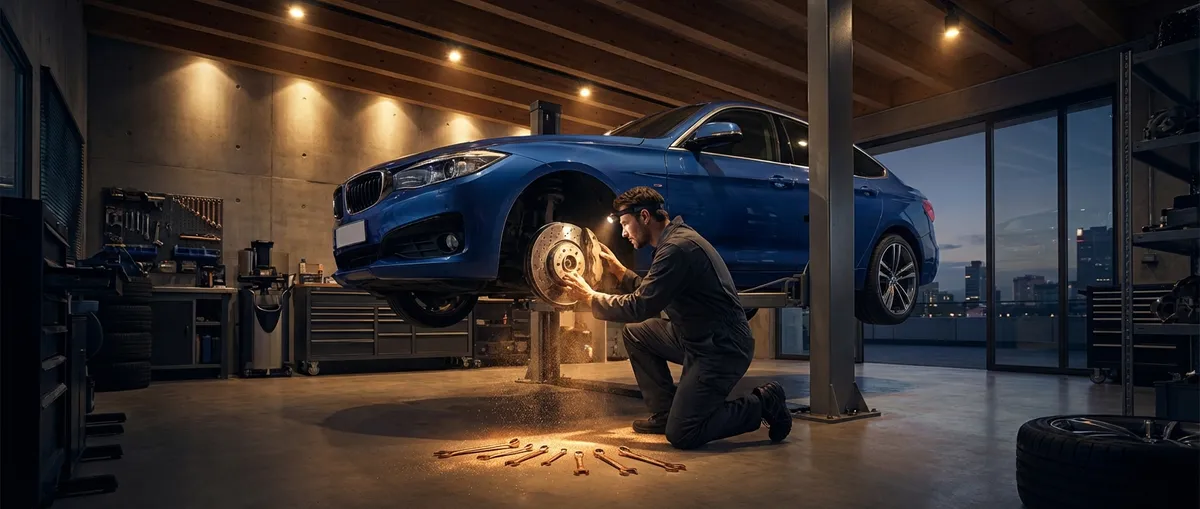
The sophisticated approach is to match pad and rotor characteristics to your real-world driving environment, not to marketing claims. A conversation with a trusted technician or brake specialist—focused on your driving style, vehicle weight, and conditions—can turn a routine replacement into a measured upgrade in control and confidence.
Exclusive Insight #4: ABS and Stability Control Are Only as Trustworthy as Their Sensors
Modern brake safety is heavily dependent on accurate data. Wheel speed sensors, yaw sensors, steering angle sensors, and brake pressure sensors feed continuous information to the ABS and electronic stability control modules. When these inputs become degraded or inconsistent, the system’s refined logic is compromised.
This manifests in subtle ways:
- ABS activating earlier than expected on surfaces that used to feel secure
- Intermittent warning lights that vanish after a restart, then reappear days later
- Slightly uneven braking behavior on bumpy or patched road surfaces
Contaminated or damaged wheel speed sensors—often exposed at the hubs—are common culprits. Corrosion, road debris, or poorly routed wiring after previous repairs can disturb the signal. Alignment issues or mismatched tire sizes can also confuse stability systems, as they alter the expected rotational relationship between wheels.
A sophisticated owner does not ignore intermittent ABS or stability control warnings, nor do they accept persistent lights as “just a sensor issue.” These systems are designed to intervene only when necessary; if they cannot trust their own inputs, they may react too aggressively, too late, or not at all.
Exclusive Insight #5: Temperature, Load, and Environment Quietly Redefine Your Safety Margin
Even the finest brake system operates within the constraints of physics. The same car, with the same components, will behave differently at 20°F versus 100°F, with a light driver versus a fully loaded family and luggage, or at sea level versus a mountain pass.
Consider these refined environmental effects:
- High heat and long descents: Repeated braking builds heat faster than it can be dissipated, edging pads and fluid closer to fade. Downshifting and engine braking are not just old-fashioned habits; they are deliberate strategies to preserve brake capacity for when you truly need it.
- Cold mornings and first stops: Moisture accumulation on rotors overnight can slightly reduce friction on the first few stops. In winter, road salt and grime also accelerate corrosion at critical interfaces.
- High load or towing: Added weight increases stopping distances and brake temperatures dramatically. If you tow, transport heavy equipment, or frequently carry multiple passengers, your brake system effectively lives a harder life than the factory baseline assumption.
- Urban versus rural usage: Tight urban traffic imposes constant low-speed stops, whereas rural or highway driving often involves fewer, but sometimes more severe, braking events. Each pattern suggests different priorities in pad selection, rotor design, and service intervals.
The elevated standard is to adjust driving and maintenance habits with deliberate awareness of environment and load. An owner who respects these variables will not be surprised by brake fade on long grades, nor by premature wear after repeated heavy loading.
Conclusion
Brake systems reward attention to nuance. For the discerning driver, safety is not just the absence of warning lights; it is the presence of predictability, composure, and consistency in every stop. By listening to your brake pedal’s “personality,” treating fluid as a scheduled lifeline, pairing pads and rotors thoughtfully, respecting the role of sensors in electronic safety, and adjusting for environment and load, you move beyond basic maintenance into a truly elevated standard of control.
At that level, each stop is not a test of luck but an exercise in quiet authority—where your vehicle’s braking system reflects the same care and precision you expect from every other aspect of your driving experience.
Sources
- [National Highway Traffic Safety Administration (NHTSA) – Brakes](https://www.nhtsa.gov/equipment/brakes) - Overview of brake system components, safety considerations, and regulatory context
- [U.S. Department of Transportation – ABS and Stability Control Information](https://www.transportation.gov/mission/safety/abs-and-esc) - Explains how anti-lock braking and electronic stability control function and enhance safety
- [University of Texas at Austin – Braking System Fundamentals](https://www.me.utexas.edu/~longoria/pap-courses/383G/auto-lectures/383G-Lecture08.pdf) - Technical lecture notes on brake system dynamics, energy conversion, and heat management
- [StopTech White Paper – Brake Fluid 101](https://stoptech.com/technical-support/technical-white-papers/brake-fluid-101/) - In-depth explanation of brake fluid types, hygroscopic behavior, and performance implications
- [Car and Driver – How Modern Braking Systems Work](https://www.caranddriver.com/features/a15130070/how-brakes-work-feature/) - Accessible yet detailed description of modern brake systems, components, and real-world behavior
Key Takeaway
The most important thing to remember from this article is that this information can change how you think about Brake Systems.