For the driver who values composure more than spectacle, a vehicle’s true luxury is measured in how confidently it comes to rest. A refined brake system isn’t merely a collection of mechanical parts—it is the quiet authority that stands between intention and outcome, speed and stillness, hazard and escape. Understanding how your brakes work, and how to care for them with discernment, transforms routine maintenance into an elevated safety ritual.
Below, we explore the modern brake system through a more sophisticated lens—and share five exclusive insights that safety‑focused owners rarely hear at the service counter.
The Architecture of Control: How Modern Brakes Really Work
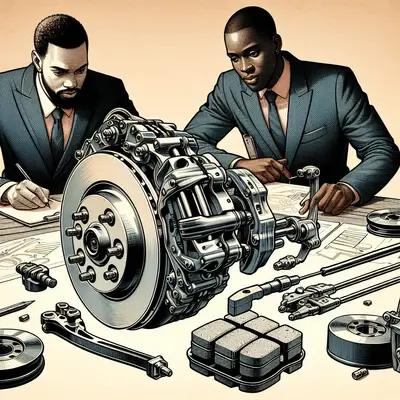
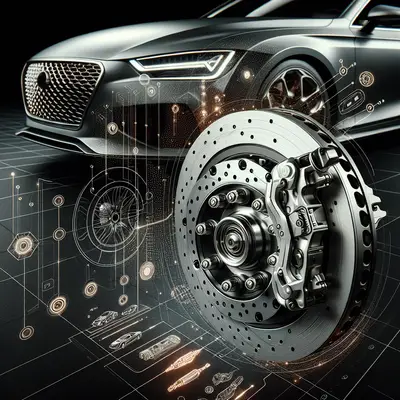
Beneath the polished sheet metal, your brake system is an elegantly choreographed network of hydraulics, friction materials, and electronic guardians. When you press the pedal, a brake booster amplifies your input and sends hydraulic pressure from the master cylinder through steel lines and flexible hoses to each wheel. This pressure urges caliper pistons to clamp pads against spinning rotors, converting motion into heat—a carefully controlled dissipation of energy.
Disc brakes now dominate at all four corners in many vehicles, offering superior cooling and more consistent performance under repeated stops. The anti-lock braking system (ABS) continuously monitors wheel speeds, momentarily releasing and reapplying pressure to prevent lock-up, preserving steering control on marginal surfaces. Traction control and electronic stability control (ESC) build upon this foundation, subtly modulating brake force at individual wheels to maintain composure in evasive maneuvers or abrupt lane changes.
For the discerning owner, appreciating this architecture is not a technical indulgence; it is a way to sense when something is amiss. A softer-than-usual pedal, a delayed response, or a subtle pull under braking is not a quirk—it is your system’s way of whispering that its finely tuned balance has been disturbed.
Beyond Pad Wear: The Refined Owner’s View of Brake Health
Most service conversations stop at “your pads are worn,” but a genuinely safe brake system demands a broader, more nuanced assessment. Brake pads are only one element of a harmonized ensemble that includes rotors, caliper hardware, brake fluid, hoses, and even the health of your wheel bearings and suspension.
Premium brake care means looking for even pad wear across each axle, not just thickness. Uneven wear patterns can signal sticking caliper slide pins, seized pistons, or imbalanced hydraulic pressure—issues that can compromise stability long before the pads reach their minimum thickness. Rotors should be inspected not only for grooves and scoring, but also for runout (wobble) and thickness variation, which can manifest as pedal pulsation and reduced contact quality under hard stops.
Brake fluid, often overlooked, is hygroscopic—it absorbs moisture over time. This raises the fluid’s boiling point and invites internal corrosion in lines, ABS modules, and calipers. An owner who treats brake fluid as a critical safety component rather than an afterthought is already operating at a more elevated level of safety than most drivers on the road.
Five Exclusive Insights for the Safety‑Driven Driver
1. Brake Feel Is Your Early-Warning Language
Most drivers wait for a light on the dash or an obvious squeal. You should cultivate something quieter: a memory of how your brake pedal normally feels. A premium safety habit is to pay attention to:
- The initial “bite” when you first touch the pedal
- How far the pedal travels before the vehicle meaningfully decelerates
- How consistently the pedal responds in traffic, on hills, and at highway speeds
A gradual increase in pedal travel, a spongy sensation, or the need to press harder than usual—even if stopping distance still seems acceptable—can indicate air in the lines, fluid degradation, or micro-leaks that haven’t yet revealed themselves on the floor. Treat these changes as reasons to schedule an inspection, not as curiosities to “monitor.”
2. Quiet Brakes Are Not Always Healthy Brakes
Many owners worry only when brakes become noisy. In reality, some of the most insidious brake issues are nearly silent. Premium, noise‑dampened pads and advanced shims can mask early signs of hardware fatigue or slight rotor irregularities until performance has already been compromised.
Conversely, not all noise is catastrophic. A brief squeal when brakes are cold or after a damp night can be normal surface rust or pad glazing. The refined approach is to distinguish patterns: recurring noise under light braking, new sounds under hard stops, or metallic grinding that changes with pedal pressure. Any new sound that is repeatable and directional (clearly from one side) warrants professional attention, even if overall stopping still feels secure.
3. Brake Fluid Age Matters More Than Mileage Alone
Brake fluid service is often sold as an optional “nice-to-have.” For a safety‑conscious owner, it is foundational. Moisture ingress is a function of time and environmental conditions as much as distance. Urban vehicles exposed to traffic heat cycles, frequent short trips, and humidity can degrade brake fluid faster than a highway-driven car with more miles but fewer stop‑and‑go cycles.
A refined strategy:
- Aim for fluid replacement roughly every 2–3 years, or as recommended by your manufacturer
- Ask your service provider whether they use test strips or a boiling point tester to assess fluid condition, not just color
- Insist that ABS and stability control components are properly cycled during the bleed process to avoid trapped old fluid in the system’s “hidden” chambers
Treating brake fluid as a critical safety fluid—on par with engine oil from a risk perspective—places you in a very small, very wise minority of vehicle owners.
4. Wheel and Tire Choices Quietly Reshape Your Braking
Many drivers upgrade wheels and tires for aesthetics or seasonal performance without considering their influence on stopping power. Heavier wheels increase rotational mass; oversize rims with low-profile tires can amplify harshness and, if poorly chosen, reduce the tire’s contact effectiveness on real-world surfaces.
The sophisticated view is to choose tire and wheel packages that support, rather than undermine, your brake system:
- Prioritize high-quality tires with strong wet and cold performance ratings over purely cosmetic rim upgrades
- Avoid dramatically heavier wheels that burden your brakes, especially on vehicles already at the upper limit of their brake sizing (e.g., SUVs and performance sedans)
- Recognize that a premium performance tire with better grip can shorten stopping distances more meaningfully than a flashy but mismatched brake or wheel upgrade
Your brakes can only work within the limits of your tires. Investing in the right rubber is a subtle but powerful safety upgrade.
5. Your ABS and ESC Are Only as Good as Your Technique
Anti-lock brakes (ABS) and electronic stability control (ESC) are extraordinary safety assets, but they are not magical. They preserve control; they do not defy physics. A refined driver understands how to work with these systems instead of assuming they will correct any error.
Key practices:
- In an emergency stop, apply firm, steady pressure on the brake pedal and allow the ABS to pulse—do not pump the brakes
- Maintain your steering input deliberately; ABS and ESC maintain your ability to steer, but they cannot create additional grip beyond what your tires and road surface allow
- Recognize that a vehicle will still require significantly more distance to stop on wet leaves, gravel, or ice—even with sophisticated electronics fully functional
The truly safety‑oriented driver occasionally rehearses emergency braking in a safe, empty space (such as an advanced driving course or controlled clinic). This is a subtle but extraordinary way to ensure that, in a crisis, your technique and your electronics operate as a single, practiced system.
Elevating Your Service Experience: What to Ask, What to Expect
A premium brake experience is not solely about parts—it is about the quality of the conversation you have with your service provider. Instead of a hurried “Do I need pads and rotors?”, consider a more elevated set of questions:
- “Can you show me the actual measurements of my pad thickness and rotor condition?”
- “Were there any signs of uneven wear, caliper sticking, or heat spots?”
- “What is the condition and age of my brake fluid, based on an actual test?”
- “Did you inspect the hoses, hardware, and backing plates, or only the pads and rotors?”
A shop aligned with your safety standards will be comfortable answering these questions, and will welcome your interest rather than dismissing it. Request documentation of measurements and findings with each service; over time, this becomes your personalized brake health dossier, helping you anticipate future needs with composure instead of reacting to unexpected repairs.
Conclusion
True driving confidence is not loud; it is the quiet assurance that, if everything around you becomes unpredictable, your vehicle will not. A well-understood, meticulously maintained brake system turns every journey into a more deliberate, controlled experience—where power is matched by restraint, and speed is balanced by the elegance of an assured stop.
By attending to brake feel, fluid age, tire and wheel choices, the nuance of noise, and your partnership with ABS and ESC, you move beyond basic maintenance into a more cultivated form of safety. In that space, your brake system becomes what it was always meant to be: an unspoken, unwavering promise between you, your vehicle, and the road ahead.
Sources
- National Highway Traffic Safety Administration (NHTSA) – ABS and ESC Overview – Explains how anti-lock braking systems and electronic stability control enhance vehicle safety
- U.S. Department of Energy – Braking System Basics – Provides a clear overview of how automotive braking systems function
- AAA – Brake System Maintenance Recommendations – Discusses the importance of routine brake inspections and fluid care
- Car and Driver – Brake Fluid Guide – Offers an in-depth look at brake fluid types, aging, and performance implications
- Tire Rack – Tire Performance and Braking Distance – Explores how tire choice affects braking performance and stopping distances
Key Takeaway
The most important thing to remember from this article is that this information can change how you think about Brake Systems.