Modern brake systems are engineered to disappear into the background—until the exact moment you ask them to perform perfectly. For the discerning driver, “good enough” is never sufficient. True confidence comes from understanding how your brakes behave, what they’re telling you, and how to preserve their performance long before a warning light blinks to life.
This guide explores the refined realities of contemporary brake systems, then highlights five exclusive, often-overlooked insights that safety‑focused owners quietly rely on.
The Modern Brake System, Demystified
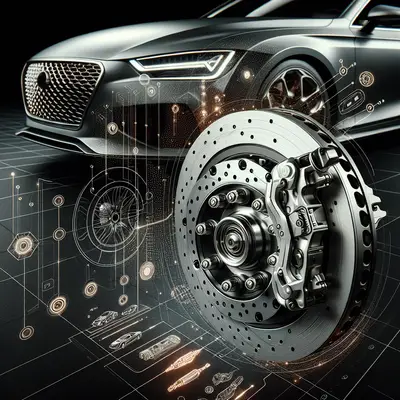
Today’s brake systems are far more sophisticated than the simple hydraulic circuits of decades past. At their core, they still rely on a driver’s input at the pedal, transferred via hydraulic pressure to calipers that clamp pads against rotors. Yet surrounding that core are intricate layers of intelligence: electronic brake‑force distribution, anti‑lock braking (ABS), stability control, and, in many vehicles, integrated functions for adaptive cruise and collision avoidance.
Each press of the pedal becomes a nuanced negotiation between hardware and software. The brake booster may be vacuum‑assisted or fully electronic. The master cylinder relays hydraulic pressure through carefully engineered lines to each wheel, where calipers and pads convert motion into controlled heat. Sensors constantly monitor wheel speed, yaw, and pedal effort, allowing the system to modulate braking force in milliseconds—individually, at each corner.
For a driver who values precision, understanding this ecosystem is not academic trivia; it’s the basis for reading subtle cues. A slightly inconsistent pedal, a faint change in noise under light braking, or an unexpected intervention from stability control can all be early indications of issues that a routine glance at the dashboard will never reveal.
How Brakes Quietly Age: Heat, Time, and Technique
Brakes rarely fail suddenly. They fade, glaze, corrode, and fatigue in stages, usually unnoticed by drivers who adapt subconsciously to the decline. Pads wear thinner, rotors develop fine ridges and hotspots, rubber hoses slowly lose compliance, and brake fluid absorbs moisture, reducing boiling point and encouraging internal corrosion.
Heat is the invisible adversary. Every hard stop transforms kinetic energy into thermal energy concentrated in relatively small surfaces. Repeated aggressive braking—especially from high speeds or on steep descents—can push pads and fluid toward their thermal limits. The result may not be immediate failure, but a quiet erosion of safety margin: slightly longer stopping distances, subtle pedal softness, or occasional fade that appears only under demanding conditions.
Time is equally relentless. Even cars that are driven gently and infrequently are subject to humidity, temperature cycles, and contamination. Brake fluid, being hygroscopic, attracts moisture from the air through hoses and seals. Rotors can rust on unused surfaces, calipers can begin to stick, and parking brake mechanisms can seize if never exercised. For the attentive owner, the goal is not merely to “replace when worn,” but to understand how aging interacts with driving style and environment—and to intervene before safety margins become theoretical.
Five Exclusive Insights for Safety‑Obsessed Brake Owners
Discerning owners often focus on details that rarely appear in general maintenance advice. The following five insights reflect practices and observations that quietly separate truly safe brake systems from merely functional ones.
1. Pedal Feel Is a Precision Instrument, Not a Vague Suggestion
Most drivers notice only extremes: a very soft pedal or a grinding noise. The safety‑minded owner treats pedal feel as a finely calibrated instrument. A slight increase in initial travel, a hint of sponginess after extended braking, or a pedal that firms up when pumped can all signal particular issues—air in the system, early fluid degradation, or a developing hydraulic leak.
Make a habit of noticing how the pedal feels in a controlled environment: same stretch of road, similar speed, gentle stopping. Over weeks and months, you’ll develop a memory of “normal” for your car. Any deviation, even if small, justifies a closer inspection. This kind of sensory calibration allows you to detect problems long before a failure, especially those that might not yet trigger a warning light or obvious noise.
2. Brake Fluid Condition Is as Critical as Pad Thickness
Enthusiasts routinely discuss pad and rotor wear, yet brake fluid is often treated as an afterthought. In reality, fluid condition is one of the most critical determinants of emergency braking performance. As fluid absorbs moisture, its boiling point drops, making it more prone to vapor formation under hard use—which manifests as sudden pedal softness or loss of braking force when it’s needed most.
Rather than relying solely on mileage intervals, refined owners consider use cases: frequent mountain driving, stop‑and‑go commuting in hot climates, or towing all increase thermal stress on fluid. A periodic professional test of fluid moisture content or boiling point is a small investment that yields precise data, allowing fluid changes to be based on condition instead of guesswork. It’s a quiet but decisive way to preserve maximum safety margins.
3. Rotor Surface Tells a Story Most Drivers Never Read
Rotors are typically judged by thickness and visible rust, yet their surfaces carry nuanced information about brake health. A lightly polished, uniform gray surface suggests even pad contact and stable operation. Fine concentric grooves may be normal, but deeper scoring, blue spots, or patchy glazing hint at uneven pressure, sticking calipers, overheated pads, or contamination.
Attentive owners periodically inspect rotors through the wheel openings with good lighting. Asymmetric wear—where one side of the rotor face looks markedly different from the other—can indicate a caliper slide issue or a partially seized piston. Early detection at this stage can prevent warped rotors, erratic braking, and costly repairs. Instead of accepting “no obvious grinding noise” as a comfort, you’re reading the subtle visual record of how your brakes have been working.
4. Intelligent Use of Downshifting Protects Brakes Without Overdoing It
Using engine braking to support the brakes is widely recommended, particularly on long descents, but the way it is applied matters. Thoughtful downshifting reduces heat load on pads and rotors, preserving their performance and minimizing fade. Yet excessively aggressive downshifts, or holding the engine at unnecessarily high RPMs, can introduce drivetrain stress and instability, especially on slick surfaces.
The refined approach is balanced: anticipate gradients early, select a lower gear before speed builds excessively, and let the engine assist in maintaining a controlled pace while brakes handle fine modulation. You should feel consistent, moderate pedal input rather than alternating between full braking and full release. This technique not only protects the brake system but also keeps tire grip and vehicle balance under better control—crucial when road conditions are unpredictable.
5. Electronic Aids Are Partners, Not Excuses
Systems such as ABS, electronic brake‑force distribution, and stability control are extraordinary safety advances. However, they’re often misinterpreted as substitutes for mechanical health and driving technique. In reality, they’re most effective when working with a well‑maintained brake system and a measured driver.
A premium perspective treats every intervention—ABS pulsing at the pedal, stability control corrections in a curve, or brake‑based torque vectoring in performance vehicles—as feedback. Frequent or unexpected activation may suggest mismatched tire grip, uneven brake performance from side to side, or driving habits that push the system into constant rescue mode. Scheduling a professional diagnostic when electronics intervene regularly is not paranoia; it’s a deliberate strategy to ensure the underlying mechanical and software foundations remain synchronized and reliable.
Elevating Routine Maintenance into Informed Assurance
For most drivers, brake maintenance consists of waiting for squeals or dashboard alerts. For those who value exceptional safety, the benchmark is higher: clear, predictable pedal feel; consistently even rotor surfaces; fluid with strong thermal resilience; and electronic aids that step in rarely, not routinely.
By treating your brake system as a precision instrument rather than a consumable, you shift from reactive repairs to proactive assurance. Regular professional inspections combined with your own attention to subtle cues—pedal character, noise patterns, rotor appearance, and electronic interventions—create a layered defense against unexpected failures.
Ultimately, the luxury isn’t in the brand of your vehicle or the material of your pads, but in the confidence that every stop, from the casual to the critical, has been quietly prepared in advance.
Sources
- National Highway Traffic Safety Administration (NHTSA) – Brake Safety Overview - Federal guidance on brake system safety, equipment, and performance considerations
- U.S. Department of Transportation – Brake System Educational Materials - Safety resources and technical information related to vehicle systems, including brakes
- SAE International – Brake System Technical Papers - Engineering research on modern brake technology, materials, and performance
- Car and Driver – Understanding Your Car’s Anti-Lock Braking System - Clear explanation of ABS function and its interaction with the rest of the brake system
- IIHS (Insurance Institute for Highway Safety) – ESC and ABS Safety Benefits - Data and analysis on how electronic stability control and ABS improve crash avoidance and braking outcomes
Key Takeaway
The most important thing to remember from this article is that this information can change how you think about Brake Systems.