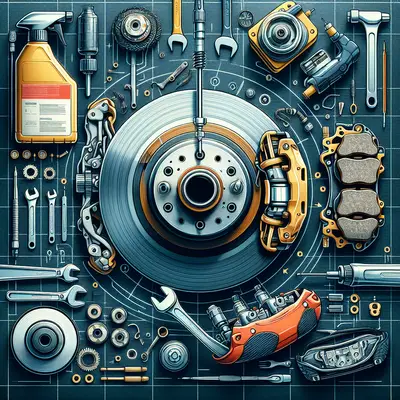
For drivers who expect their car to respond with poised, unflinching confidence, brake repair is not a last-minute scramble—it is a disciplined craft. At Brake Repair Basics, we view the braking system not merely as hardware, but as the car’s most eloquent safety statement. This guide is designed for owners who insist on understanding what happens when their vehicle slows, stops, and protects the people inside. Below, you’ll find five exclusive, detail‑rich insights that transform “getting the brakes done” into an informed, deliberate practice.
Understanding Brake Feel: The Signature of a Healthy System
Every car has a distinct “brake signature”—the way the pedal feels, responds, and communicates under your foot. Learning that signature is your first line of defense.
A healthy brake pedal engages smoothly, with a consistent firmness that builds predictably as you press. Any sudden change—sponginess, excessive travel, a “wooden” hardness with little effect, or a pulsing sensation—deserves attention. Rather than waiting until performance is obviously compromised, note even modest shifts in feedback and braking distance.
When discussing repairs with a technician, describe the feel with precision: when it happens (cold start, after highway driving, during long descents), how often, and under what conditions. This level of detail helps distinguish between issues like air in the lines, warped rotors, contaminated fluid, or caliper problems. Treat this as a driving ritual: a brief mental “brake check” at the start of each journey and after any significant service.
The Brake Pad–Rotor Relationship: Why Matching Matters
Brake pads and rotors do not simply “fit” together; they form a working partnership that defines how your car stops. Many owners accept whatever parts are available or cheapest, but refined brake performance begins with intentional pairing.
Pad compounds (ceramic, semi-metallic, low‑metallic, organic) interact with rotor metallurgy and surface finish in very specific ways. The right match controls noise, dust, stopping power, and longevity. For mostly urban use, a premium ceramic pad paired with high‑quality coated rotors often provides quiet, clean, consistent braking. For heavier vehicles or spirited driving, a more temperature‑resistant semi‑metallic pad combined with robust rotors may be appropriate.
An advanced conversation with your repair shop should include: vehicle weight and usage (commuter, mountain driving, towing), typical speeds, climate, and your tolerance for dust and noise. Ask explicitly for name‑brand, application‑appropriate pads and rotors, and request that both axles (front or rear) be kept consistent. The objective is not just stopping—it is stopping in a manner that feels composed, repeatable, and refined.
Brake Fluid as a Safety Asset, Not an Afterthought
Brake fluid is one of the most neglected safety components in a car, yet it is central to delivering the pedal feel and stopping power you expect. Over time, brake fluid absorbs moisture from the atmosphere—especially in humid or coastal regions—lowering its boiling point and promoting internal corrosion in lines, calipers, and ABS components.
As fluid degrades, hard braking can cause it to boil, resulting in a soft or fading pedal. Corrosion inside the system is more insidious; it can quietly damage expensive components long before any outward symptom appears. That is why discerning owners treat fluid replacement as routine preventive care, not an emergency measure.
Aim to have brake fluid professionally tested or replaced according to your vehicle manufacturer’s interval, or sooner if you drive in demanding conditions. A complete flush (not merely a top‑off) ensures the entire system benefits. When speaking with your technician, ask about the fluid specification (DOT rating), the procedure used (pressure or vacuum bleeding), and whether the ABS module is properly cycled during the process. This level of attention converts a basic fluid change into a meaningful upgrade in brake reliability.
Calipers, Hardware, and the Elegance of Even Braking
Most discussions about brakes stop at pads and rotors. Sophisticated brake repair, however, looks closely at calipers, slide pins, and mounting hardware—elements that control how evenly each wheel participates in stopping.
A sticking caliper or seized slide pin can cause one pad to wear dramatically faster, generate heat and odors, or pull the car subtly to one side under braking. At a premium level of care, a brake service includes cleaning and lubricating slide pins with high‑temperature brake grease, inspecting dust boots and seals, and replacing corroded or fatigued hardware such as abutment clips and pad shims.
Ask your repair provider whether caliper slide pins will be removed, cleaned, and lubricated; whether the pad contact points on the bracket will be cleaned; and whether new hardware is included with the service. These details not only enhance safety and consistency but also reduce brake noise and uneven wear. Properly serviced hardware offers something every refined driver appreciates: a quiet, vibration‑free, confidence‑inspiring stop.
Road Testing with Intent: Verifying the Quality of Your Repair
The road test after a brake repair is not a casual drive around the block—it is a critical quality check that confirms the system performs as designed. Owners who care about safety should treat this step with the same seriousness as the repair itself.
After any brake service, request a documented road test. At a minimum, this should include low‑speed stops (to assess noise and feel), medium‑speed stops (to evaluate straight‑line stability), and, where safe and legal, at least one more assertive stop to confirm that the system responds strongly without pulling or pulsation. The steering wheel should remain steady, the vehicle should track straight, and the pedal should feel stable and linear.
Once you receive the vehicle, conduct your own concise evaluation in a safe area: a gentle stop, a firmer stop, and a controlled emergency‑style stop with no one behind you. Listen for new noises, assess vibration, and note any difference in pedal travel or firmness. Treat this as a final acceptance check. If anything feels inconsistent or unsettled, return immediately and articulate the issue clearly. A premium brake repair does not merely install new parts; it delivers a stopping experience you can trust completely.
Conclusion
Exceptional brake safety is not accidental; it is the product of informed choices, precise communication with your repair professional, and a willingness to notice subtle changes in your vehicle’s behavior. By understanding brake feel, insisting on well‑matched pads and rotors, elevating brake fluid to its rightful importance, demanding thorough caliper and hardware service, and approaching the post‑repair road test with intention, you move beyond routine maintenance into the realm of deliberate, high‑standard safety.
For owners who view driving as a refined discipline rather than a mundane necessity, this level of attention is not excessive—it is appropriate. Your brakes are the final word in every journey you take. They should speak with clarity, composure, and absolute authority.
Sources
- National Highway Traffic Safety Administration (NHTSA) – Vehicle Brakes - Federal guidance on brake safety, system components, and related recalls
- U.S. Department of Transportation – Brake Safety Resources - Broader safety context and links to braking‑related campaigns and information
- AAA – Brake System Inspection and Maintenance - Practical guidance on brake inspections, warning signs, and maintenance intervals
- University of Nebraska–Lincoln, Department of Mechanical & Materials Engineering – Friction Materials Overview - Technical background on friction materials relevant to brake pad compounds
- Brembo Official Technical Area - Manufacturer insights into brake rotors, calipers, fluid, and performance considerations
Key Takeaway
The most important thing to remember from this article is that this information can change how you think about Repair Guides.