For the driver who expects more than merely “good enough,” brake repair is not a chore—it is a discipline. The difference between an acceptable stop and a poised, predictable one lies in nuances most owners never see: subtle wear patterns, torque values, fluid integrity, and the quiet dialogue between pedal and caliper. This guide is written for those who care about that difference and who want their repair decisions to reflect the same standards they apply to every other aspect of their vehicle.
Understanding Brake Health Beyond the Dashboard Light
Warning lights and audible squeals are late-stage alerts, not early-warning systems. A refined brake maintenance approach begins with understanding what optimal brake behavior looks and feels like long before trouble appears.
A confident pedal should be firm yet progressive, with no sudden softness as you press harder. The steering wheel should remain composed under moderate to hard braking, without shimmying or drifting to one side. At low speeds, stopping should feel linear and predictable—no surging, no grabbing, no delay. When a vehicle departs from this calm, consistent character, it is offering early clues that pads, rotors, calipers, or hydraulic components may be drifting from their best. This awareness turns every commute into an informal diagnostic test, allowing you to schedule service on your terms rather than reacting to a crisis.
Choosing Components That Match Your Driving Standards
All brake parts are not created equal, and “premium” on a box is not always a guarantee of premium performance. The components you select define how your car feels every time you slow, merge, or execute an emergency stop.
Original Equipment (OE) or OE-equivalent pads and rotors are engineered to match your vehicle’s specific weight, balance, and brake bias. While budget components may physically fit, they often alter pedal feel, noise characteristics, dust output, and fade resistance in hard stops. Performance-oriented compounds can be superb when properly chosen, but a track-focused pad on a daily commuter may require higher temperatures to work optimally, compromising initial bite in cold conditions. When consulting a shop, ask for the exact pad compound type, friction rating (where available), and rotor style recommended for your usage—not just a brand name. The conversation should center around your driving profile: urban stop-and-go, highway touring, mountain descents, or towing. The result is a brake system that feels cohesive, not cobbled together.
Five Exclusive Insights Discerning Owners Quietly Rely On
Car owners with a heightened concern for brake safety tend to share a few habits and priorities that rarely make it into basic repair guides. These five insights separate routine service from elevated practice:
They Treat Brake Fluid as a Safety Component, Not a Footnote
Brake fluid is hygroscopic—it absorbs moisture over time. Even without leaks, water contamination reduces boiling point, risking fade under repeated hard stops. Sophisticated owners request documented brake fluid tests or replacements on a time or mileage schedule (often every 2–3 years, or as the manufacturer specifies), not only when a technician remembers to suggest it. Clear, light-colored fluid in a clean reservoir is a quiet but powerful indicator of a well-kept braking system.
They Insist on Proper Torque and Clean Mating Surfaces
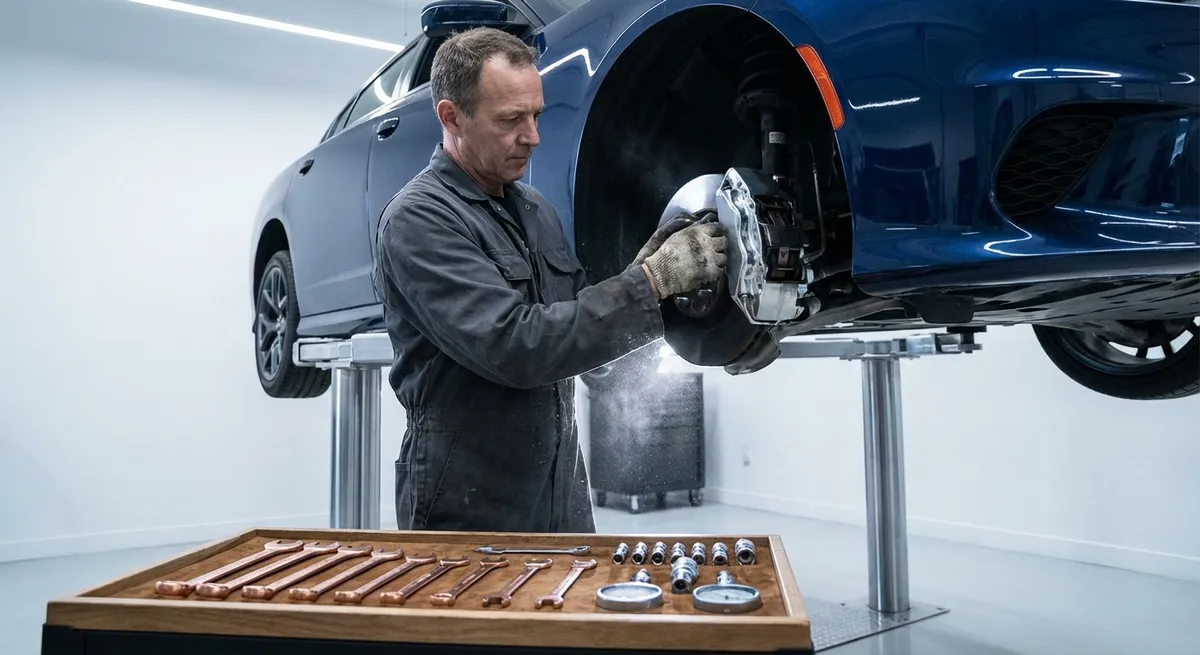
Rotors that are installed against rusty hubs or wheels tightened unevenly can develop pulsation, even when the parts themselves are new. Discerning drivers ask shops whether hub faces are wire-brushed and corrosion is removed before rotor installation, and whether a calibrated torque wrench or torque sticks are used on wheel fasteners. This attention to detail dramatically reduces the chance of brake judder, warped-feeling rotors, and uneven pad wear.
They Monitor Brake Performance After Service, Not Just Before
The first 300–500 miles after a brake job are crucial. Pads and rotors must bed-in—establishing an even transfer layer of pad material on the rotor surface. Thoughtful owners avoid repeated high-speed panic stops in this period unless necessary, and pay close attention to any new noises, vibrations, or smells. A faint smell and light, temporary noise can be normal; grinding, severe pulling, or persistent pulsation is not. Prompt feedback to the shop during this phase can prevent minor issues from becoming more serious.
They Consider the Whole System, Not Just Pads and Rotors
Superior brake feel involves more than friction parts. Flexible brake hoses, slide pins, caliper pistons, master cylinders, and even suspension bushings influence braking stability and control. When committing to a brake overhaul, sophisticated drivers ask for an inspection report that includes caliper slide motion, hose condition (cracks, bulges, or dry rot), and even the state of suspension components that can cause instability under braking. This “systems view” ensures that new pads and rotors are not masking deeper problems.
They Align Brake Service Timing With Their Driving Calendar
Drivers who truly prioritize safety do not wait for a cross-country holiday trip or mountain drive to remember their brakes. They schedule comprehensive inspections before major seasonal changes (such as winter) or before ambitious road plans. This aligns fresh components and critical checks with the moments when brake performance matters most—heavy traffic, wet roads, steep descents—not months later when wear has quietly advanced.
Working With a Shop: Questions That Reveal True Competence
Even among reputable facilities, there is a difference between basic adequacy and meticulous craftsmanship. The way a shop answers particular questions can quickly reveal whether its standards match your own.
Ask how they diagnose rotor issues: do they rely solely on feel, or do they measure rotor thickness and runout with precision instruments? Inquire whether they clean and lubricate caliper slide pins with high-temperature brake lubricant, and whether they replace hardware—shims, clips, and anti-rattle components—when indicated, rather than reusing tired pieces. Confirm that they reference manufacturer specifications for torque, rotor thickness, and minimum pad material rather than using “rules of thumb.” A shop comfortable providing before-and-after measurements and explaining their choices in plain, confident language is far more likely to deliver the aesthetically pleasing, vibration-free braking experience you expect.
Elevating Your Personal Inspection Routine
You don’t need to be a technician to maintain an informed, observant relationship with your braking system. A brief, methodical inspection routine a few times per year can reveal issues long before they become urgent.
Visually check through the wheel spokes for pad thickness; as a general reference point, when friction material appears as thin as the metal backing plate, you are well past the point of ideal replacement. Look for uneven rotor coloration, heavy scoring, or deep grooves that suggest poor contact or contamination. After drives that include a few firm stops, quietly step out and smell near the wheels—persistent burning odors or visible smoke are immediate red flags. Pay attention to whether your brake pedal height and firmness are consistent from day to day. Document any changes in a simple log or notes app: noises, vibrations, pull direction, pedal feel, and even weather and load conditions. This record becomes invaluable if you later need to discuss intermittent symptoms with a technician.
Conclusion
Brake safety, at its highest standard, is not defined by the absence of warning lights; it is defined by consistency, composure, and confidence in every stop. For the driver who values precision, brake repair is an ongoing partnership between your own awareness, carefully chosen components, and a shop that respects the fine details: clean mating surfaces, proper torque, fluid integrity, and disciplined testing. By applying the five exclusive insights above and cultivating a more nuanced understanding of brake behavior, you transform routine service into an intentional, elevated practice—one that protects not only your vehicle, but the refined, unhurried way in which you choose to drive it.
Sources
- National Highway Traffic Safety Administration (NHTSA) – Brake Safety Overview - Federal guidance on brake systems, safety considerations, and defect investigations
- U.S. Department of Transportation – Brake Fluid and Hydraulic Systems - Technical and regulatory information related to vehicle safety and hydraulic components
- AAA – Recognizing the Warning Signs of Brake Problems - Practical overview of common brake symptoms and when to seek service
- SAE International – Brake System Technical Resources - Engineering-focused standards and testing procedures for light vehicle brake systems
- University of California, Berkeley – Vehicle Dynamics and Braking Research - Academic research on vehicle dynamics, including studies relevant to braking behavior and performance
Key Takeaway
The most important thing to remember from this article is that this information can change how you think about Repair Guides.