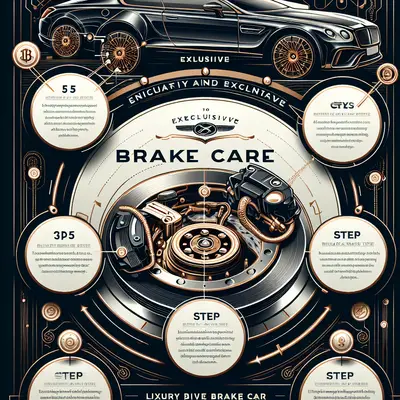
Few experiences feel as reassuring as a car that responds instantly and gracefully when you brush the brake pedal. For drivers who value refinement, brake safety is more than a basic requirement—it is the quiet assurance that every journey is under meticulous control. This guide explores subtle, often overlooked practices that keep your braking system composed, predictable, and worthy of your standards.
Reading the Road Like a Brake Engineer
Most drivers use their brakes reactively; discerning drivers use them strategically. The way you “read” the road directly shapes your brake safety margin.
Develop the habit of scanning well beyond the car in front of you—aim for at least 12–15 seconds ahead in city driving and more at highway speeds. By anticipating traffic light phases, congestion pockets, and lane changes, you can release the accelerator earlier and brake with a gentle, progressive squeeze rather than a sudden jab. This style maintains stability, reduces the chance of rear-end collisions, and keeps your anti-lock braking system (ABS) in reserve for true emergencies, instead of routine stops.
Pay close attention to transitions: driveways, intersections, and merging lanes are where other drivers are most unpredictable. Treat these zones as “enhanced attention corridors” in which your foot hovers prepared, not tense, above the brake pedal. The goal is deliberate responsiveness, not nervous over-braking.
The Brake Pedal as a Diagnostic Instrument
To a careful driver, the brake pedal doubles as a real-time diagnostic gauge. The way it feels, travels, and responds can reveal developing issues long before they become urgent.
Cultivate a mental baseline of how your brakes feel when they are healthy: the initial resistance as you touch the pedal, the smooth increase in braking power as you press, and the predictable point at which the car settles to a stop. Any change in this “signature” deserves attention. A pedal that feels spongy or travels farther than usual may indicate air in the brake lines or degraded fluid. A pulsation under steady pressure could point to rotor irregularities. A pedal that suddenly feels unusually firm might signal a problem with the brake booster or vacuum supply.
Perform this “pedal check” at low speed on a quiet, straight road: apply moderate, steady pressure and notice how the car responds without distraction from music or conversation. This simple habit transforms routine driving into continuous safety monitoring—and allows you to discuss concerns with your technician in precise, confident language.
Temperature Awareness: Protecting Brakes from Heat Stress
Brake systems live and die by how effectively they manage heat. Even the most sophisticated components can be compromised by repeated high-temperature abuse.
After extended downhill driving, spirited driving, or towing, assume your brakes are significantly hotter than normal. Instead of keeping your foot lightly on the pedal for long descents (which continuously generates heat), shift to a lower gear where appropriate and allow engine braking to share the workload. Use deliberate, firmer applications followed by intervals of release, rather than a constant light drag; this approach gives rotors and pads brief cooling windows.
When you park after demanding driving, avoid immediately dousing the wheels with cold water at a car wash. Rapid cooling can increase the risk of rotor warping over time. Allow the car to roll a short distance with minimal brake use in the final approach to your parking space to begin gentle cooling, then let the vehicle sit before any intensive washing. This mindful handling of heat may not be dramatic, but it is exactly the kind of subtle care that preserves consistent, confident stops.
Curated Service, Not Casual Maintenance
For drivers who care about safety and refinement, any brake service provider will not do. The difference between a merely functional brake job and a superb one is felt in quiet operation, consistent pedal feel, and stable stopping over thousands of miles.
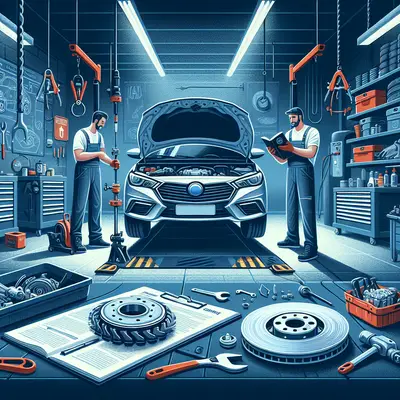
Seek technicians or workshops with specific expertise in braking systems and modern driver-assistance technologies. Ask how they assess brake balance front to rear, how they handle rotor runout, and whether they use torque specifications and proper lug nut tightening patterns—not just air tools. Their answers will reveal whether they treat brake work as precision craftsmanship or routine labor.
Insist on high-quality, application-appropriate components rather than the least expensive option. The right friction material can dramatically influence noise, dust, and response. Confirm that brake fluid changes follow the manufacturer’s recommended interval or, if unspecified, a regular schedule based on your climate and driving intensity. Professional fluid replacement with proper bleeding procedures helps ensure that advanced systems like ABS and electronic stability control (ESC) perform as designed when you need them most.
Harmonizing Human Skill with Electronic Safety Systems
Modern cars integrate braking with an array of safety systems: ABS, ESC, traction control, and often advanced driver-assistance features like automatic emergency braking. Treat these systems as highly capable partners—not infallible substitutes for skill.
Learn how your specific vehicle behaves in emergency stops. In a safe, controlled environment (such as a well-managed driver training course or advanced driving program), experience a full-force braking maneuver to understand how ABS pulsation feels and how the car remains steerable under maximum deceleration. This familiarity prevents hesitation or surprise during a real emergency.
Do not rely on electronic aids to compensate for following too closely, driving distracted, or speeding into poor conditions. Instead, use their presence as a prompt to maintain higher standards: smoother inputs, generous following distances, and heightened attention in rain, snow, or low-traction surfaces. When you combine refined driving technique with calibrated electronic safeguards, brake safety evolves from a basic expectation into an orchestrated, multilayered assurance.
Conclusion
Graceful, reliable braking is not accidental; it is the cumulative result of attentive habits, thoughtful service choices, and an awareness of how both mechanical and electronic systems protect you. By treating the brake pedal as an instrument, respecting heat, curating your service relationships, and understanding the capabilities of modern safety technology, you transform everyday driving into a quietly disciplined exercise in control.
For those who value a refined driving experience, this level of care is not excess—it is the standard.
Sources
- National Highway Traffic Safety Administration (NHTSA) – Brakes - Overview of brake safety, ABS, and related system performance from a U.S. government safety authority
- Federal Motor Carrier Safety Administration – Brake Safety - Technical guidance on brake inspection and performance, illustrating the importance of proper maintenance and inspection standards
- Car and Driver – How to Use Anti-Lock Brakes - Clear explanation of ABS operation and what drivers should expect and feel during hard braking
- Bridgestone – Brake System Basics - Accessible technical overview of brake components, wear, and maintenance considerations from a major tire and service provider
- AAA – Brake System Warning Signs - Practical list of pedal feel and performance changes that indicate potential brake issues
Key Takeaway
The most important thing to remember from this article is that this information can change how you think about Safety Tips.