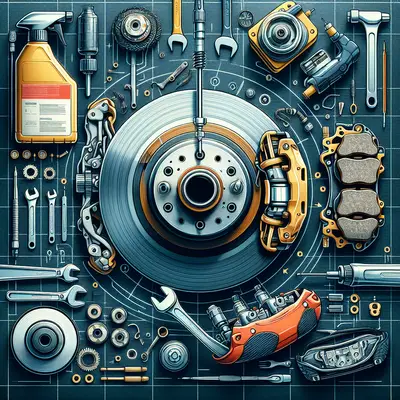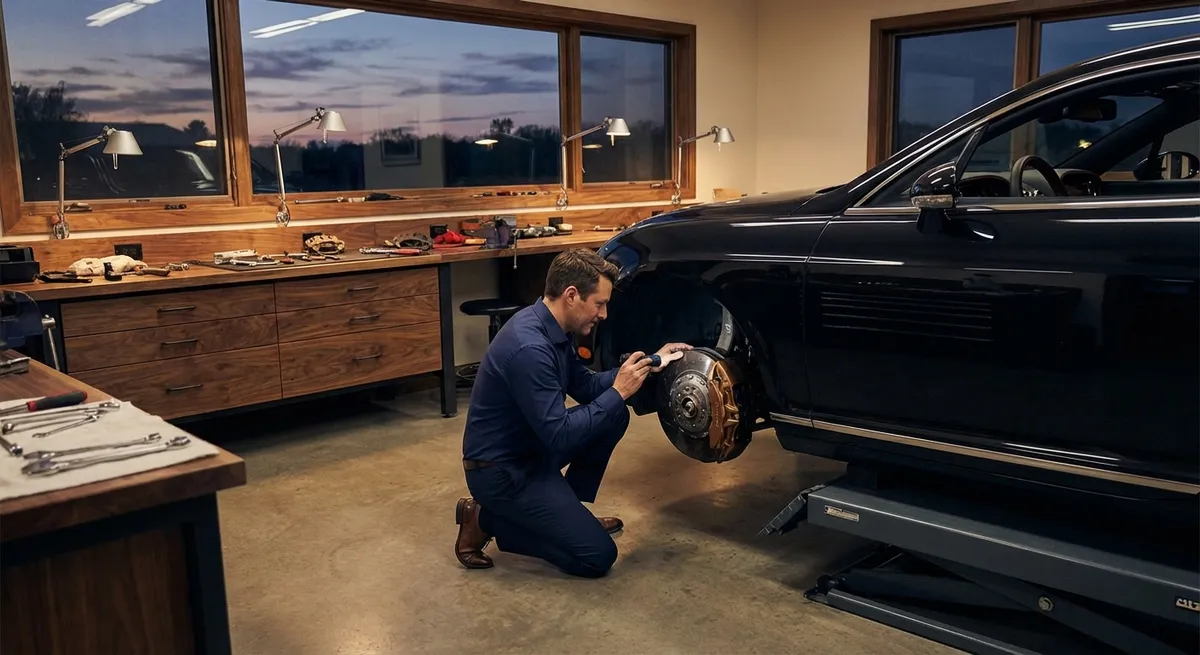
When you press the brake pedal, you’re not simply slowing a machine—you’re exercising judgment, control, and care. For drivers who expect more than “good enough,” brake repair is not a commodity; it’s a craft. This guide is designed for the owner who values refinement, precision, and verifiable safety above all. We’ll move beyond generic advice and into the subtle markers of expert work, disciplined decision‑making, and the small details that separate routine service from truly exceptional brake care—highlighted with five exclusive insights discerning owners rarely find in standard repair guides.
Understanding Brake Repair as a Safety Investment, Not an Expense
Treating brake repair as a line item to minimize is the fastest route to compromise. For a refined driver, it is a calculated safety investment with measurable returns: shorter stopping distances, more predictable handling, and the quiet confidence that comes from knowing critical systems are in peak condition.
An intelligent approach begins with understanding that “new pads” or “new rotors” are not a complete picture. Friction material quality, rotor metallurgy, caliper health, and proper lubrication practices all influence how the vehicle responds in an emergency stop at highway speeds. Instead of asking, “How much for a brake job?” a more sophisticated question is, “What components are being used, what is their specification, and how will the work be documented?”
By reframing brake work as a curated service rather than a generic repair, you place the emphasis where it belongs: on verifiable safety outcomes, not merely on price or speed.
How a Professional Brake Repair Should Actually Look and Feel
A premium brake service is as much about procedure as it is about parts. The best technicians follow a methodical sequence: road test, visual inspection, precision measurement, component cleaning, correct torque of all fasteners, and a validating test drive. Each step has a purpose; if any are skipped, you’re paying for work that may not achieve its full intent.
An elevated repair experience also pays close attention to pedal feel and consistency. After service, you should notice a controlled, linear response—no sponginess, no excessive pedal travel, no “grabby” behavior at low speeds. The vehicle should track straight during braking, with no steering wheel vibration or pulsing through the pedal as the brakes warm up.
Ask to see the old components. Glazed pads, uneven rotor wear, or heat spots on the rotor surface can tell a story about how your brakes were performing before and whether your usage pattern or driving environment may require a slightly different strategy moving forward.
Exclusive Insight #1: The Heat Signature Hidden in Your Rotors
Most drivers look at rotor thickness alone. A more sophisticated owner asks about heat history. Repeated hard stops, towing, or mountain driving can cause thermal stress that may not yet show as obvious cracks or catastrophic warping—but will reveal itself as subtle blueing, radial heat lines, or localized hard spots.
A careful technician will:
- Inspect the rotor surface for color variation and fine heat checking
- Use a micrometer to measure rotor thickness at multiple points, not just one
- Check for lateral runout (side-to-side wobble) with a dial indicator
If your rotors show early signs of heat fatigue, simply resurfacing them may preserve thickness but compromise long‑term stability. In that case, replacement with high‑quality rotors—often with better metallurgy or cooling design—aligns better with a safety‑first philosophy, especially for heavier or performance‑oriented vehicles.
Exclusive Insight #2: Brake Fluid as a Window Into System Health
Brake fluid is often treated as an afterthought, yet it is one of the most revealing indicators of system integrity. Because it is hygroscopic, it slowly absorbs moisture from the air, reducing its boiling point and inviting internal corrosion. This affects how your brakes behave during repeated hard stops and over long ownership periods.
Instead of relying on mileage alone, a discerning owner asks for:
- A measured boiling point test rather than a simple visual check
- Documentation of when the system was last fully flushed, not just topped off
- A brief inspection of rubber components (hoses, seals) that interact with the fluid
If your fluid’s boiling point is significantly below specification, your brakes may feel “normal” in everyday use but could fade under demanding conditions. Proactive fluid maintenance—typically every 2–3 years, or sooner in high-humidity areas—preserves both performance and internal brake component longevity.
Exclusive Insight #3: Pad Compound Choice as a Driving Style Match
Brake pads are not a one‑size‑fits‑all component. The friction compound dictates noise level, dust generation, initial bite, and resistance to fade. Generic “ceramic” or “semi‑metallic” labels mask significant differences in formulation and quality.
A premium repair conversation will address:
- Your driving profile (urban, high‑speed commuting, mountain roads, towing)
- Your tolerance for dust versus your preference for a quieter, more progressive feel
- The rotor material on your vehicle and how the pad compound interacts with it
For example, a spirited highway driver may benefit from a performance‑oriented pad with stable friction at higher temperatures, while a city driver focused on refinement might prioritize low noise and smooth, consistent stop characteristics. The key is alignment: your pad compound should be deliberately selected to match the way you actually use the car, not based on what happens to be on the shelf.
Exclusive Insight #4: Calipers and Slide Hardware—The Silent Determinants of Symmetry
Many repair guides obsess over pads and rotors yet give calipers and hardware a single line item. That’s a mistake. Your calipers, slide pins, and contact hardware largely determine whether braking force is applied evenly side to side and pad to pad. Even premium pads and rotors cannot mask a sticking caliper or neglected slide pins.
In a high‑standard brake repair, you should expect:
- Removal, cleaning, and proper lubrication of slide pins with high‑temperature brake grease
- Replacement of worn or corroded hardware clips, not re‑using distorted originals
- Inspection for seized pistons, uneven pad wear, or torn dust boots
Uneven pad thickness from inner to outer or side to side is a subtle warning sign that the caliper system was previously neglected. Correcting this early prevents pulling, vibration, and premature wear—while also protecting your investment in higher‑quality friction components.
Exclusive Insight #5: The Post‑Repair Road Test as Your Final Safety Audit
The way your technician concludes the repair is as important as how they begin. A thorough post‑repair road test is not a quick lap around the block; it is a structured validation of system behavior under different braking loads and speeds.
A refined post‑service process includes:
- Low‑speed stops to confirm initial pad engagement and pedal feel
- Moderate‑speed stops to check for vibration, noise, or pull
- A controlled harder stop (where safe) to evaluate stability and ABS performance
- A final inspection for leaks, loose hardware, or uneven pad imprinting as the brakes cool
Ask your service provider to describe their road test procedure and what they look for specifically. This single step, when done properly, transforms brake repair from a completed “job” into a verified safety event and gives you a clear basis for trust.
Building Your Own Brake Repair Standard
To ensure consistently excellent results, create a personal checklist that each repair must meet, regardless of where the work is performed. It might include:
- Written measurements: rotor thickness, runout, and pad thickness before and after
- Confirmation of caliper and hardware service, not merely pad replacement
- Documentation of brake fluid condition and any change made
- The exact pad and rotor brands and part numbers installed
- A brief summary of the road test, including how the ABS and stability systems behaved
When you present this standard to a service facility, you quickly learn who treats brake work as a craft and who sees it as a shortcut. A shop that welcomes your questions and readily provides measurement data is typically one that will align well with your expectations for safety and refinement.
Conclusion
Refined brake care is not about obsessing over every detail for its own sake—it is about consciously managing the system that stands between momentum and impact. By recognizing the importance of rotor heat signatures, brake fluid health, pad compound selection, caliper symmetry, and meaningful post‑repair validation, you step beyond ordinary maintenance into deliberate, elevated safety stewardship.
In a world where “brake job” can mean almost anything, your standards are your safeguard. Define them clearly, insist on them calmly, and partner only with professionals who can meet them. The result is not just shorter stopping distances; it is the quiet reassurance that, when precision matters most, your vehicle will respond with the same care you have invested in it.
Sources
- National Highway Traffic Safety Administration (NHTSA) – Vehicle Brakes and Safety - Federal guidance on brake systems, performance, and safety considerations
- U.S. Department of Transportation – Brake Fluid Safety Information - Overview of brake fluid properties, maintenance, and safety implications
- AAA – How to Know When You Need New Brakes - Consumer-focused guidance on recognizing brake wear and choosing service
- University of Nebraska–Lincoln – Fundamentals of Brakes - Educational overview of brake system components, function, and performance factors
- Brembo Technical Insights – Brake Discs and Pads - Manufacturer-level explanation of pad/rotor interaction, materials, and thermal behavior
Key Takeaway
The most important thing to remember from this article is that this information can change how you think about Repair Guides.