In a world of touchscreens and driver‑assist systems, the humble brake remains the most decisive safety feature in your vehicle. For discerning drivers, “good enough” braking is never acceptable; each stop should feel deliberate, composed, and utterly predictable. This roadmap is crafted for owners who value both mechanical integrity and a calm, confident driving experience—those who want more than basic instructions and instead seek a sophisticated understanding of how truly exceptional brake repair and maintenance should feel, sound, and perform.
Rethinking Brake Repair: From Emergency Fix to Planned Craft
Most drivers encounter brake repair as a crisis—squeals, a warning light, or a pedal that suddenly feels wrong. The refined approach is different: treat brake repair as a scheduled, strategic craft rather than a reaction to failure.
Begin by anchoring your decisions to time, mileage, and driving environment, not just symptoms. Highway commuters, city drivers, and mountain-road enthusiasts place very different demands on their brakes. City traffic and frequent stop‑and‑go can wear pads faster than long-distance cruising, while steep hills stress both pads and rotors through heat. A sophisticated owner keeps a simple log: service dates, pad thickness measurements, rotor condition, and any subtle changes in brake feel. This quiet record transforms guesswork into informed decisions, elevating repair from “when something feels wrong” to “before anything has the chance to go wrong.”
Approaching brake repair this way also lets you plan for higher‑quality components, better scheduling with your preferred shop, and fewer rushed decisions under pressure. Instead of accepting whatever parts are “in stock,” you retain the luxury of choice—selecting materials, brands, and even technicians with standards that match your own.
Understanding the System: A Calm, Coordinated Ensemble
A premium braking experience is the result of a carefully balanced ensemble, not a single part. Pads, rotors, calipers, brake lines, fluid, and even wheel bearings contribute to the sensation at your foot and the stopping distance on the road.
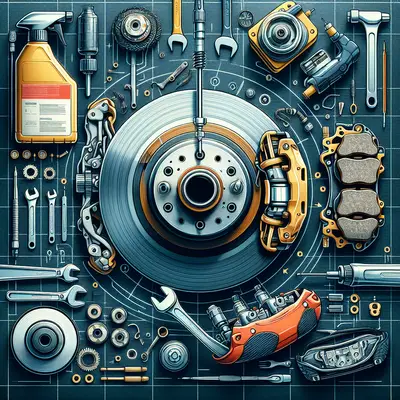
Brake pads convert motion to heat through friction. Rotors manage that heat and must remain true, smooth, and within thickness tolerance to avoid vibration. Calipers apply the clamping force; any hesitation or sticking here becomes an uneven, unpredictable stop. Brake fluid transmits your pedal input with hydraulic precision, but only if it remains uncontaminated and within its specified boiling point. Even flexible brake hoses and the condition of the master cylinder influence how “solid” or “mushy” your pedal feels.
The refined owner doesn’t need to become a mechanic, but does benefit from speaking the same language as a professional. Ask about pad composition (ceramic vs. semi‑metallic), rotor condition (minimum thickness and runout), and fluid type (DOT 3, 4, or 5.1) during service. This level of engagement not only improves safety, it also signals to the shop that you value craftsmanship, not shortcuts.
Five Exclusive Insights for the Safety‑Obsessed Driver
For owners who hold their brakes to a higher standard, these five under‑discussed insights can meaningfully elevate both safety and driving refinement.
1. Pedal Feel Tells a Story Long Before Warning Lights Do
A premium braking system communicates through the pedal. Subtle shifts in feel are often the earliest indicators of emerging issues:
- A gradually softening pedal may indicate moisture‑contaminated fluid, internal hose deterioration, or early master cylinder wear.
- A pedal that sinks slowly under steady pressure can hint at a hydraulic leak or internal bypassing, even before fluid visibly drops.
- A higher, abruptly firmer pedal can reveal pad glazing or uneven pad deposits on rotors, often linked to hard, repeated stops on hot components.
Train yourself to notice changes over weeks, not just dramatic failures. A few slow, controlled stops in a safe area each month—deliberately feeling for consistency—creates a baseline that makes deviations obvious and actionable.
2. Brake Fluid Has a “Quiet Expiration Date” You Can’t See
Brake fluid is hygroscopic; it slowly absorbs moisture from the air. Over time, this lowers its boiling point and invites internal corrosion in the system. Even if your ABS light is off and your pedal feels normal, aged fluid can compromise safety in high‑demand stops, especially on long descents or in repeated emergency braking.
Rather than relying on guesswork, adopt an interval-driven strategy: many experts recommend flushing brake fluid roughly every 2–3 years, or sooner in humid climates or performance driving. For the detail-oriented owner, a brake fluid tester that measures boiling point is a worthwhile tool—it converts a vague maintenance task into a precise decision, ensuring your hydraulic system always operates within its original design intent.
3. Rotor Health Is About Precision, Not Just Absence of Noise
Rotors rarely fail all at once; they drift out of ideal condition, often unnoticed. Slight thickness variations or subtle warping can produce faint vibrations under braking that many drivers dismiss as “road texture.” Over time, this can lengthen stopping distances, fatigue suspension components, and accelerate pad wear.
A refined brake inspection includes rotor thickness measurements at multiple points and a check for lateral runout (side‑to‑side wobble). When rotors are close to their minimum thickness, replacing rather than repeatedly resurfacing them is the higher‑standard choice. This ensures better heat capacity, reduced fade, and a more composed pedal under demanding stops. If your shop only offers a quick visual check, request measurements; the difference between adequate and exceptional often lies in a few overlooked thousandths of an inch.
4. Pad Selection Should Match Your Driving Personality, Not Just Your Car
Original‑equipment (OE) pads are chosen as a compromise between cost, noise, dust, and performance. Discerning owners can do better by aligning pad choice with their actual driving profile.
- Urban and luxury‑focused drivers often favor high‑quality ceramic pads: quieter operation, less dust, and smoother engagement.
- Mountain, towing, or spirited drivers may benefit from performance‑oriented semi‑metallic pads with greater heat tolerance and more consistent bite under load.
- Mixed‑use drivers might select premium pads designed to maintain OE characteristics while improving fade resistance and longevity.
The exclusive insight: consistency matters more than peak performance. A pad that behaves predictably across cold mornings, heavy rain, and long descents contributes more to real‑world safety than one that only shines in ideal conditions. Don’t hesitate to discuss friction material, operating temperature range, and noise characteristics with your technician or parts supplier.
5. Exceptional Brake Work Includes the Details You Don’t See
Two cars can leave a shop with new pads and rotors, yet deliver very different experiences. The distinction lies in execution—especially the small, meticulous steps many quick services omit:
- Hardware refresh: high‑quality caliper slide pins, anti‑rattle clips, and shims ensure pads retract smoothly and avoid uneven wear or noise.
- Proper lubrication: only appropriate high‑temperature brake lubricants on the right contact points (never on pad surfaces or rotors) preserve a silent, controlled action.
- Correct torque: lug nuts and caliper bolts tightened with a torque wrench prevent rotor distortion and future vibration.
- Bedding‑in procedure: a series of controlled stops to mate new pads and rotors properly, reducing the risk of uneven deposits and premature judder.
When evaluating a shop, ask if their brake service includes hardware replacement, torque‑spec adherence, and a defined bedding‑in protocol. A truly premium brake repair is as much about these invisible refinements as the visible parts.
Partnering with the Right Professional: Curating Expertise
Even the most engaged owner benefits from a trusted professional who treats brakes as a safety system, not a commodity service. Look for technicians who welcome your questions, explain findings with photos or measurements, and document pad thickness, rotor condition, and fluid status on every visit.
Certifications, such as ASE or manufacturer‑specific training, indicate a baseline of technical competence, but attitude matters as much as credentials. A premium experience involves transparency: itemized parts, clear labor descriptions, and realistic guidance on what is urgent versus what can be monitored. Avoid services that default to “replace everything” without explanation, just as you should be wary of those who dismiss subtle symptoms as “normal” without investigating.
For the meticulous driver, a long‑term relationship with such a shop is invaluable. Over time, they learn your driving style, your expectations for pedal feel and noise tolerance, and can tailor recommendations accordingly. The result is a brake system maintained not only to specification—but to your personal standard of confidence.
Conclusion
Refined brake care is not about paranoia; it is about precision. When you treat every stop as a measure of your vehicle’s integrity, brake repair becomes less of an unwelcome expense and more of a curated investment in safety, composure, and control. By understanding the system, listening to subtle changes, respecting fluid and rotor health, selecting the right pads, and insisting on meticulous workmanship, you transform brake maintenance from a routine chore into a disciplined practice.
The outcome is both tangible and intangible: shorter stopping distances, quieter operation, predictable feedback, and a serene confidence every time your foot meets the pedal. For drivers who demand more than mere functionality, that level of assurance is not a luxury—it’s the standard.
Sources
- [National Highway Traffic Safety Administration (NHTSA) – Vehicle Maintenance and Safety](https://www.nhtsa.gov/vehicle-maintenance) – Federal guidance on essential maintenance practices and how they affect safety
- [U.S. Department of Transportation – Brake System Overview](https://www.transportation.gov/mission/safety/brake-systems) – Technical background and safety considerations related to modern brake systems
- [AAA – How to Know When You Need Brake Repair](https://www.aaa.com/autorepair/articles/how-to-know-when-you-need-brake-repair) – Consumer-focused explanations of common brake symptoms and service needs
- [University of Nebraska–Lincoln, Vehicle Brake Systems Educational Module](https://extension.unl.edu/statewide/douglas-sarpy/Vehicle%20Brake%20Systems.pdf) – Educational resource detailing brake components, function, and maintenance concepts
- [Consumer Reports – Car Brakes: How Do You Know When You Need New Pads?](https://www.consumerreports.org/cro/news/2015/02/how-do-you-know-when-you-need-new-brakes/index.htm) – Practical guidance on recognizing wear, choosing parts, and working with repair shops
Key Takeaway
The most important thing to remember from this article is that this information can change how you think about Repair Guides.