A composed stop is never an accident. It is the outcome of deliberate choices, disciplined maintenance, and an intimate understanding of how your vehicle brings itself to rest. For drivers who expect more than “good enough” from their braking system, repair decisions become less about emergencies and more about curating confidence—quietly, consistently, and with intention.
This guide is crafted for owners who view brake repair not as a begrudged expense, but as a cornerstone of road manners, personal safety, and mechanical integrity. Below, you’ll find a structured way to think about inspections, repairs, and upgrades—plus five exclusive insights that reward a more discerning approach to brake care.
Seeing Brakes as a System, Not a Single Repair
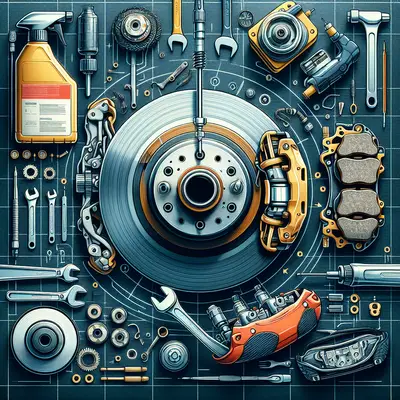
Most drivers experience braking as a single motion: press the pedal, the vehicle slows. In reality, that refinement is the product of a coordinated system—pedal, booster, master cylinder, hydraulic lines, calipers, pads, rotors, ABS hardware, and tires—each with its own failure patterns and maintenance needs.
Treating brake work as “pad replacement” alone invites subtle imbalances: fresh pads on glazed rotors, new fluid in aging rubber hoses, or modern performance pads paired with underwhelming tires. A premium approach steps back to assess the health and compatibility of the entire system.
By thinking in systems rather than parts, you avoid piecemeal repairs that feel acceptable in city traffic but falter under emergency conditions or sustained high-speed braking. The objective is nuance: a brake system that behaves predictably at the extremes, not just comfortably in the routine.
The Foundation: Establishing a Personal Brake Baseline
A refined brake strategy begins with a baseline—a clear, documented understanding of how your brakes behave when they are properly serviced and functioning as designed.
Schedule a thorough brake inspection (or perform one, if you’re experienced) when everything appears “fine,” not when something already feels wrong. Capture the details:
- Pad thickness at each wheel
- Rotor thickness and runout measurements
- Brake fluid color, age, and water content (if tested)
- Hose and line condition (including any surface corrosion)
- Parking brake function and cable condition
From there, record subjective impressions after the service: pedal travel, firmness, noise, and any subtle vibrations. That becomes your personal reference. When something changes, you’re not relying on vague memory—you’re comparing against a known standard of “correct.”
A premium owner’s habit is to treat brake performance like a sommelier treats flavor notes: not dramatic, but distinctly observed and recorded.
Five Exclusive Insights for the Safety-Conscious Driver
These insights move beyond the generic “replace your pads when they’re low.” They are the nuances that careful owners use to keep their braking performance quietly exceptional.
1. Pedal Feel Is a Diagnostic Tool, Not Just a Preference
Most drivers describe pedal feel as “soft,” “hard,” or “normal.” A more discerning reading treats pedal feel almost like a stethoscope for brake health:
- A gradually softening pedal over months often signals degrading brake fluid or expanding rubber hoses under pressure.
- A firm pedal that vibrates subtly under light braking can suggest rotor thickness variation or uneven pad deposits long before you hear a squeal.
- A long pedal that improves after pumping may point toward pad knock-back (common after aggressive driving or wheel bearing issues) rather than a simple air-in-the-lines problem.
Refined owners pay attention to how the pedal changes over time, not just whether it “still stops.” Minute shifts in travel or firmness are often the earliest, most affordable warning you’ll receive.
2. Brake Fluid Age Matters More Than Most People Admit
Brake fluid is hygroscopic: it gradually absorbs moisture from the air. As water content rises, boiling point drops, internal corrosion accelerates, and pedal consistency erodes.
Even if you never track your car, brake fluid that’s more than two to three years old may:
- Boil under extended mountain descents or repeated hard stops, causing a soft, sinking pedal
- Promote internal rust in calipers, ABS valves, and steel lines
- Compromise ABS performance when you need it most
A premium practice is to treat fluid changes as non-negotiable, calendar-based maintenance—not a “when I remember” item. Request a documented brake fluid flush on a defined schedule (often every 2–3 years, or sooner in demanding climates), and ask for the brand and DOT rating used. You’re not buying a fluid change; you’re buying consistency under pressure.
3. Caliper Condition Is the Quiet Divider Between “Adequate” and “Exceptional”
Pads and rotors get most of the attention, but calipers are where finesse lives. Sticky slide pins, uneven piston movement, or minor seizing often show up not as obvious failure, but as:
- One wheel dusting heavily while others stay relatively clean
- Slight steering pull during firm braking
- Subtle pad tapering (worn more at one end than the other)
During brake repairs, insist that caliper service is more than a quick glance. At a minimum, you want:
- Slide pins removed, cleaned, and lubricated with appropriate high-temperature grease
- Dust boots inspected for tears or leaks
- Piston movement checked for smooth, even extension and retraction
Discerning owners sometimes request caliper replacement as a preventative measure on older, high-mileage vehicles—even if they are not yet failing dramatically. Smooth, balanced calipers transform braking from merely effective to gracefully predictable.
4. Noise and Vibration Are Telling a Story—Learn the Language
Many drivers treat brake noise as an annoyance, not a communication. A sophisticated approach decodes it:
- A single “click” at the start or end of braking may indicate pad movement from improperly fitted hardware or missing anti-rattle clips.
- High-pitched noise at low speeds can suggest glazed pads or a rotor surface that was never properly bedded in.
- A humming or growling that appears only under braking can point to rotor issues, but if it persists off-throttle, it may be a wheel bearing beginning to fail.
Rather than simply asking a shop to “make the noise go away,” describe when it occurs, how it changes with temperature, and whether it is felt in the steering wheel, pedal, or seat. You’re not being picky—you are handing your technician a map instead of a mystery.
5. Bedding-In New Pads and Rotors Is Not Optional for Premium Results
Even high-quality pads and rotors will underperform if they’re not properly bedded. The bedding process mates pad material to the rotor surface in a controlled way, reducing noise, improving bite, and stabilizing friction.
A refined approach:
- After new pads/rotors are installed, avoid heavy braking for the first few miles.
- Perform a series of moderate stops (for example, 5–8 stops from 30–40 mph down to 5–10 mph) with gentle acceleration between each, allowing partial cooling.
- Avoid coming to a complete stop with significant pedal pressure when rotors are very hot—this can imprint pad material and cause judder.
If your shop completes the bedding process, ask them to note it on the invoice. If they do not, request their recommended procedure and perform it yourself on a quiet, safe road. Proper bedding is the subtle difference between “new brakes” and well-prepared brakes.
Choosing Brake Components with Purpose
A premium owner doesn’t simply choose “the good pads.” You choose components that are coherent with how and where you drive:
- Pads: Ceramic compounds typically offer low dust and quiet operation, ideal for urban and commuter use. Semi-metallic pads often provide stronger high-temperature performance, suitable for spirited or heavy-load driving.
- Rotors: Plain rotors are more than adequate for most refined driving. Slotted or drilled options are best reserved for specific use cases where heat and gas management are truly limiting factors, not as purely aesthetic upgrades.
- Hoses and Lines: On older vehicles, braided stainless-steel hoses can sharpen pedal feel. However, quality, correct fitment, and reputable brands are non-negotiable; poorly built aftermarket lines are a step backward in both safety and refinement.
Ask your technician not just what they’re installing, but why that combination for your vehicle and driving style. The goal is tailored braking character, not a random assortment of “upgrades.”
Elevating the Service Experience: Working with the Right Shop
Exceptional brake performance is a partnership between owner and technician. Look for service providers who:
- Measure, don’t guess: They record pad thickness, rotor specs, and fluid condition.
- Welcome informed questions: They are willing to explain component choices and trade-offs.
- Think beyond today’s visit: They identify emerging issues and suggest a forward-looking plan.
Share your expectations clearly: you value smoothness, quiet operation, predictable pedal feel, and robust performance during emergency stops. A sophisticated owner doesn’t demand the cheapest job; they ask for a complete job that respects both safety and driving character.
Conclusion
Brake repair, when approached with intention, becomes an art of controlled deceleration—an unspoken standard that defines how you and your passengers experience the road. By treating your brakes as a carefully curated system, reading the early nuances of pedal feel and noise, and insisting on disciplined practices like fluid maintenance and proper bedding, you move beyond mere compliance with safety and into the realm of quiet mastery.
The reward is subtle yet unmistakable: a pedal that inspires trust in every season, on every surface, in every unplanned moment when you need your vehicle to respond not just adequately, but impeccably.
Sources
- National Highway Traffic Safety Administration (NHTSA) – Brakes – Federal safety guidance and background on brake system performance and regulations.
- U.S. Department of Transportation – Brake Fluid Safety Information – General safety resources, including discussion of vehicle system maintenance and fluid considerations.
- AAA – Brake System Service and Maintenance – Consumer-focused explanation of brake inspections, component roles, and service best practices.
- Car and Driver – Brake Pads and Rotors Explained – In-depth overview of pad and rotor types, materials, and performance trade-offs.
- University of Nebraska–Lincoln – Fundamentals of Hydraulic Brake Systems (Extension Resource) – Technical yet accessible explanation of hydraulic brake operation and component interaction.
Key Takeaway
The most important thing to remember from this article is that this information can change how you think about Repair Guides.