For the driver who notices the subtle in everything—the muted thud of a closing door, the way a steering wheel settles back to center—brake repair is not simply a service item. It is an expression of standards. This guide is designed for those who expect more than “good enough” stopping power, and who understand that well‑executed brake work can feel as composed and deliberate as a well‑planned journey. Rather than a basic how‑to, this is a blueprint: a structured way to think about brake repair so every decision, from parts choice to test drive, reflects exceptional care.
Reframing Brake Repair: From “Fix It” to “Engineer It”
Most repair advice begins with symptoms—squeaks, grinding, or a soft pedal—and ends with a single repair: pads, rotors, or fluid. A more sophisticated approach treats each intervention as an engineering decision in a tightly integrated system.
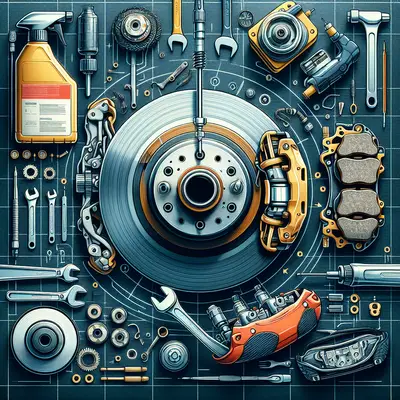
The brake system is an orchestration of friction, hydraulic pressure, heat management, and electronic oversight. Pads and rotors convert kinetic energy to heat. Calipers and lines must transfer pressure consistently. Brake fluid must resist boiling and moisture intrusion. ABS, stability control, and brake force distribution systems layer in electronic control that expects the mechanical side to behave predictably.
Approaching repair with this systems mindset changes the conversation from “What’s worn out?” to “What combination of components and practices will yield stable, predictable, and quiet stopping—over thousands of miles and in varied conditions?” For the attentive owner, that shift is where real control begins.
The Foundation: Setting a Higher Standard for Parts and Surfaces
Selecting brake components is not merely a choice between “budget” and “premium.” It is a decision about how your vehicle will feel and respond at the pedal edge, under stress, and over time. Two rotors of the same size may differ significantly in metallurgy, balance, and surface finish; two pad sets may share a part number yet differ in friction curve stability and noise behavior.
An elevated approach starts with rotors that meet or exceed OEM specifications for thickness, runout, and balance, and that avoid cheap coatings which burn off unevenly and promote hot spots. Pad selection should consider intended use (urban stop‑and‑go, spirited driving, towing), noise performance, dust characteristics, and cold‑versus‑hot friction behavior.
Equally important is the surface they mate with. Machining or replacing rotors without verifying cleanliness and flatness of the hub face invites future pulsation and steering wheel vibration. A light film of corrosion or debris on the hub can translate into rotor runout and uneven pad deposition. The refined standard: the mating surfaces are cleaned until perfectly metallic, checked with a dial indicator where practical, and assembled torque‑evenly so the system starts from mechanical precision rather than approximation.
Five Exclusive Insights for the Safety‑Focused Driver
1. Brake Feel Can Be Tuned—Not Just Fixed
Many drivers accept a vague or inconsistent pedal as “just how this car feels.” In reality, pedal feel is influenced by pad compound, caliper condition, flexible hose integrity, master cylinder health, and even the quality and age of the brake fluid.
A carefully executed repair can deliver a firmer, more linear pedal than the vehicle had when you first acquired it. For example, replacing spongy rubber hoses with high‑quality OEM or upgraded lines, ensuring caliper slide pins move flawlessly, and flushing with fresh fluid that meets the specification (DOT 3, 4, or 5.1 as appropriate) all contribute to a more immediate and confident response. For the discerning driver, the goal is not simply “it stops,” but “the car responds as precisely as my right foot.”
2. Heat Management Is a Hidden Decider of Long‑Term Safety
Repeated braking from speed, mountain driving, or spirited highway use can expose weaknesses not visible in a quick inspection. When brakes overheat, pads can glaze, rotors can develop fine surface cracks or hard spots, and brake fluid can approach boiling—compromising pedal consistency.
A premium repair considers heat: choosing rotors with adequate mass and proper ventilation, avoiding overly aggressive pad compounds on vehicles not driven hard enough to keep them in their optimal range, and ensuring dust shields and airflow paths are not obstructed. Even small decisions—like avoiding riding the brakes on long descents and using engine braking appropriately—protect the integrity of your recent repair and preserve safety margins that are otherwise quietly eroded by heat.
3. Brake Fluid Condition Is an Early Warning System
Brake fluid is often treated as an afterthought, changed only when a component fails. Yet fluid condition is one of the simplest and most revealing indicators of overall brake system health. Because brake fluid is hygroscopic, it gradually absorbs moisture, lowering its boiling point and increasing internal corrosion risk.
Sophisticated owners treat periodic fluid testing and replacement as part of a safety calendar, not a reaction to problems. A professional‑grade tester can estimate moisture content; dark, contaminated fluid suggests internal rust or degraded rubber components. During a repair, a complete flush with fluid that meets or exceeds the manufacturer’s specification, combined with inspection of bleeder screws, caliper seals, and lines, transforms the braking system from “functioning” to “trustworthy under duress.”
In short: fresh fluid is not a luxury; it is a quiet guarantee that the system will remain composed when temperatures and demands spike.
4. The Quality of the Test Drive Predicts the Quality of the Repair
A hurried spin around the block is an inadequate final step for a high‑standard brake job. A deliberate, structured test drive is where theory meets reality—and where a refined owner can insist on excellence.
An ideal post‑repair drive includes low‑speed stops to evaluate initial bite and noise, moderate‑speed decelerations to verify linearity and steering stability, and a few more assertive stops once components are bedded in, listening and feeling for vibration, pull, or ABS behavior. It should be done on a safe, low‑traffic route with enough space to simulate real‑world demands.
When you retrieve your vehicle, ask not simply “Is it done?” but “How did it behave under progressive stops and emergency‑style braking?” A shop that can answer in detail has likely taken your safety—and the quality of their craft—seriously.
5. Small Hardware Choices Have Outsized Safety Consequences
In many brake jobs, the “small parts” are where standards quietly slip: reused pad shims, dry caliper slide pins, fatigued anti‑rattle clips, and old hardware thrown back into place. These components are rarely glamorous, but they play a decisive role in consistent braking, especially over time and in harsh conditions.
Premium practice insists on new, high‑quality hardware where specified, with metal contact points lightly lubricated using correct high‑temperature brake lubricant, not generic grease. Caliper slide pins should be inspected for scoring or corrosion and replaced if suspect, ensuring that both pads engage the rotor evenly. Even lug nut torque matters; uneven or excessive torque can distort the rotor and undo the very precision you invested in.
This is where an elevated mindset shows: not in what you can see at first glance, but in the quiet reliability of the pieces that hold the system together.
Partnering with the Right Professional—or Building Your Own Capabilities
Whether you prefer to entrust your vehicle to a specialist or handle work yourself, the underlying principles of refined brake care remain the same: respect for the system, attention to small details, and a willingness to exceed the bare minimum.
If you work with a professional, choose one who welcomes questions about brand choices, torque procedures, rotor runout checks, and fluid standards. Look for documentation of measurements (like rotor thickness and minimum spec) and a clear explanation of why particular parts were selected. An honest technician will often point out optional but wise upgrades—such as hardware kits or fluid flushes—that align with your desire for long‑term safety, not just short‑term fixes.
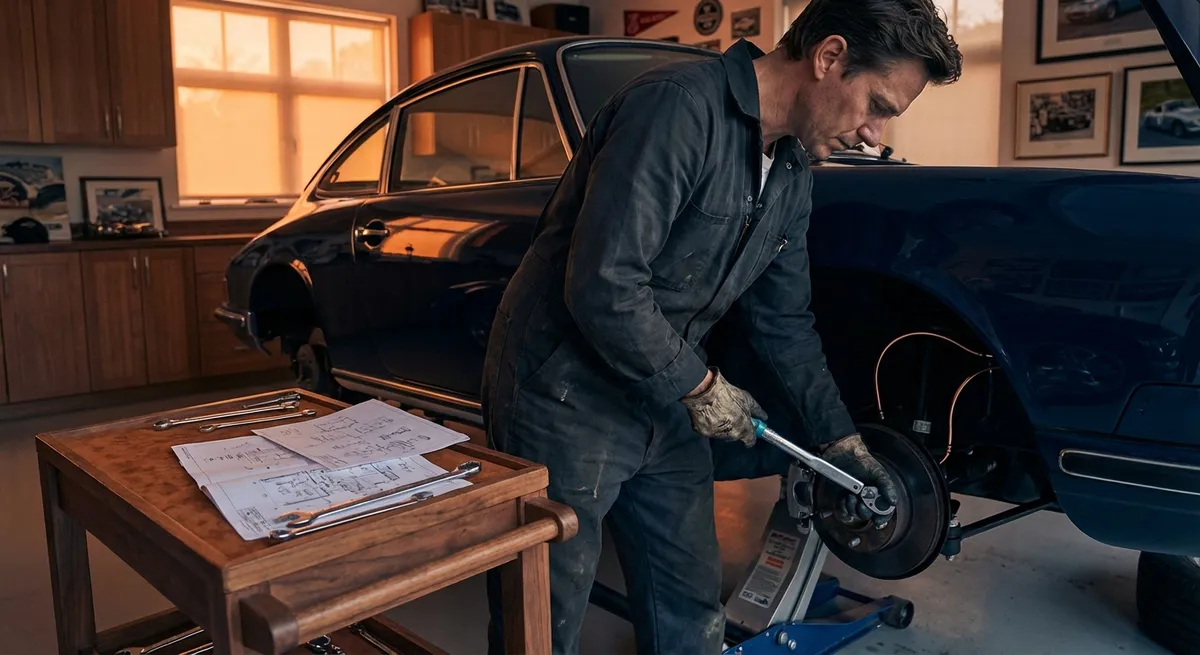
For the dedicated do‑it‑yourself owner, invest first in knowledge and correct tools: a torque wrench, dial indicator (if you intend to measure runout), quality jack stands, and manufacturer repair information. In the world of brake repair, technique and precision easily outweigh raw effort; thoughtful, methodical work is what transforms new parts into a cohesive, confidence‑inspiring system.
Conclusion
Brake repair, executed at a basic level, restores function. Brake repair, approached with refinement, restores trust. By treating each intervention as part of an engineered whole—prioritizing quality components, heat management, fluid integrity, meticulous hardware, and a disciplined test drive—you elevate stopping power from a background assumption to a deliberate choice.
For the driver who notices the smallest details, this is more than maintenance. It is the assurance that, when you press the pedal in an unexpected moment, the car will respond with the same composure and precision you expect of yourself.
Sources
- [National Highway Traffic Safety Administration (NHTSA) – Brakes and Safety](https://www.nhtsa.gov/equipment/brakes) - Federal guidance on brake system safety and performance considerations
- [U.S. Department of Transportation – Brake Fluids (FMVSS No. 116)](https://www.ecfr.gov/current/title-49/subtitle-B/chapter-V/part-571/section-571.116) - Official specifications and requirements for brake fluid types and performance
- [AAA – How to Know When You Need New Brakes](https://www.aaa.com/autorepair/articles/how-to-know-when-you-need-new-brakes) - Consumer-focused overview of brake wear symptoms and repair expectations
- [Federal Trade Commission – Auto Repair Basics](https://consumer.ftc.gov/articles/auto-repair-basics) - Guidance on working with repair shops and understanding service recommendations
- [MIT School of Engineering – The Physics Behind Car Safety Systems](https://engineering.mit.edu/engage/ask-an-engineer/how-do-car-brakes-work/) - Explains how braking systems convert motion to heat and the science behind stopping power
Key Takeaway
The most important thing to remember from this article is that this information can change how you think about Repair Guides.