For the discerning driver, brake repair is not a crisis to be endured but a system to be understood. Behind every poised stop is a network of components working in quiet coordination—and the more you grasp that choreography, the more confidently you can approve, question, or even perform certain repairs. This guide is designed for car owners who value engineering integrity, subtle safety cues, and informed decision‑making at the repair shop.
Understanding the Modern Brake System as a Whole
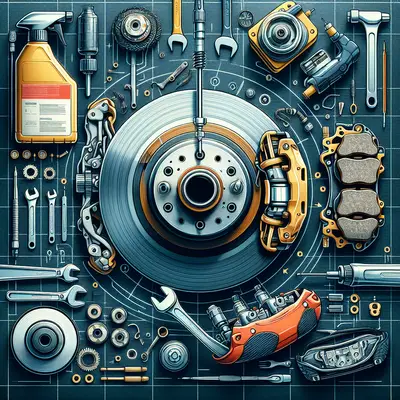
While many repair guides dive directly into pads and rotors, the sophisticated owner benefits from seeing the brake system as a unified ecosystem. Your brake pedal movement is translated into hydraulic pressure through the master cylinder, pushed along brake lines to calipers or wheel cylinders, which in turn press friction material (pads or shoes) against a rotating surface (rotors or drums). Anti-lock braking systems (ABS) and stability control then modulate that pressure in real time to preserve traction.
Viewing brakes as a system helps you distinguish between cosmetic wear and structural concern. A small amount of rust on rotor hats may be ordinary, while deep scoring across the braking surface can indicate previous overheating or contamination. Soft pedal feel might reflect air in the lines, but it can also point to a fading master cylinder or a small leak that only reveals itself under sustained pressure. When examining or approving repair work, always consider the chain of cause and effect: unusual noises, sensations, or smells are rarely isolated events; they’re signals from a tightly interconnected mechanism.
The Five Exclusive Insights Every Safety‑Focused Owner Should Know
Below are five premium-level insights that elevate your brake repair decisions from reactive to intentional—details that service writers often skip, but careful owners deeply appreciate.
1. Brake Pedal Feel Is a Diagnostic Instrument, Not Just a Comfort Feature
Your brake pedal is one of the most refined feedback tools in the vehicle. Its feel—initial bite, travel distance, firmness under sustained pressure, and response to repeated stops—can help you anticipate issues before they become urgent repairs.
A pedal that slowly sinks at a stoplight, even if the car still stops, may indicate internal master cylinder bypass or a subtle hydraulic leak. A spongy, compressible feel often suggests trapped air or moisture-contaminated fluid, rather than simply “old pads.” A high, very stiff pedal with poor stopping power can signal glazed pads or rotors overheated into reduced friction. By mentally noting pedal feel over weeks, you create a baseline; any deviation from that baseline is an early cue to have the system inspected before a complete loss of performance.
2. Brake Fluid Condition Quietly Reveals the System’s Future
Brake fluid is not just another service line item; it is the invisible guardian of every component downstream. Because modern brake fluids are hygroscopic—designed to absorb moisture—time alone can slowly degrade their performance, lowering the boiling point and inviting internal corrosion in calipers, ABS valves, and steel brake lines.
A careful owner will ask not only “What is the age of my brake fluid?” but also “What is its moisture content or boiling point?” Many premium shops can test fluid condition with electronic or boiling point testers, providing objective data rather than vague recommendations. Cloudy, darkened fluid or fluid with a significantly reduced boiling point suggests that a flush is not simply preventive, but protective. Over years, disciplined fluid maintenance can mean the difference between a straightforward pad-and-rotor job and costly replacement of seized calipers or compromised ABS components.
3. Rotor Surface Patterns Tell a Story of Heat, Habits, and Hardware
Rotors are a visual narrative of how you brake and how your hardware has been treated. Subtle coloration or light surface rust can be inconsequential, but more pronounced patterns demand interpretation. Blue or purple heat spots, for instance, can suggest aggressive driving, dragging calipers, or an imbalance between front and rear braking forces. Deep grooves may indicate pads worn down to their backing plates or debris caught between pad and rotor.
Fine radial lines often appear after normal use, but heavy scoring or uneven patches of shiny and dull surfaces may signal pad material transfer issues or misaligned calipers. When discussing repairs, ask your technician not just whether rotors will be replaced or resurfaced, but why the current pattern emerged. Correcting the underlying cause—improper break‑in, sticky slide pins, mismatched friction materials—prevents repeating the same rotor wear pattern on your new components.
4. Pad Selection Is About Driving Style, Not Just Cost or Brand
Brake pads are not commodities; they are tuned to different priorities. Ceramic pads often offer quieter operation and less dust, semi‑metallic pads can deliver stronger high‑temperature performance, and organic formulations may provide a softer, more progressive feel. The sophisticated owner aligns pad choice with driving profile, vehicle weight, and environment rather than defaulting to the cheapest option or the most aggressive “performance” label.
Urban, stop‑and‑go drivers may prioritize quiet, low‑dust ceramics coupled with rotors designed for smooth street use. Those who frequently tow, descend steep grades, or drive in mountainous regions may benefit from pads capable of sustaining higher temperatures without fade, even if that means a bit more noise or dust. When your shop proposes a pad type, inquire about friction rating, expected operating temperature range, and how that matches your real-world usage. The “right” pad is the one that complements both your safety expectations and your driving character.
5. A Proper Bedding‑In Procedure Is the Final Step of Any Quality Repair
Many brake jobs are technically complete the moment the wheels are back on, but a premium-level result demands one more stage: careful bedding‑in (or burnishing) of new pads and rotors. This process gradually heats the friction surfaces through controlled stops, establishing an even transfer layer of pad material onto the rotor. Done correctly, it enhances initial bite, consistency, and longevity while reducing vibration and noise.
A hurried or aggressive first drive on brand‑new components can create hot spots, uneven deposits, or early glazing. Ask your service provider whether they perform an initial bedding cycle and what they recommend for your first 100–300 miles. If you perform your own brake work, follow a structured series of medium‑pressure stops from moderate speeds, allowing the brakes to cool between cycles. This final, often overlooked step turns a simple parts replacement into a truly refined braking experience.
Navigating Repair Shops with Quiet Authority
Being informed is not about challenging every recommendation; it is about asking precise, respectful questions that reveal the quality of the work behind the invoice. When presented with a brake estimate, consider requesting to see the removed parts or, at minimum, clear photos. Ask for measurements: pad thickness in millimeters, rotor thickness compared to the minimum specification, and brake fluid condition metrics if available.
Clarity on what is urgent versus what is advisory helps you prioritize. For example, a slightly worn pad with even wear may be noted for future service, while a caliper with evidence of sticking or uneven pad wear may merit immediate attention. Inquire whether hardware such as shims, clips, and slide pins will be cleaned and lubricated or replaced, not just reused. The difference between budget brake work and truly professional repair often lies in these subtleties, which directly affect brake feel, noise, and long‑term reliability.
When DIY Brake Work Is Appropriate—and When It Is Not
For some owners, performing basic brake maintenance is part of their appreciation for the mechanical honesty of a vehicle. With the right tools, service manual, and safety stands, straightforward front pad and rotor replacement on many vehicles is achievable. However, a sophisticated approach begins with understanding one’s limits.
Modern cars integrate braking with electronic stability control, regenerative braking (on hybrids and EVs), and sensitive ABS modules. Some procedures require specialized scan tools to retract electronic parking brakes or to bleed ABS components correctly. Missteps here can compromise safety in ways that are not immediately obvious on a quiet test drive around the block. If a job involves complex bleeding procedures, high‑pressure steel lines, electronic actuators, or you are unsure of the torque values and sequence, delegating to a qualified professional is not a concession—it is part of a premium safety strategy.
Conclusion
Refined brake care is not about obsessing over every squeak but about cultivating an educated, attentive relationship with your vehicle’s most critical safety system. By using pedal feel as a diagnostic tool, respecting the importance of brake fluid health, reading rotor surfaces, choosing pads that truly suit your driving, and insisting on proper bedding‑in, you transform routine brake repair into an exercise in precision and foresight.
In a world where many owners treat brakes as an afterthought until something feels wrong, your quiet command of these details sets you apart. It is not about doing everything yourself; it is about ensuring that whatever is done—by you or by a professional—honors the engineering, preserves safety margins, and delivers the confident, composed stops your driving deserves.
Sources
- National Highway Traffic Safety Administration (NHTSA) – Vehicle Safety - U.S. government guidance on vehicle safety systems, including braking performance and defect investigations
- AAA – How to Know When Your Car Needs Brake Service - Practical overview of brake wear symptoms and service considerations from a major automotive authority
- University of Michigan – Brake System Basics - Educational material detailing fundamentals of hydraulic brake systems and component functions
- Federal Motor Vehicle Safety Standards – FMVSS No. 135: Light Vehicle Brake Systems - Regulatory standards outlining performance requirements for modern passenger vehicle braking systems
- Brembo Technical Data – Brake Discs and Pads - Manufacturer’s technical insight on brake disc and pad technology, heat management, and performance characteristics
Key Takeaway
The most important thing to remember from this article is that this information can change how you think about Repair Guides.