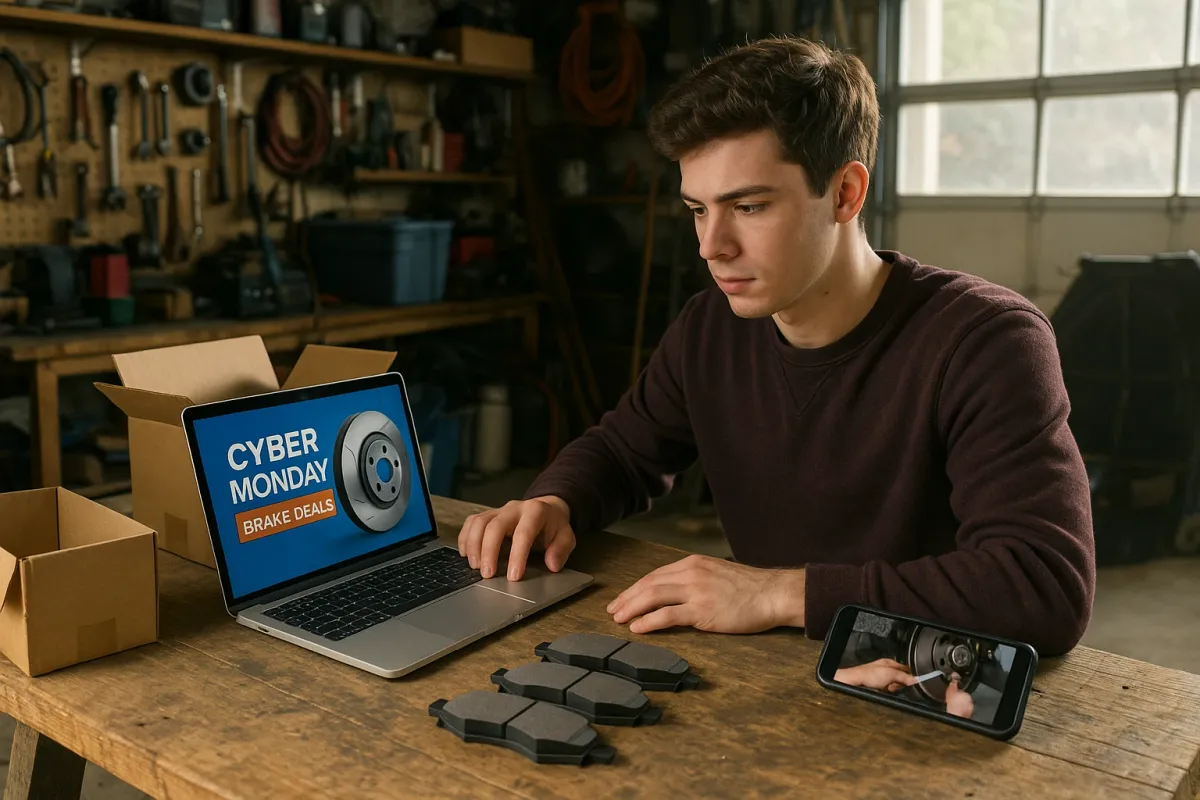
Each November, Cyber Monday reshapes the way we shop. This year’s coverage—like the viral “17 Cyber Monday Weekend Deals That Will Make You Forget Black Friday Even Happened”—highlights a clear shift: drivers are abandoning crowded storefronts in favor of curated online deals, delivered to their doorsteps. That same digital-first mindset is transforming how discerning motorists approach brake maintenance.
Instead of passively accepting whatever a parts counter happens to stock, today’s driver is cross‑shopping brands, reading expert reviews, and pairing premium components with high‑quality DIY repair guides. Cyber Monday isn’t just about snagging a cheaper TV; it’s a live experiment in how we research, compare, and commit to quality—habits that translate directly into safer, more sophisticated brake work at home.
Below, we distill five exclusive, high‑caliber insights for car owners who treat stopping power with the same seriousness that others reserve for fine watches or audio equipment. Think of this as your premium playbook for navigating the new Cyber Monday era of brake repair—where information, precision, and restraint matter more than the discount banner at the top of the page.
Elevate Your Parts Selection Beyond the Cyber Monday Headline
Cyber Monday automotive deals tend to promote what’s most clickable, not what’s most appropriate for your specific braking system. Major retailers—whether it’s Amazon’s automotive section, Walmart’s online marketplace, or RockAuto’s timed promotions—often bundle “performance” or “ceramic” brake kits without context. For the sophisticated car owner, that’s merely the starting point.
Before you add any brake kit to your cart, consult your vehicle manufacturer’s specifications and service bulletins. Cross‑reference the exact part number, rotor diameter, and pad compound against the OEM recommendations. An aggressively discounted drilled-and-slotted rotor may be alluring on your feed, but if your daily commute is urban and stop‑start, a high‑quality plain rotor with a stable friction compound is often quieter, more predictable, and longer‑lived. Use the deal window to step up in quality—opting for reputable names (Brembo, ATE, Akebono, Raybestos’ professional lines, Bosch) rather than simply stepping down in price. The refined approach is not to chase the biggest percentage off, but to use the sale to access a tier of quality you would normally consider aspirational.
Match Online Tutorials With OEM‑Level Torque and Procedure
Cyber Monday’s “how‑to” content inevitably explodes in parallel with the sales: YouTube channels, TikTok creators, and even brand‑backed Instagram accounts release bite‑sized brake videos to catch your attention. Many are helpful; few are complete. The discerning owner treats these not as standalone instructions, but as visual supplements to factory‑level documentation.
After choosing your parts, secure access to a proper repair guide—whether that’s an official OEM subscription (Honda, Toyota, BMW, etc. all now offer short‑term access), a reputable database like ALLDATA or Mitchell, or a premium Haynes/Chilton manual. Pay particular attention to torque specifications for caliper bracket bolts, wheel lugs, and guide pins, as well as any required replacement hardware (single‑use stretch bolts and specialty fasteners are increasingly common on modern vehicles). Many viral tutorials skip critical steps: cleaning hub faces to avoid rotor runout, properly orienting pads with inner/outer and leading/trailing positions, or re‑initializing electronic parking brakes. If a video doesn’t mention torque wrenches, brake grease types, or sequence of pedal bedding, treat it as entertainment, not gospel. In the Cyber Monday era, sophistication means curating instructions as carefully as you curate your cart.
Treat Electronic Brake Systems as Precision Instruments, Not Afterthoughts
As newer vehicles dominate the online deals this Cyber Monday Weekend—especially lightly used EVs and hybrids being promoted on dealer sites—electronic brake systems sit quietly behind the scenes. Regenerative braking, electronic parking brakes (EPB), and advanced driver assistance systems (ADAS) all complicate what used to be a purely mechanical task. Yet many discount parts kits and generic guides still assume a 20‑year‑old hydraulic layout.
Before any brake work, identify whether your vehicle uses an EPB that must be placed into “service mode” via a scan tool or manufacturer procedure. For models from Audi, VW, Tesla, Ford, and many others, failing to retract the EPB properly can damage the motor or caliper, turning a routine pad change into a four‑figure repair. Likewise, if your vehicle relies heavily on regenerative braking—as with most EVs and hybrids—the friction brakes may appear barely worn but can suffer from corrosion and glazing due to infrequent high‑load use. Your maintenance strategy should include periodic inspection and deliberate brake bed‑in drives to keep rotors clean and pads active. A sophisticated DIYer understands that as software increasingly governs stopping power, brake repair is no longer just about wrench skills; it’s about respecting the calibration and logic that sit between your foot and the road.
Build a “White‑Glove” Brake Work Environment at Home
Cyber Monday has trained us to expect premium tools and accessories at accessible prices—torque wrenches, low‑profile jacks, and even pro‑level lighting often feature heavily in deal round‑ups. For brake work, this is more than a luxury; it’s a safety multiplier. A refined brake repair doesn’t begin when you remove the wheel—it begins with the environment you create.
Invest in a set of high‑quality jack stands with known load ratings rather than chasing the cheapest option. A stable, well‑lit workspace allows you to detect hairline rotor cracks, torn dust boots, and subtle fluid seepage that a dim garage would hide. Use nitrile gloves not just for cleanliness, but to avoid contaminating friction surfaces with oils from your skin. Keep separate, clearly labeled brushes for hub cleaning versus caliper bracket preparation, and dedicate one clean, lint‑free towel exclusively to wiping friction surfaces after using brake cleaner. These rituals might seem exacting, but they reduce noise, vibration, uneven pad deposits, and premature wear. In a world where tools arrive as easily as streaming subscriptions, the discerning motorist curates a brake‑specific toolkit that elevates every repair from merely functional to meticulously executed.
Adopt a Post‑Repair Validation Routine That Rivals Professional Shops
After the Cyber Monday packages are opened, the wrenches put away, and the new rotors glint behind freshly cleaned wheels, many DIYers simply drive off and hope for the best. A premium approach to brake repair places as much emphasis on validation as on installation. Professional workshops—especially those catering to performance and luxury marques—use structured post‑repair road tests and checklists. There is no reason a careful owner cannot mirror that discipline.
Begin with a static check: engine off, press the brake pedal firmly several times to seat the pads and ensure a consistent, high pedal. Confirm no warning lights remain illuminated on the dashboard. On an initial drive in a low‑speed, low‑traffic area, perform a series of gentle stops from 20–30 mph, listening for abnormal noises and feeling for pull, pulsation, or sponginess. Once confidence is established, follow your pad manufacturer’s bedding procedure precisely—usually a graduated series of medium stops followed by cool‑down. Conclude with a visual re‑inspection at home: verify there are no fluid leaks, that pad abutment points remain greased (but not contaminated), and that wheel lugs have retained torque. Document the date, mileage, parts used, and your observations. Over time, this personal brake log becomes as valuable as any digital receipt—a record of care that reinforces both your safety and your vehicle’s long‑term value.
Conclusion
This year’s Cyber Monday coverage underscores a simple truth: the modern driver is more empowered, more informed, and more digitally connected than ever before. But when it comes to brakes, sophistication is not measured by how many “deals” you capture—it’s measured by the care with which you select components, the rigor of your procedures, and the discipline of your validation.
By treating online discounts as an opportunity to invest upward in quality, pairing crowd‑sourced tutorials with factory‑grade data, respecting the complexity of electronic systems, curating a refined workshop environment, and adopting a professional‑style post‑repair routine, you transform routine brake maintenance into a quietly luxurious exercise in safety. In an age of one‑click convenience, the true premium experience is not speed of purchase, but excellence of execution—especially when everything depends on how you stop.
Key Takeaway
The most important thing to remember from this article is that this information can change how you think about Repair Guides.