In an online world obsessed with spotting tiny “easter eggs” in films like Ratatouille, audiences are proving they love one thing: catching details most people miss. That same detail-obsessed mindset is quietly reshaping the way thoughtful drivers approach vehicle safety—especially brakes. When social feeds celebrate people who notice a shadow in the corner of a frame or a barely visible background character, it reveals something deeper: precision is the new status symbol.
At Brake Repair Basics, we believe this cultural shift toward hyper-observation belongs in your garage as much as on your screen. If we can celebrate fans who spot hidden frames in a Pixar classic, we can celebrate drivers who recognize the subtle, early signs of brake trouble long before it becomes an emergency. This is the art of refined brake care: not reactive, but anticipatory. Not noisy, but precise.
Below are five exclusive, detail-driven insights designed for drivers who expect more than “good enough” from their braking system—and from the people who service it.
1. The “First Cold Stop” Test: How Your Brakes Whisper the Truth Each Morning
Film enthusiasts replay the opening minutes of a movie because tiny clues often hide there. For your brakes, the equivalent is your very first stop of the day—before the system heats up, before traffic distracts you, before the day takes over.
On your first drive of the morning, pay close attention to three elements: pedal feel, noise, and initial bite. Does the pedal feel firmer or spongier than usual? Is there a faint grinding or scraping that fades after a few stops? Does the vehicle need noticeably more distance to come to rest at the first light? These are microscopic changes that many drivers dismiss as “morning quirks,” but they’re often early indicators of glazed pads, uneven rotor deposits, or moisture-affected fluid settling in the calipers overnight.
Repeat this “cold stop assessment” at the same intersection or stretch of road for a week. If something feels slightly different every day—or progressively worse—you likely have developing issues that a premium brake inspection can catch early. Bringing this log (even mental notes) to your technician instantly elevates the quality of the diagnosis. You’re not just a customer with a complaint; you’re a co-observer, the way an attentive critic is to a director’s cut.
2. Texture, Not Just Thickness: Why Rotor Surfaces Deserve a Connoisseur’s Eye
Just as film fans examine lighting, framing, and background motion instead of only the main actors, refined brake care goes beyond the basic “pads still have meat on them” test. The surface texture of your brake rotors is a critical yet often overlooked detail that separates routine servicing from exceptional maintenance.
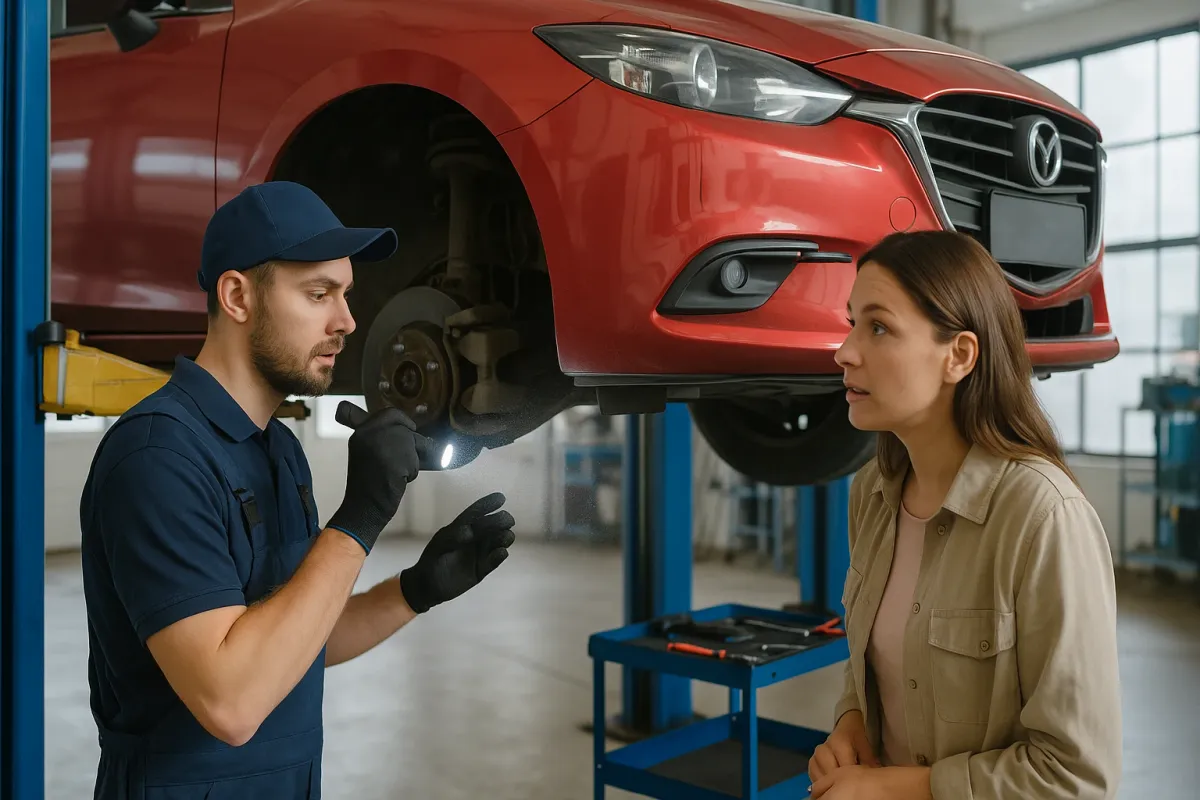
During your next tire rotation—or any wheel-off service—ask to see your rotors up close, in good light. You’re looking less for dramatic grooves and more for subtle patterns: faint “washboard” ridges, patchy darker zones, or a mirror-like shine just on one half of the rotor face. These clues can indicate uneven pad transfer, minor rotor warping, or caliper slide issues long before you feel pulsation in the pedal.
A truly premium repair doesn’t simply replace pads on any surface that appears “mostly fine.” Instead, your shop should measure rotor runout with a dial indicator, verify thickness variation, and decide whether a precision resurfacing or replacement is warranted. If your technician uses the phrase “that surface will just clean up over time,” ask how they confirmed rotor flatness and thickness. The best shops welcome that level of scrutiny; in fact, they expect it from drivers who treat braking performance with the same respect critics give a meticulously crafted scene.
3. The Pedal’s “Signature Feel”: Building a Personal Baseline Before Something Goes Wrong
Every cinematographer has a signature style—once you know it, you can recognize their work in seconds. Your brake pedal has a signature feel as well, but only drivers who consciously catalog it can detect the first hint of trouble. This is where sophisticated ownership begins: building your own internal “brake profile.”
On a safe, low-traffic road, at moderate speed, perform a series of firm but controlled stops. Notice where in the pedal travel the braking really begins to “wake up.” Observe how quickly the car settles from 40 mph to 0, whether the nose dips smoothly or abruptly, and whether the pedal feels progressive or slightly “stepped.” This becomes your baseline.
Revisit this exercise monthly, or after any repair. If the pedal gradually creeps lower over weeks, it can signal slow internal fluid leaks or caliper seal relaxation. If it becomes abruptly firmer and less progressive, you may have pad contamination or inaccurately bedded new pads. A premium-minded driver doesn’t wait for a warning lamp; they notice this subtle drift in feel and act before it reaches crisis levels. Documenting your observations, even briefly on your phone, transforms you from a passive driver into an expert witness of your own vehicle’s behavior.
4. Fluid as a Luxury Component: Treating Brake Hydraulic Health Like Fine Oil, Not a Footnote
Online, people admire lenses that make the moon appear impossibly large without digital trickery. The magic is in the glass. In your braking system, the “glass” of the operation—the silent enabler—is your brake fluid. Yet, despite its role in translating each subtle movement of your foot into a precise mechanical response, brake fluid is often treated as an afterthought.
Modern ABS and stability systems, used heavily in today’s stop‑and‑go and emergency‑assist environments, cycle valves and pumps that punish old fluid. Moisture absorption over time lowers boiling points and can create corrosive conditions in the ABS module and calipers. While many manufacturers still recommend multi‑year intervals, premium service practices now favor proactive testing and earlier replacement, particularly for vehicles in humid or coastal climates.
Ask your service provider if they measure brake fluid moisture content or boiling point rather than simply judging by color. A sophisticated driver doesn’t wait for discoloration; they aim to keep the hydraulic system in a “like new” state, the way a watch collector services a fine movement before it fails. Consider aligning a fluid flush not just with mileage, but with real use: frequent mountain driving, towing, or spirited highway braking justify shorter intervals. This is where luxury isn’t about chrome—it’s about consistency in the one system you rely on every time you drive.
5. Precision Bedding-In: Turning New Brakes from “Installed” to Truly Optimized
In the same way a film editor’s final polish turns raw footage into something transcendent, the bedding-in process turns new pads and rotors into a properly integrated braking system. Yet this critical phase is frequently rushed, skipped, or left entirely to chance after you leave the shop.
Proper bedding isn’t about “breaking things in gently.” It’s a controlled procedure that establishes an even layer of pad material on the rotor surface, ensuring uniform friction and minimizing the risk of future vibration or noise. A refined brake job should include a clearly explained bedding plan tailored to your pad compound and driving style, not a vague “just go easy on them for a bit.”
Ask your technician how they recommend bedding your specific brand and type of pads—ceramic, semi‑metallic, or performance. Expect details: a certain number of moderate stops from a defined speed, with specific cooling intervals, on a safe road. If they can’t provide this, consult the pad manufacturer’s guidelines and follow them precisely. Share that process with fellow owners on social media; this is the kind of high‑value, detail‑rich content discerning drivers appreciate. It separates a basic brake replacement from a professionally optimized braking system.
Conclusion
The internet’s newfound obsession with hidden details—whether in a beloved Pixar classic or a perfectly framed lunar photograph—reveals a powerful truth: we are increasingly drawn to craftsmanship you can feel, even when you can barely see it. Your braking system deserves that same reverence.
By turning everyday drives into opportunities for observation, treating fluid and rotor surfaces as precision components, and insisting on properly optimized installations, you elevate brake care from maintenance chore to a refined safety ritual. This is what truly premium ownership looks like: not louder, not flashier, but quieter, more controlled, and infinitely more intentional.
On today’s feeds, the most share‑worthy posts celebrate sharp eyes and subtle discoveries. As a discerning driver, your greatest “hidden detail” might be the one no one on social media ever sees: a braking system so impeccably maintained that it turns every stop—especially the unexpected ones—into an unremarkable, perfectly controlled moment. And in the real world, that is the highest luxury of all.
Key Takeaway
The most important thing to remember from this article is that this information can change how you think about Repair Guides.