For drivers who expect more than mere functionality from their vehicles, the braking system is not just a safety feature—it is a measure of engineering refinement and personal standards. Confident, composed stopping power is the quiet foundation of every graceful drive. This article looks past generic maintenance advice to examine how modern brake systems truly behave, and offers five exclusive, often-overlooked insights that discerning owners can use to elevate both safety and driving experience.
The Modern Brake System as a Connected Ecosystem
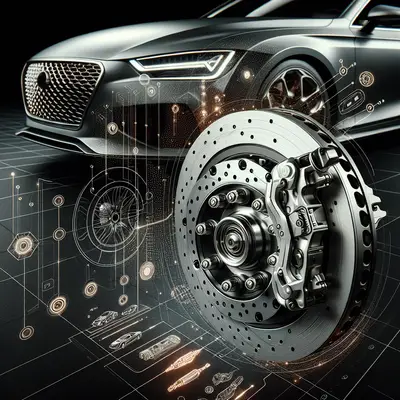
A contemporary brake system is no longer an isolated mechanical assembly; it is an integrated ecosystem of hydraulics, electronics, software, and materials science. At its core remain the familiar elements—master cylinder, brake lines, calipers, pads, and rotors—but each is now intertwined with advanced control modules and sensor networks.
Anti-lock braking systems (ABS), electronic brake-force distribution (EBD), stability control, and advanced driver assistance features all rely on precise, real-time communication. Wheel-speed sensors, yaw sensors, and pressure sensors constantly inform a central control unit, which modulates pressure at each wheel individually. For the safety-focused owner, this means any apparent “brake issue” may be a symptom of a broader systems-level imbalance. A subtle vibration, a transient warning light, or an intermittent ABS intervention should never be dismissed as a trivial annoyance; they are early indicators that the harmony of the ecosystem is being disrupted.
Understanding your brake system as a network rather than a single part encourages a more holistic approach to service: evaluating the condition of the fluid, the integrity of lines, the health of sensors, and the correctness of software calibrations, not just the thickness of the pads.
Insight 1: Pedal Feel Is a Precision Instrument, Not an Afterthought
For many drivers, brake pedal feel is simply “firm” or “soft.” For a meticulous driver, it is a diagnostic tool. The way the pedal responds underfoot can reveal far more about system health than most warning lights.
A consistent, progressive pedal—firm without being harsh, with clear feedback as pressure increases—typically indicates that hydraulic pressures are well-managed and there is minimal air or moisture in the system. A pedal that slowly sinks at a stop sign may signal internal leakage within the master cylinder or a compromised seal. A pedal that feels spongy suggests air in the lines or degraded brake fluid, often due to absorbed moisture over time.
The elevated practice here is to pay deliberate attention to the pedal in a controlled environment: a straight, empty road, gentle braking from moderate speed, hands lightly on the wheel. Evaluate not only how quickly the car slows, but also how predictable and linear the pedal feels. Any notable change in your car’s “pedal personality” from one month to the next is reason to schedule an inspection, not a curiosity to ignore.
Insight 2: Brake Fluid Is the Quiet Guardian of Consistent Stopping
Brake fluid is one of the most underappreciated elements in the entire system. While pads and rotors are visibly replaced, fluid is often neglected until it causes a problem—usually during high-demand braking when you most need consistency.
Brake fluid is hygroscopic; over time it absorbs moisture from the air, even in a closed system. This reduces its boiling point and can introduce microscopic corrosion within lines, calipers, and ABS components. Under repeated or heavy braking—descending a mountain road, towing, or driving in high temperatures—moisture-laden fluid can boil, causing vapor pockets that compress under pressure. The result is a pedal that suddenly feels soft or fades, just when you require unwavering performance.
For a safety-conscious owner, treating fluid changes as a scheduled, non-negotiable service—often every two to three years, or as recommended by the manufacturer—is a subtle yet powerful refinement. A professional flush using the correct specification fluid restores the system’s resistance to heat and ensures ABS and stability systems can respond with the precision they were designed for. It is not merely “maintenance”; it is a form of preventive risk management.
Insight 3: Rotor Condition Is About Smoothness, Not Just Thickness
Many drivers focus on rotor thickness alone: if it is above minimum spec, it is assumed to be acceptable. Sophisticated brake care looks further—toward surface quality, runout, and thermal history.
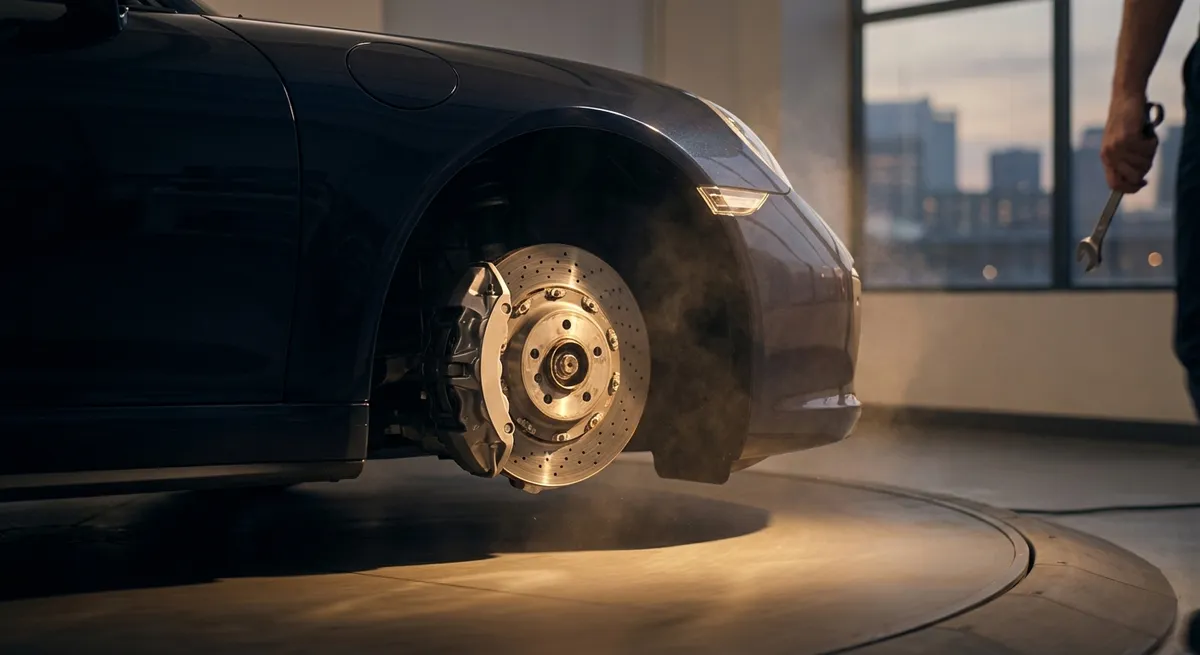
Rotors can develop subtle variations in thickness (often called DTV—disc thickness variation) and slight waviness over time. These imperfections may be the result of uneven pad deposits, improper wheel torque, or repeated hard stops followed immediately by a full, stationary clamp with hot brakes. The outcome is familiar: steering wheel vibration during braking, pulsing in the pedal, and an overall sense that the car has lost its composure under deceleration.
An owner attuned to refinement appreciates that proper rotor care begins even during installation. Lugs must be torqued to specification, using a calibrated torque wrench and a cross-pattern sequence to prevent distortion. If rotors are resurfaced, they should be machined accurately and paired with appropriate bedding-in of new pads. When the vehicle is driven with mechanical sympathy—avoiding long, hard stops followed by resting motionless with hot brakes clamped—the rotors are far more likely to remain smooth, consistent, and vibration-free.
Insight 4: Brake Noise Is a Language, Not Just an Irritation
Squeals, chirps, and low-frequency rumbles are often treated as annoyances to be tolerated until they become intolerable. In reality, they are data: a language that, once understood, can provide early warning long before performance degrades.
High-pitched squeals under light braking often arise from pad vibration at specific resonant frequencies, sometimes due to missing or worn shims, lack of proper lubricant at contact points, or pads of questionable quality. Rhythmic scraping that increases with wheel speed may suggest rust buildup on the rotor edge or a backing plate grazing the disc. A low growl or grinding sound is more serious, signaling that friction material may be nearly gone and the metal backing plate is contacting the rotor.
The refined approach is twofold. First, insist on quality components: reputable-brand pads matched to your driving style and vehicle, along with proper hardware (shims, clips, springs) and high-temperature brake grease at designated contact points. Second, treat any new noise as a prompt for investigation, not a background condition. A silent, composed brake system is not just pleasant; it is also a sign that each component is functioning harmoniously.
Insight 5: Electronic Aids Support You—But They Also Need Support
ABS, electronic stability control, and traction systems are often taken for granted as “always on” digital guardians. Yet their effectiveness depends heavily on the mechanical and hydraulic components behind them, as well as on the health of their sensors and wiring.
Wheel-speed sensors exposed to road debris, winter salt, or minor impact can begin to provide intermittent or incorrect data. A single failing sensor may trigger warning lights, but can also quietly reduce the subtle accuracy of the system before a fault is formally logged. Corroded connectors, damaged tone rings, or improperly seated sensor brackets can all shift the threshold at which ABS intervenes or stability control engages.
Owners with elevated standards invest in periodic, thorough inspections that include scanning for stored ABS or stability-related trouble codes, even if no warning light remains illuminated. Additionally, they recognize that basic mechanical integrity—proper tire size, matched tread depths across an axle, and correct tire pressures—plays a profound role in the precision of electronic aids. The control unit can only work with the data it receives; ensuring that both the brakes and the surrounding hardware are in exemplary condition allows these systems to deliver their full safety benefit.
Conclusion
A sophisticated approach to brake safety moves far beyond “are my pads worn out?” and toward a nuanced understanding of how the entire system feels, sounds, and behaves under real driving conditions. The brake pedal becomes an instrument, fluid becomes a strategic safeguard, rotors are judged as much by their smoothness as by their thickness, and noise becomes a language rather than a nuisance. Electronic aids are appreciated not as magic, but as finely calibrated extensions of a system that still relies on fundamental mechanical excellence.
For the driver who values composure, control, and peace of mind, this level of attention is not excess—it is alignment. Alignment with the vehicle’s engineering, with modern safety standards, and with the quietly confident way you expect your car to respond when it matters most.
Sources
- National Highway Traffic Safety Administration (NHTSA) – Brakes and Safety Systems - Overview of braking system safety, recalls, and regulatory guidance
- Federal Motor Carrier Safety Administration – Brake System Fact Sheet (PDF) - Technical insight into brake components, air and hydraulic systems, and inspection considerations
- University of California, Berkeley – Safe Transportation Research & Education Center - Research context on roadway safety and vehicle systems, including braking-related studies
- Bosch Mobility – ABS and Electronic Stability Systems - Detailed explanation of ABS operation and its integration with modern vehicle safety technologies
- Brembo – Technical Insights on Brake Discs and Pads - Expert information on rotor condition, brake pad performance, and maintenance best practices
Key Takeaway
The most important thing to remember from this article is that this information can change how you think about Brake Systems.