On a well‑kept road in a well‑kept car, nothing should feel accidental—least of all the way you stop. For discerning drivers, brakes are not just a safety system; they are the quiet arbiter of control, composure, and confidence. This is where true maintenance begins: not with crisis repairs, but with deliberate, informed care that preserves the full integrity of your braking system long before warning lights illuminate.
Below are five exclusive, often-overlooked insights designed for car owners who treat brake safety as non‑negotiable. Each is less about emergency fixes and more about cultivating a standard—one where every stop feels measured, predictable, and impeccably under control.
Reading the Road Through Your Brakes: Sensory Diagnostics as a Habit
Most drivers wait for noise. The sophisticated driver listens—and feels—long before that.
Rather than treating the brake pedal as a mere on/off switch, think of it as a finely tuned instrument that reflects the health of your vehicle. Pay deliberate attention to pedal travel, resistance, and feedback during everyday driving. A gradually softening pedal, a slightly longer stopping distance, or a faint pulse under your foot on gentle braking are all early indicators that a professional inspection is due long before safety margins are compromised.
Refined drivers also use repetitive conditions to benchmark performance: the same commute ramp, the same gentle downhill, the same low‑speed stop in a parking garage. When you repeat the environment, deviations in brake behavior stand out. This calibrated awareness does not replace professional inspections; instead, it gives you a more informed vocabulary to communicate with your technician—and often catches subtle issues before they become urgent.
The Hidden Cost of “Good Enough” Pads: Material Quality and Driving Character
Brake pads are not a commodity item, no matter how often they are marketed that way. Their material composition fundamentally shapes safety, feel, and consistency.
Lower‑grade pads often trade stability for price: they may work adequately in casual driving, but they can fade under repeated stops, wet conditions, or spirited highway driving. They may also produce uneven friction as they heat and cool, leading to slight steering pulls or vibration that many drivers incorrectly attribute to “bad rotors.”
Premium or OEM‑grade pads are engineered for predictability across a wide range of temperatures and weather conditions. They tend to provide:
- More linear pedal feel
- More consistent stopping distances
- Less fade on long downhill stretches
- Reduced noise when paired with proper hardware and installation
For a safety‑critical system like brakes, “good enough” is rarely appropriate. When you select brake pads, match the material to your driving environment: urban stop‑and‑go, high‑speed interstate trips, mountain descents, or a combination of all three. A refined braking experience begins with components chosen for character, not just cost.
Fluid as a Safety Asset: Treating Brake Fluid Like a Wear Item, Not an Afterthought
Brake fluid is one of the most underestimated elements of brake performance. It is also one of the most quietly perishable.
Because brake fluid is hygroscopic—it absorbs moisture over time—it gradually loses its high boiling point, which is crucial during hard or repeated braking. As moisture content increases, the risk of vapor formation under high heat rises, leading to a soft pedal, reduced braking power, and in extreme cases, partial brake failure. This deterioration happens silently, even if you rarely brake aggressively.
A sophisticated maintenance approach treats fluid like a scheduled wear item, not something to be “topped off” when low. Instead:
- Replace brake fluid proactively, following your manufacturer’s interval or sooner if you drive in humid climates or mountainous terrain.
- Request a moisture content or boiling point test during routine service, especially on vehicles more than three years old.
- Avoid mixing fluid types without confirming compatibility; use the DOT rating specified in your owner’s manual unless an expert recommends otherwise.
By elevating brake fluid to the same status as pads and rotors, you protect not only day‑to‑day performance but also the system’s ability to respond flawlessly in the one moment you truly need every available inch of stopping distance.
Precision Beyond the Rotor: Hardware, Cleanliness, and Installation Discipline
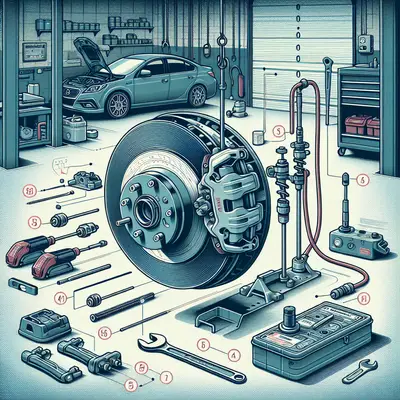
While most conversations focus on pads and rotors, the true refinement of a brake system lies in the details of installation. Even the highest‑grade components can underperform if the supporting hardware is neglected.
Sophisticated maintenance insists on:
- Proper cleaning and preparation of contact surfaces to ensure rotors sit perfectly flush and run true.
- Replacement—not reuse—of worn or corroded hardware such as clips, shims, and pins, which guide pad movement and prevent binding.
- Correct application of high‑temperature lubricants only where specified to avoid contamination of friction surfaces.
- Accurate torque with a calibrated wrench on lug nuts and caliper bolts to prevent rotor distortion and uneven pad contact.
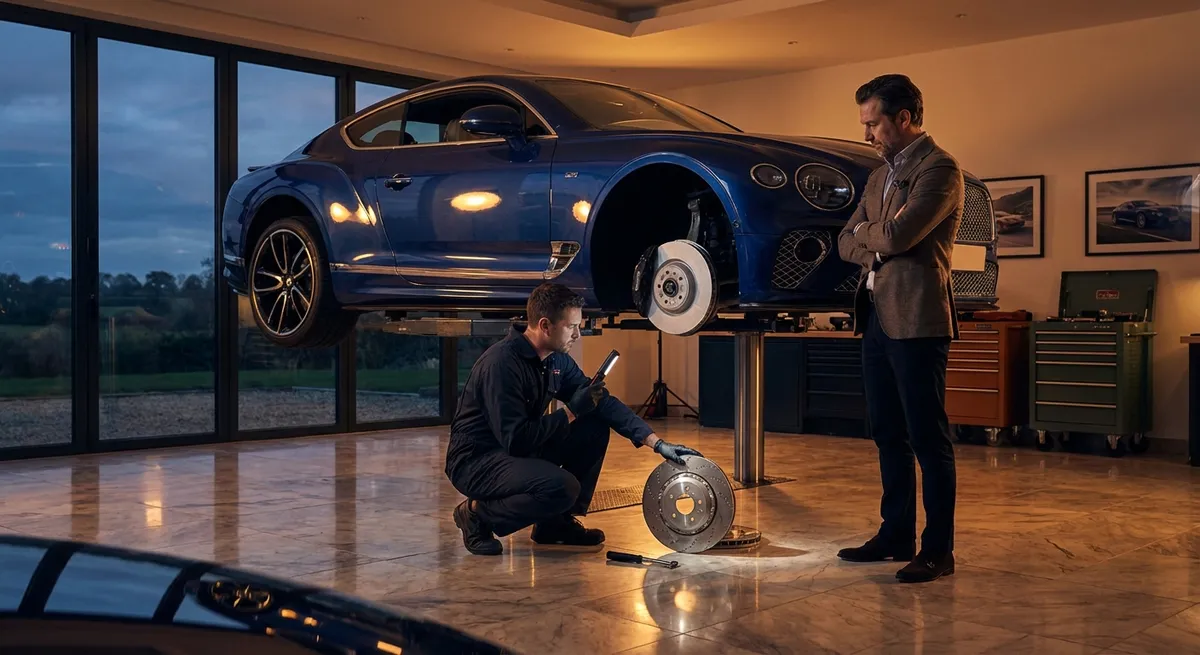
These details directly influence pedal feel, noise, and rotor life. A slight misalignment or improperly torqued wheel can mimic the symptoms of “warped” rotors, leading to unnecessary parts replacement. The refined approach is not simply to repair, but to insist on procedure: a clean work environment, measured torque, and a technician who treats brake assembly less like a chore and more like a craft.
Aligning Climate, Driving Style, and Service Intervals: A Personalized Maintenance Strategy
The most advanced brake maintenance is not universal; it is tailored. Two vehicles with identical odometer readings can be in very different condition depending on climate, route, and driver behavior.
A personalized strategy considers:
- Climate: Coastal or humid environments accelerate corrosion on lines, calipers, and hardware; mountainous regions demand more frequent fluid changes due to heat cycling; cold climates increase the importance of rust protection and regular inspections.
- Driving profile: Long highway commutes are generally gentler on brakes than urban stop‑and‑go traffic, but high‑speed driving raises the stakes of emergency stops. Short, frequent trips can also prevent systems from fully warming, contributing to moisture retention in the fluid and light rotor rust.
- Load and use case: Towing, frequent passengers, or fully loaded vehicles place increased demand on brakes, warranting more proactive attention to pad thickness, rotor condition, and fluid performance.
Refined car owners often keep a concise maintenance log: not just mileage, but dates, climate notes, and type of service performed. Over time, this record helps you and your technician anticipate wear patterns, schedule service before degradation becomes noticeable, and preserve that consistent, composed braking behavior that defines a well‑maintained vehicle.
Conclusion
Impeccable brake maintenance is less about reacting to failure and more about curating a standard. It is the quiet discipline of knowing how your car should feel under your foot, of selecting components for performance rather than price alone, and of insisting on precise workmanship in every detail.
For the driver who refuses to compromise, brakes are not the system you remember only in emergencies. They are an everyday assurance—an elegant, predictable partnership between machine and driver. When maintained with intention, each stop feels less like a necessity and more like proof that your vehicle is operating exactly as it should: under your complete, calm control.
Sources
- NHTSA: Brakes – Safety Information – U.S. National Highway Traffic Safety Administration guidance on brake system safety and maintenance considerations.
- U.S. Department of Energy – Brakes and Safety – Overview of brake maintenance and how it affects vehicle performance and energy use.
- AAA – Car Brake System: Service & Maintenance – Practical explanation of brake components, wear patterns, and recommended service practices.
- Bridgestone – Brake Fluid: What It Is & When to Change It – Detailed discussion of brake fluid function, degradation, and replacement intervals.
- MIT School of Engineering – How Do Brakes Work? – Technical but accessible description of how braking systems function and why proper maintenance is critical.
Key Takeaway
The most important thing to remember from this article is that this information can change how you think about Maintenance.