Brakes are the quiet guardians of every journey—felt in milliseconds, trusted for decades, and too often understood only when something goes wrong. For drivers who view safety as a non‑negotiable luxury rather than a mere requirement, understanding the brake system is no longer optional. It is a mark of refined ownership, informed decision-making, and respect for the physics that safeguard every stop.
This guide steps beyond basic explanations to explore how contemporary brake systems genuinely work, where their strengths lie, and where discerning owners should direct their attention. Along the way, you’ll find five exclusive insights that shift brake care from a reaction to a deliberate, elevated standard of safety.
The Architecture of Confidence: How Modern Brake Systems Truly Work
A modern hydraulic brake system does far more than convert pedal pressure into stopping power. At its core is a sequence of precisely orchestrated events designed to create repeatable, predictable deceleration in a variety of conditions.
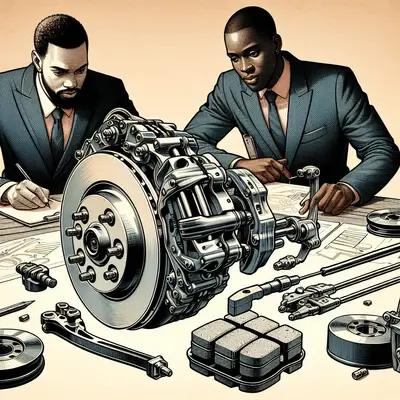
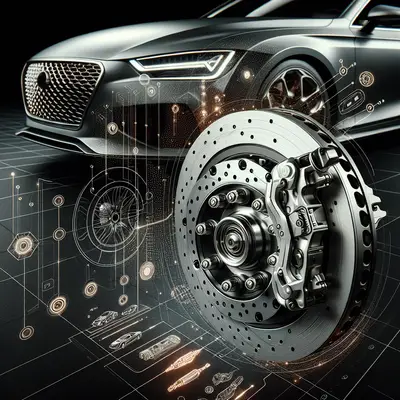
When you press the pedal, a pushrod moves the piston in the master cylinder, converting mechanical effort into hydraulic pressure. This pressure travels through brake lines and flexible hoses to calipers (or wheel cylinders in drum setups), which clamp pads against rotors or press shoes against drums. The friction generated transforms kinetic energy into heat—manageable when the system is healthy, dangerous when neglected.
Layered onto this hydraulic foundation is an increasingly sophisticated safety architecture:
- ABS (Anti-lock Braking System) modulates braking pressure multiple times per second to prevent wheel lockup, enabling steering control during emergency stops.
- Electronic Brakeforce Distribution (EBD) subtly adjusts front and rear brake balance based on load and traction.
- Brake assist and stability systems interpret pedal speed, vehicle attitude, and wheel speed to amplify braking when a true emergency is detected.
What appears to be a single pedal press is, in reality, a deeply coordinated response involving hydraulics, electronics, friction materials, and thermal management. Understanding that interplay is the first step toward managing it wisely.
Exclusive Insight #1: Pedal Feel Is a Precision Instrument, Not an Afterthought
Discerning drivers treat pedal feel the way a musician treats the tension of a piano key: it tells you far more than the untrained ear can hear.
A consistent, firm pedal that responds predictably as pressure increases is the ideal. Deviations from this standard are not just inconveniences; they are diagnostic signals:
- A gradually soft or “spongy” pedal often points to air in the hydraulic system, degraded brake fluid, or flexible rubber hoses beginning to balloon under pressure.
- A pedal that sinks slowly at a stop may suggest an internal master cylinder seal issue—a subtle but critical loss of hydraulic integrity.
- A high, rigid pedal with minimal travel might indicate seized caliper slide pins or accumulated corrosion restricting movement.
Sophisticated ownership means treating these sensations as early-warning instrumentation, not “quirks you’ll get used to.” Recording changes in pedal behavior over time, especially after tire rotations, pad replacements, or fluid service, allows you to detect trends long before they become emergencies.
Exclusive Insight #2: Brake Fluid Is a Wear Item—And a Silent Failure Point
Most drivers treat brake fluid as if it were permanent. It is not. Brake fluid is deliberately engineered to be hygroscopic—it attracts and absorbs moisture from the surrounding environment. This property prevents free water from pooling in low points of the system, where it could cause catastrophic boiling, but it introduces two serious consequences over time:
- Lower boiling point: As water content rises, the fluid’s boiling point drops. Under heavy or repeated braking (mountain descents, towing, spirited driving), the absorbed moisture can vaporize, creating compressible gas pockets that translate into a suddenly soft or fading pedal.
- Accelerated corrosion: Moisture-laden fluid corrodes internal metal surfaces—caliper pistons, ABS valves, and steel brake lines—long before external rust appears.
A refined brake care routine treats fluid changes as non‑negotiable, typically every 2–3 years or per the manufacturer’s specification, even if mileage is low. Owners who drive in humid climates, coastal regions, or subject the vehicle to frequent heavy braking benefit from shorter intervals.
Premium practice: Ask your technician for a documented brake fluid boiling point test or moisture-content reading rather than relying solely on mileage. It transforms fluid replacement from an arbitrary upsell into an evidence-based decision.
Exclusive Insight #3: Not All Brake Pads Are Created for Your Driving Reality
Brake pads are often discussed in terms of price, with less attention to how their composition reshapes the entire driving experience. The friction compound—organic, semi-metallic, low-metallic, or ceramic—changes more than noise and dust. It defines the personality of your brakes:
- Organic (NAO) pads: Typically quiet and gentle on rotors, but they can fade under repeated heavy braking and may produce more dust.
- Semi-metallic pads: Offer strong bite and excellent heat tolerance, often favored in performance or heavier vehicles, but may be noisier and harsher on rotors.
- Ceramic pads: Known for low dust and quiet operation, with stable performance under normal daily use, though true aggressive track use may reveal their limitations.
The sophisticated choice is not simply “the more expensive, the better,” but rather the compound most appropriate to your vehicle’s weight, your driving conditions, and your expectations:
- For an urban commuter seeking serene, dust‑controlled operation, a high-quality ceramic pad can feel transformative.
- For a performance sedan or SUV frequently driven on mountain roads, a carefully chosen semi‑metallic pad with higher thermal capacity may be the safer, more honest option.
Premium practice: When approving a brake job, ask for the specific friction rating (often marked as two letters, like “FF” or “GG”) and discuss how that rating aligns with your driving style. You are not just buying parts; you are selecting the character of every future stop.
Exclusive Insight #4: Rotor Condition Is About More Than Thickness
Rotors are often reduced to a single measurement: minimum thickness. While staying above that specification is critical, discerning owners look at the broader picture of rotor health:
- Lateral runout (wobble): Even slight deviations can lead to pedal pulsation and uneven pad wear over time. Excessive runout may stem from hub corrosion, improper wheel torque, or low-quality rotors.
- Disc thickness variation (DTV): Microscopic differences in thickness, invisible to the eye, create the sensation many drivers call “warped rotors.” In reality, uneven pad deposition or inconsistent rotor cooling is frequently to blame.
- Surface condition and metallurgy: Heat spots, fine radial cracks, or pronounced scoring often indicate thermal stress or friction material incompatibility.
Refined brake service goes beyond simply resurfacing or replacing rotors. It includes meticulous cleaning of the hub face, accurate torque of wheel fasteners with a calibrated torque wrench, and attention to bedding-in new pads and rotors so friction layers form evenly.
Premium practice: After a brake service, perform the recommended bedding procedure—usually a sequence of controlled stops from moderate speeds—exactly as instructed. It’s an understated but powerful act that can extend rotor life and preserve that smooth, vibration‑free pedal feel.
Exclusive Insight #5: Your Driving Habits Quietly Rewrite Your Brake System’s Future
The most advanced brake technology in the world cannot fully compensate for counterproductive driving behavior. Over time, your daily habits subtly program how your brake system ages:
- Long downhill braking vs. pulse braking: Riding the brakes on descents keeps pads and rotors at elevated temperatures, encouraging fade and glazing. Alternating brake application with engine braking allows components to cool and preserves friction performance.
- Last‑second stops vs. progressive deceleration: Hard, late braking generates more heat and wear than earlier, gentler deceleration. ABS may intervene more frequently, increasing mechanical stress on components.
- Brake‑over‑puddle behavior: Driving through standing water immediately after heavy braking can rapidly cool hot rotors, encouraging distortion and uneven pad deposits over time.
Sophisticated drivers adopt a composed, predictive style:
- They scan far ahead, using gentle deceleration whenever possible.
- They downshift (in appropriate vehicles) or ease off earlier on long descents, rather than relying solely on the pedal.
- They are deliberate about heavy braking—reserving it for genuine emergencies, not habitual late braking at every intersection.
This style is not just courteous and comfortable; it is a structural investment in your brake system’s longevity and reliability.
Conclusion
A truly premium driving experience is not defined by power alone, but by the graceful, predictable way that power comes to rest. The modern brake system is a finely balanced interplay of hydraulics, electronics, materials science, and your own daily habits.
By treating pedal feel as a diagnostic tool, respecting brake fluid as a consumable, choosing pads intentionally, demanding more than minimums from your rotors, and refining your driving style, you transform your brake system from a taken‑for‑granted necessity into a consciously curated safety asset.
In a world where many drivers only think about their brakes when something feels wrong, choosing to understand and steward this system places you in a distinct minority—one defined by composure, foresight, and a quiet insistence on exceptional safety.
Sources
- [National Highway Traffic Safety Administration (NHTSA) – Brake System Basics](https://www.nhtsa.gov/equipment/brakes) - Overview of brake system components and federal safety considerations
- [U.S. Department of Transportation – Brake Fluid Safety Information](https://www.transportation.gov/mission/safety/brake-fluid) - Guidance on brake fluid properties, maintenance, and safety implications
- [AAA – How Brakes Work and When to Service Them](https://www.aaa.com/autorepair/articles/how-brakes-work) - Consumer-focused explanation of brake operation and recommended service intervals
- [Car and Driver – Brake Pad Types and How They Affect Performance](https://www.caranddriver.com/features/a15129764/brake-pad-types-feature) - Detailed discussion of pad materials, performance, and trade‑offs
- [Society of Automotive Engineers (SAE) – Brake Rotor and Pad Interaction (Technical Overview)](https://www.sae.org/binaries/content/assets/cm/content/learn/education/technical-paper/technical-paper_brakes.pdf) - Technical insight into rotor condition, friction behavior, and wear patterns
Key Takeaway
The most important thing to remember from this article is that this information can change how you think about Brake Systems.