For the discerning driver, brake repair is not a grudge purchase—it is an expression of standards. The way you approach your braking system communicates how you value control, composure, and the safety of those who travel with you. This guide is designed for owners who want more than “it stops when I press the pedal.” It is for those who insist on predictable deceleration, quiet confidence on the motorway, and a repair approach that is deliberate rather than reactive.
Below, you’ll find a refined framework for understanding brake repair decisions, alongside five exclusive insights that elevate your perspective well beyond basic maintenance.
Understanding Brake Repair as a System, Not a Single Job
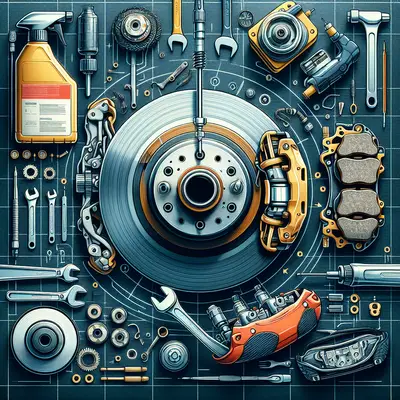
Most brake “repairs” are treated as isolated fixes—pads here, a rotor there, a fluid top‑off when convenient. That fragmented mentality is precisely what refined owners avoid. Brakes are a tightly integrated system: pedal, booster, master cylinder, lines, hoses, calipers, pads, rotors or drums, fluid, and even tires all contribute to how your car stops and feels.
Adopting a system mindset means you no longer judge your brakes solely by pedal feel or the absence of noise. You consider balance from front to rear, consistency from cold to hot, and stability in real emergencies. A pad swap may restore friction, but if the fluid is moisture‑laden, the rubber hoses are fatigued, or the rotors are glazed, you’ve simply dressed a deeper issue in fresh parts. Sophisticated brake repair treats each intervention as a chance to re‑harmonize the entire system—so every future stop feels intentional, not accidental.
Exclusive Insight #1: Brake Feel as a Diagnostic Language
Most drivers perceive brake feel as “good” or “bad.” Discerning owners treat it as a language.
Subtle changes in pedal travel, resistance, and feedback tell you exactly where to look long before a warning light appears. A slightly softer pedal that firms up after pumping often points to air or marginal fluid. A high, overly sensitive pedal can suggest mismatched components or improper pad bedding. A long, lazy pedal with no obvious leak can indicate internal bypass in the master cylinder—an issue many drivers overlook until it becomes severe.
Train yourself to notice not just whether the brakes work, but how they communicate: initial bite, progression as you press harder, and stability when holding pressure at a red light. Documenting these impressions—mentally or in a vehicle journal—turns you into a more precise partner for any technician and significantly improves the quality and accuracy of your brake repairs.
Exclusive Insight #2: Treat Brake Fluid as a Critical Component, Not a Consumable
Brake fluid is often treated like a top‑off item, somewhere between windshield washer fluid and coolant. In reality, it is as critical to your stopping power as the pads themselves. Glycol‑based brake fluids are hygroscopic—they absorb moisture from the air over time. That moisture lowers the fluid’s boiling point and accelerates internal corrosion in lines, calipers, and ABS components.
A refined maintenance approach prioritizes preventive fluid replacement based on time, not merely mileage or “feel.” Many manufacturers recommend replacement every two to three years, yet this interval is frequently ignored. For vehicles driven in humid climates, mountainous regions, or subjected to spirited driving, a more disciplined schedule is warranted. The difference is subtle in daily commuting, but in a hard stop from motorway speeds—especially downhill—a fresh, high‑integrity fluid can mean the difference between consistent pedal effort and spongy, fading brakes.
By elevating brake fluid from afterthought to central component, you not only protect expensive hydraulic parts but also retain the crisp, confidence‑inspiring pedal feel that separates a merely functional car from a properly maintained one.
Exclusive Insight #3: Matching Parts to Driving Style, Not Just to the Car
An elegant brake repair strategy begins with a simple question: How is this car truly driven? The answer should influence far more than brand choice; it should dictate the friction material, rotor specifications, and even hardware selection.
A commuter car in an urban environment benefits from high‑quality OEM‑equivalent pads engineered for quiet, low‑dust, and predictable performance in stop‑and‑go traffic. A grand tourer that frequently sees high‑speed motorway use may warrant pads with greater temperature stability and rotors designed to shed heat efficiently. Choosing the least expensive “fits your vehicle” option undermines the carefully calibrated dynamics that manufacturers design into their braking systems.
Sophisticated owners work either with a trusted technician or through meticulous research to ensure components are compatible not only with the car’s make and model, but with the owner’s actual use: frequency of trips, load carried, climate, and driving style. The result is a brake repair that feels tailored—quiet where it should be, reassuring under pressure, and free from harshness or unpredictability.
Exclusive Insight #4: Proper Bedding as the Missing Step in Most Brake Jobs
Many brake repairs end the moment the last wheel is torqued. For refined results, that is only the beginning. Proper bedding (or “burnishing”) of new pads and rotors is a critical, often neglected art that dramatically shapes both braking performance and longevity.
Bedding creates an even transfer layer of friction material on the rotor surface. This microscopic interface is what allows the pad and rotor to interact smoothly and consistently. Without it, you’re more likely to experience vibrations, uneven wear, and inconsistent bite, especially during the first several thousand miles.
A disciplined bedding process typically involves a series of controlled stops from moderate speeds—firm, but not ABS‑engaging—followed by gentle driving to allow components to cool. While the exact pattern varies by manufacturer, the principle is constant: you are gradually “introducing” the new friction materials to one another. Treat bedding as part of the repair itself, not an optional afterthought, and you’ll notice quieter operation, more immediate response, and reduced risk of premature rotor warping or pad glazing.
Exclusive Insight #5: Evaluating Shops by Their Process, Not Their Price
For owners who prefer to entrust brake repairs to professionals, the true mark of a premium shop is not the décor of the waiting area, but the discipline of their process.
Rather than asking only, “How much for front brakes?” consider questions that reveal the quality of their approach:
- Do they measure and document rotor thickness and runout, or simply replace by default?
- Do they inspect and, if necessary, replace hardware, clips, and slide pins—not just pads and rotors?
- Do they flush brake fluid according to time‑based intervals and manufacturer guidelines?
- Do they road‑test the vehicle, confirm pedal feel, and verify ABS and stability control operation after the job?
- Do they explain part choices in terms of performance, noise, and longevity—not just cost?
Shops that can articulate why they recommend specific components and how they validate their work are far more likely to deliver braking performance that aligns with a refined owner’s expectations. The goal is a relationship built on thoughtful consultation and consistent results, not on one‑off repairs and lowest‑bid estimates.
Integrating Brake Repair Into Your Overall Safety Standard
Truly sophisticated brake care is not about obsessing over every squeak; it is about aligning your vehicle’s stopping ability with your personal standards for safety, composure, and control. That alignment comes from seeing brake repair as an ongoing dialogue with your car: listening to pedal feel, respecting service intervals, tailoring components to use, insisting on proper bedding, and partnering only with professionals who treat your braking system with the same seriousness you do.
When approached this way, each brake repair becomes more than a line item on a receipt. It is a quiet, deliberate statement of how you choose to move through the world—decisively, safely, and always with the confidence that when you ask your car to stop, it does so with the same elegance with which it accelerates.
Sources
- National Highway Traffic Safety Administration (NHTSA) – Brakes and Safety Features - Overview of brake system safety, regulations, and the role of braking in crash avoidance
- U.S. Department of Transportation – Brake System Safety Fact Sheet (FMCSA) - Federal guidance and technical notes on brake system performance and maintenance standards
- AAA – Brake System Service and Repair - Consumer‑focused explanations of brake components, warning signs, and recommended service practices
- Consumer Reports – How to Know When You Need New Brakes - Practical signs, testing methods, and considerations for brake repairs from a testing organization
- Penn State Behrend – Brake Fluid and Vehicle Safety - Educational discussion of brake fluid characteristics, system operation, and safety implications
Key Takeaway
The most important thing to remember from this article is that this information can change how you think about Repair Guides.