For the driver who expects more than “it seems fine,” the brake system is not a mystery to be tolerated; it is a safety instrument to be understood. Beneath every composed stop lies a network of engineering decisions, fluid dynamics, friction materials, and electronic oversight—each of which can either protect you quietly or fail you abruptly. This article is a guided tour through that system, with particular attention to the subtle details often missed in quick service visits—and five exclusive insights that safety‑conscious owners will want to weave into their long‑term maintenance habits.
Inside the Modern Brake System: More Than Pads and Rotors
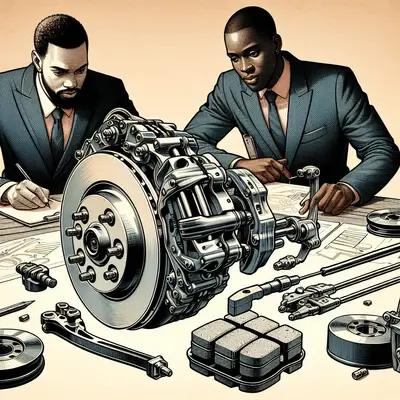
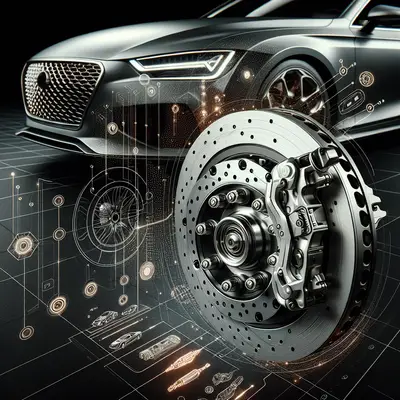
At its core, a modern hydraulic brake system converts the pressure of your foot into clamping force at each wheel. When you depress the pedal, a pushrod acts on the master cylinder, pressurizing brake fluid in the lines. That pressure is distributed to calipers (for disc brakes) or wheel cylinders (for drum brakes), which force friction material—brake pads or shoes—against a spinning surface (rotors or drums). The resulting friction transforms kinetic energy into heat and brings the vehicle to a controlled stop.
Layered onto this hydraulic foundation is a suite of electronic guardians. Anti-lock braking systems (ABS) prevent wheel lockup by modulating pressure many times per second, while electronic stability control (ESC) can selectively apply braking at individual wheels to help keep the vehicle on its intended path. Many late-model vehicles further integrate brake assist, which recognizes panic stops and maximizes braking force when drivers hesitate. For an owner, appreciating this interplay reframes “brakes” from a single line item on an invoice to a coordinated system that deserves measured, system-wide care—not just occasional pad replacements.
The Five Insights: A Higher Standard of Brake Awareness
Beyond the basics lies a level of brake awareness that most owners never reach—but that safety-conscious drivers can adopt with intentionality. The following five insights move you past checklist maintenance and into a more discerning relationship with your brake system:
Brake Feel Is Data, Not a Vague Impression
Brake Fluid Condition Is as Critical as Pad Thickness
Heat Management Dictates How Long Your Brakes Stay Trustworthy
Electronic Aids Deserve the Same Respect as Mechanical Parts
Shop Technique Can Quietly Raise—or Lower—Your Safety Margin
Taken together, these perspectives turn every drive into a subtle, ongoing assessment of system health. They also position you to ask sharper questions at the service counter, select better components, and recognize minor concerns before they become safety events.
Insight 1: Treat Brake Pedal Feel as a Precision Instrument
Most drivers know the difference between “soft” and “firm” pedals, but few track those sensations over time. For a careful owner, the brake pedal is effectively a diagnostic gauge under your foot. A gradual increase in pedal travel over weeks, a slightly spongy feel after heavy braking, or a faint pulsing under light pressure are all signals that deserve interpretation, not dismissal.
A soft or slowly sinking pedal can indicate trapped air, a failing master cylinder, or internal leaks in flexible hoses. A high, abrupt pedal may signal seized caliper slide pins or over-adjusted drum brakes. Subtle pulsation through the pedal at highway speeds often points to rotor thickness variation or uneven pad deposits, rather than “warped” rotors in the simplistic sense. By noticing patterns—cold vs. hot brakes, dry vs. rainy days, city vs. highway—you provide a technician with a more refined description than “it just doesn’t feel right.” That precision often translates into quicker, more accurate diagnosis and less unnecessary parts swapping.
Insight 2: Elevate Brake Fluid from Afterthought to Safety Priority
Brake fluid is the lifeblood of the system, yet it is frequently ignored until a major component fails. Most automotive brake fluids are hygroscopic—they slowly absorb moisture from the atmosphere. Over time, this lowers the fluid’s boiling point and can corrode internal components. Under demanding conditions, such as steep descents or repeated hard stops, overheated fluid may begin to boil, forming compressible vapor pockets that manifest as a sudden, frighteningly soft pedal.
A premium approach treats brake fluid with the same seriousness as engine oil. Rather than waiting for a crisis, many manufacturers recommend fluid replacement every two to three years, even when mileage is low. A professional flush replaces old, moisture-laden fluid with fresh fluid meeting the specification in your owner’s manual (DOT 3, DOT 4, or DOT 5.1 for most modern passenger vehicles). This not only maintains braking performance under heat, it protects ABS modulator valves and other delicate internals from internal rust and sediment. Asking your shop specifically about brake fluid condition—and requesting it be tested or replaced at defined intervals—is a quiet, sophisticated way to safeguard stopping power.
Insight 3: Respect Heat: The Invisible Force That Ages Your Brakes
Every stop is an energy exchange: the kinetic energy of the moving vehicle becomes heat in the rotor and pad. In spirited driving, mountain descents, towing, or stop-and-go traffic, the system is repeatedly pushed toward its thermal limits. Excessive heat can glaze pads, cause resins in the friction material to outgas, change friction characteristics, and lead to rotor surface irregularities. Over time, heat cycling can also harden rubber components and accelerate the breakdown of old brake fluid.
Owners attuned to this reality adapt both their driving and their maintenance. Long descents invite a lower gear and controlled speed rather than constant pedal pressure. After a series of aggressive stops, allowing a bit of cool-down driving before parking can help avoid uneven pad imprinting on hot rotors. When selecting components, you might prioritize higher-quality pads and rotors designed for better heat management, rather than the cheapest replacements available. You are not chasing performance-car theatrics; you are preserving consistent, predictable braking under the most demanding moments you might reasonably encounter.
Insight 4: See ABS and Stability Control as Systems That Need Care, Not Assumptions
Anti-lock brakes, traction control, and stability control are often spoken of as intangible features that simply “exist” once the car is built. In reality, they are systems with sensors, wiring, hydraulic control units, and software logic—all of which rely on a well-maintained mechanical foundation. A failing wheel speed sensor, rusted tone ring, or inconsistent hydraulic pressure can quietly compromise the operation of these systems.
A refined owner pays attention to warning lights with the same seriousness reserved for engine or airbag alerts. An illuminated ABS or stability control indicator means the system has partially or completely suspended its protective functions, returning control to your raw mechanical brakes. Ignoring that light for weeks or months can be an unnecessary gamble, especially in wet or icy conditions. In addition, routine brake work should be executed with awareness of these systems: using the correct scan tools and bleed procedures for vehicles with ABS modules, avoiding damage to sensor wiring, and ensuring proper reassembly near tone rings. When selecting a shop, asking how they handle ABS-equipped vehicles and what diagnostic tools they use sends a clear signal that you expect more than “pad slap” workmanship.
Insight 5: Demand Craftsmanship, Not Just Parts, from Your Brake Service
Two cars can leave two different shops with identical new pads and rotors installed—yet one will stop smoothly and quietly for years while the other develops noise, vibration, or uneven wear within months. The difference is often not the hardware but the technique. Brake service, executed properly, is a craft.
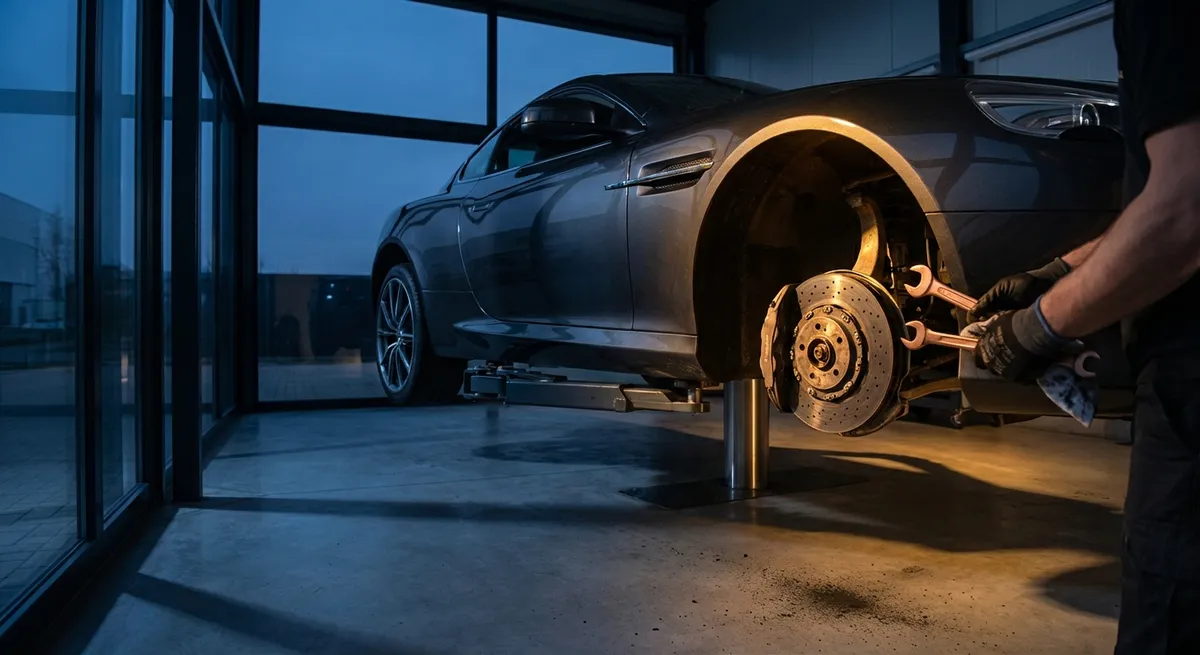
Exceptional brake work typically includes meticulous cleaning and inspection of caliper brackets, lubrication of slide pins with appropriate high-temperature grease, verification that pads move freely in their guides, and careful torquing of all fasteners. Rotors are installed on hubs whose mating surfaces have been cleaned of rust and debris to reduce runout. Where appropriate, pad bedding procedures are followed to establish a uniform transfer layer on the rotor surface. A high-end result also involves confirming pedal feel before the vehicle leaves the bay, checking for leaks, and performing a controlled road test. As a customer, you do not need to perform this work yourself, but you can absolutely ask how these steps are handled. Shops that welcome such questions tend to deliver the level of precision braking you are seeking.
Conclusion
A sophisticated approach to brake safety is not about paranoia; it is about clarity. When you understand that pedal feel is information, that brake fluid quietly ages, that heat is always part of the equation, that electronic aids are physical systems, and that craftsmanship matters as much as components, your relationship with your vehicle changes. You move from reactive maintenance to intentional stewardship.
Your brakes are the final word in every driving decision you make—every merge, every descent, every unexpected stop. By adopting these five insights and insisting on thoughtful, system-wide care, you ensure that when you ask your car to stop, it responds not with drama, but with quiet, unwavering confidence.
Sources
- [NHTSA – Anti-lock Brakes (ABS)](https://www.nhtsa.gov/equipment/anti-lock-brakes-abs) - Explains how ABS works and its role in modern vehicle safety systems
- [U.S. Department of Transportation – Brake Fluid Information](https://www.transportation.gov/mission/sustainability/brake-fluid) - Provides technical background on brake fluid types and performance considerations
- [SAE International – Brake System Fundamentals](https://www.sae.org/binaries/content/assets/cm/content/topics/brake-systems.pdf) - Technical overview of brake system components and their interactions
- [University of Michigan – Vehicle Dynamics and Braking](https://deepblue.lib.umich.edu/bitstream/handle/2027.42/60933/vehicle_dynamics.pdf) - Academic discussion of braking forces, energy, and stability control
- [AAA – How to Choose the Right Repair Shop](https://www.aaa.com/autorepair/articles/how-to-choose-the-right-auto-repair-shop) - Guidance on evaluating repair facilities and the quality of their brake service practices
Key Takeaway
The most important thing to remember from this article is that this information can change how you think about Brake Systems.