Even the most exquisite drive is reduced to a compromise the moment your brakes stop inspiring confidence. For discerning drivers, the brake pedal is not a mere control—it is a conversation between engineering, safety, and feel. Understanding that conversation at a deeper level allows you to move beyond basic maintenance and into a realm of poised, predictable, and quietly exceptional braking.
In this guide, we explore how a modern brake system truly behaves, and we reveal five exclusive, often overlooked insights that matter to owners who refuse to leave safety to chance.
The Modern Brake System, Deconstructed with Precision
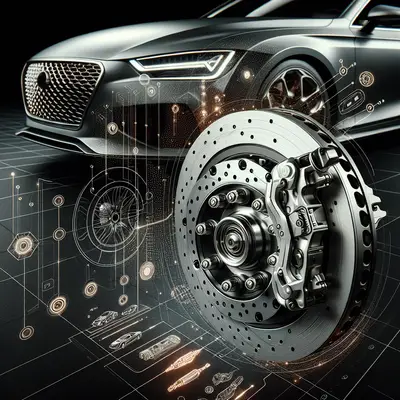
A contemporary brake system is an orchestrated ensemble: brake pedal, booster, master cylinder, hydraulic lines, calipers, pads, rotors, and a layer of electronic guardians such as ABS, stability control, and brake assist. Each component influences not just how quickly you stop, but how controlled, linear, and repeatable those stops feel.
The master cylinder converts pedal force into hydraulic pressure, distributing it through carefully balanced circuits to each wheel. The brake booster, whether vacuum-based or electronically assisted, amplifies your foot’s effort to ensure even light pedal input can generate substantial stopping power. Calipers transform hydraulic pressure into clamping force on the rotors, while pad composition and rotor design dictate how that force translates into real-world deceleration, noise, and heat management.
In parallel, your car’s electronic control units constantly monitor wheel speed, steering angle, yaw rate, and pedal input. They can selectively pulse brakes at individual wheels, stabilize the vehicle during evasive maneuvers, and even pre-charge the brake system when a potential collision is detected. For the refined driver, appreciating this interplay is the first step toward taking brake care beyond the basics.
Exclusive Insight 1: Your Pedal Is a Precision Instrument, Not a Simple Switch
Most drivers treat the brake pedal like an on/off button: press to slow down, release to go. In reality, the pedal offers a wealth of information about system health and setup if you learn to “read” it.
A refined brake pedal should feel firm yet progressive—initial light resistance, followed by a smooth build-up in effort as you press harder. Sponginess, excessive travel, or a “step” in pedal feel can hint at air in the lines, deteriorated rubber hoses, uneven pad deposits, or swollen caliper seals. A pedal that slowly sinks under steady pressure can point to internal master cylinder leaks—subtle, but serious.
Treating the pedal as a diagnostic tool means paying attention to changes over time. If a new set of pads dramatically alters pedal feel, it’s worth asking why: is the friction material dramatically different, are the caliper slide pins binding, or has the fluid overheated and degraded? Regularly noting how your pedal feels in the first few stops of a drive—cold system versus warm—creates a baseline that helps you detect emerging issues well before they escalate into genuine safety concerns.
Exclusive Insight 2: Brake Fluid Behavior Is More Sophisticated Than “Change Every Two Years”
Most maintenance schedules reduce brake fluid to a calendar interval, but for owners who value exceptional braking, timing should be informed by conditions, performance expectations, and fluid type rather than a generic date.
Brake fluid is hygroscopic—it absorbs moisture from the air. Over time, this lowers its boiling point and can introduce internal corrosion. But the rate of degradation varies. Drivers in humid climates, mountainous regions, or who regularly descend long grades place much greater thermal stress on their fluid than those with gentle, mostly flat commutes. Similarly, spirited driving or towing can push fluid temperatures toward its boiling point, where vapor bubbles form and pedal feel deteriorates sharply.
A premium approach is to treat brake fluid as both a safety and performance consumable. Consider periodic testing with a professional brake fluid tester or having its condition evaluated during service, especially before long road trips or seasonal changes. Upgrading to a high-quality DOT 4 fluid (or an approved fluid that matches your manufacturer’s specification) can offer higher boiling points and more stable performance—provided you commit to an appropriate flush schedule. For the discerning driver, fluid is not an afterthought; it’s a central pillar of predictable brake response.
Exclusive Insight 3: Rotor Surface Quality Quietly Shapes Stopping Personality
Many owners judge rotors solely by thickness and the absence of obvious grooves. Yet for a driver who cares about nuanced braking, rotor surface condition—and not just remaining life—deserves careful scrutiny.
Microscopic irregularities on the rotor face, uneven pad deposits, and partial glazing can all influence both pedal feel and steering wheel behavior during braking. That “shimmy” or vibration at highway speeds is often less about a truly warped rotor and more about variations in thickness or friction layer consistency. A refined system favors a smooth, uniform transfer layer of pad material on the rotor, which provides consistent friction and pressure distribution.
An elegant approach to rotor care includes: avoiding aggressive hard stops on brand-new pads and rotors until they are properly bedded; requesting rotor resurfacing or replacement when replacing pads if there is clear evidence of uneven wear; and understanding that cheap, low-quality rotors can undermine even the finest pads. The outcome is not simply shorter stopping distances—it’s a cleaner, more stable deceleration with minimal vibration and a confidence-inspiring pedal under all conditions.
Exclusive Insight 4: Pad Selection Is About Character, Not Just Longevity
Brake pads are often chosen on two simplistic criteria: low price and long life. For drivers attuned to safety and feel, pad selection is a matter of braking “character”—how the car responds, how it behaves in wet conditions, and how it performs on that third hard stop, not just the first.
Organic, semi-metallic, and ceramic pads each provide different friction curves, noise signatures, and temperature tolerances. Ceramic pads typically offer quieter operation and lower dust, appealing to those who prioritize cleanliness and refinement. Semi-metallic pads often provide stronger, more consistent performance under higher temperatures, suiting drivers who tackle long descents or brisk highway use. What matters most is how well the pad compound aligns with your driving style, vehicle weight, and environment.
For a truly premium brake experience, align your pads with your expectations: if you value quiet, smooth, and dust-controlled operation in urban driving, a quality ceramic compound may be ideal. If your driving narrative frequently includes mountain passes or heavy loads, selecting a pad with higher temperature stability—even at the cost of more dust—might be the safer, more sophisticated choice. Work with a trusted technician or performance-focused shop that understands these subtleties, rather than defaulting to the cheapest option on the shelf.
Exclusive Insight 5: Your Electronic Safety Systems Depend on Brake Health More Than You Think
Advanced driver-assistance systems (ADAS)—from autonomous emergency braking to stability control—are often marketed as stand-alone safety features. In reality, they are only as effective as the physical brake system they command.
When your car detects an impending collision, the control unit may pre-pressurize the hydraulic system or apply maximum braking faster than a human could. But if the fluid is degraded, the pads are glazed, or the rotors are compromised, those “heroic” interventions are operating with diminished tools. Likewise, ABS and stability control require clean wheel speed signals and balanced hydraulic circuits; a dragging rear caliper or contaminated rotor can cause subtle inconsistencies that reduce their precision.
For the safety-conscious owner, respecting the synergy between electronics and hardware is essential. That means ensuring brake service is done correctly—using proper torque on caliper bolts and wheels, respecting bedding procedures, and promptly addressing warning lights related to ABS or stability systems rather than ignoring them. The refined mindset recognizes that the silicon and software in your car’s brain rely on impeccably maintained steel, fluid, and friction material to deliver their promised protection.
Conclusion
Exemplary brake performance is never an accident. It’s the product of understanding that every stop is shaped by more than pads and rotors—it is defined by pedal feel, fluid integrity, rotor surface quality, pad character, and the quiet choreography between electronics and mechanical components.
When you elevate your relationship with the brake system from basic maintenance to informed stewardship, each press of the pedal becomes something more than a routine action. It becomes a deliberate, reassuring confirmation that your vehicle is prepared—gracefully and consistently—for the unexpected. For those who value both refinement and safety, that assurance is not a luxury; it is an essential standard.
Sources
- [National Highway Traffic Safety Administration (NHTSA) – Vehicle Braking and Stopping](https://www.nhtsa.gov/equipment/brakes) - Overview of brake safety, regulatory standards, and stopping performance considerations
- [Brembo Technical Insights – Brake Systems Explained](https://www.brembo.com/en/company/news/brakes-how-they-work) - Detailed explanation of modern brake system components and how they interact
- [U.S. Department of Transportation – Brake Fluid and Maintenance Guidance](https://www.transportation.gov/mission/safety) - Safety-focused information on vehicle maintenance, including braking systems and fluids
- [SAE International – Brake System Technology Articles](https://www.sae.org/news/transportation-safety) - Engineering-level insights into brake performance, materials, and safety technologies
- [AAA – Understanding Vehicle Braking and ABS](https://exchange.aaa.com/automotive/insights/antilock-braking-systems-abs/) - Practical discussion of ABS function and its relationship to overall brake health
Key Takeaway
The most important thing to remember from this article is that this information can change how you think about Brake Systems.